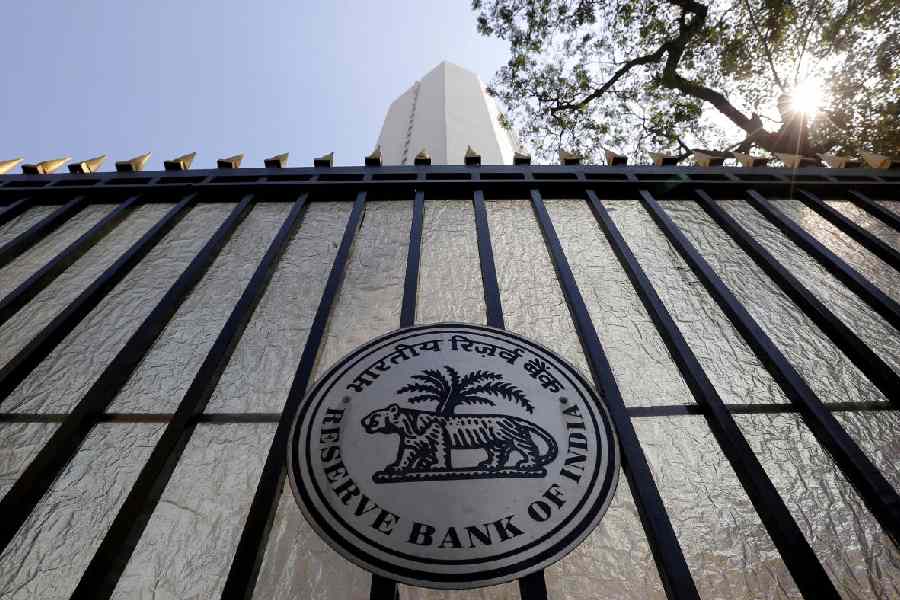
India’s financial regulation has steadily moved away from a binary choice between tight control and liberalisation. The latest announcements alongside the February 2026 monetary policy discussions reinforce that evolution.
The Reserve Bank of India has not reduced supervision; it has refined it — regulating systemic risk rigorously while removing friction where risk is minimal. For the non-banking financial company (NBFC) sector, this distinction matters because the next phase of credit growth will depend less on liquidity and more on distribution efficiency and trust.
One of the notable proposals is the exemption from registration for NBFCs that neither accept public funds nor interact with customers and have assets below ₹1,000 crore. These are captive or internal financing structures that do not intermediate household savings or lend to retail borrowers. Historically, they remained inside the regulatory perimeter largely for administrative uniformity rather than risk relevance.
By removing them from registration, RBI sharpens supervisory focus on customer-facing lenders — where conduct, underwriting and liquidity risks actually reside. The move does not weaken oversight; it reallocates regulatory bandwidth toward institutions that matter for stability.
Equally important is the proposal to dispense with prior approval requirements for certain NBFCs to open large numbers of branches, particularly in gold-loan lending. India’s credit gap is fundamentally a distribution gap.
Millions of small businesses, self-employed households and informal income earners do not merely need capital; they need proximity. In large parts of the country, credit assessment still depends on physical interaction, collateral verification and relationship familiarity. Branches, therefore, are not a legacy cost centre in secured retail lending; they are part of the underwriting architecture.
Until now, gold-loan NBFCs crossing the threshold of 1,000 branches required regulatory approval for further expansion, linked to concerns around the safety and custody of pledged gold. That concern was valid when the sector was nascent. But once an institution operates more than a thousand branches, it has demonstrated operational capability, security processes and audit discipline at scale.
Continuing the same permission requirement at that stage created an anomaly — maturity was being regulated as if it were infancy. Moving to a governance-based framework recognises that institutions which have already mastered security protocols should be allowed to expand faster, subject to ongoing supervision and accountability.
Gold loans illustrate why flexibility matters. In practice, they function as working capital for micro-enterprises — a shopkeeper stocking inventory before festival season, a small manufacturer purchasing raw material, or a household managing temporary cash-flow mismatches.
Borrowers value speed, certainty and dignity of process as much as pricing. Each branch becomes a micro-credit node serving a local economic radius. Faster expansion improves grassroots circulation.
The shift aligns with broader credit trends. Unsecured lending has been consciously moderated as risk awareness increased. As that segment slows, small businesses gravitate toward collateral-backed borrowing. Gold loans, being short-tenor and self-liquidating, become a reliable liquidity source. Easing branch expansion matches this structural shift — from consumption-led unsecured credit toward productive secured borrowing.
Another regulatory feature stands out. Gold loans carry a Tier-1 capital requirement of 12 per cent, compared with 10 per cent for other NBFCs. Yet from a credit perspective, gold loans are among the safest retail assets in NBFC portfolios. As policy encourages safer lending, aligning capital treatment with actual risk characteristics could further strengthen the secured credit ecosystem.
Taken together, the measures reflect precision rather than uniformity. Systemically relevant institutions face tighter capital and governance norms. Low-risk entities face fewer procedural barriers. Customer-facing lenders gain operational flexibility but under stronger conduct scrutiny. Growth and prudence are being aligned rather than traded off.
For secured retail lenders, especially gold-loan NBFCs, this creates a clearer runway. Faster branch expansion deepens penetration into underserved geographies, while stronger conduct norms enhance long-term credibility. By differentiating risk instead of standardising it, regulation becomes simpler and stronger — essential for sustaining credit growth in a rapidly formalising economy.
- Nirmal Jain is founder, IIFL Group, and Chair, NBFC committee of Ficci