Public sector oil marketing companies may continue to raise petrol and diesel prices going forward to cover for losses led by persistently high crude oil prices, but the government will have to perform a delicate balancing act given the inflationary concerns in mind, experts said.
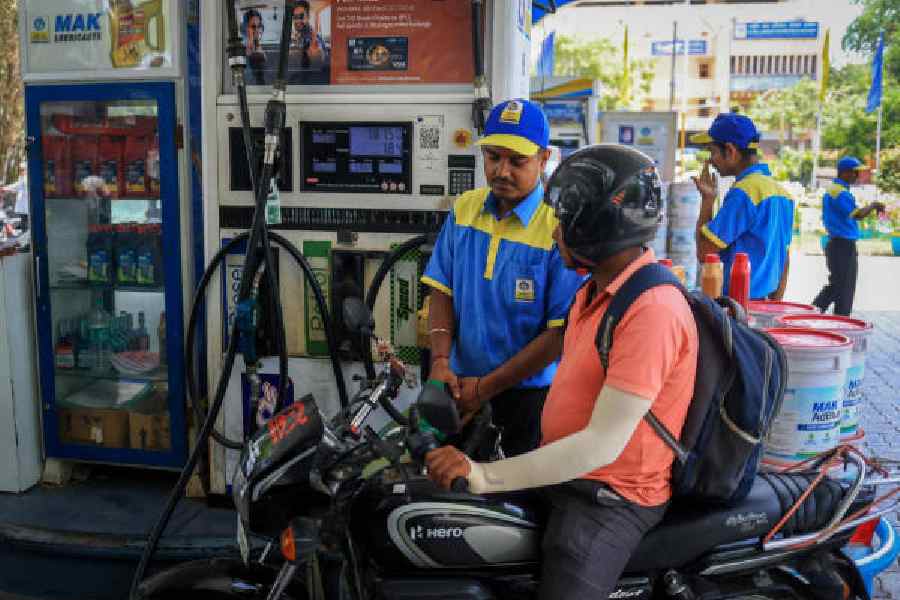
Although petrol and diesel prices are deregulated in India, the Centre exerts significant influence on prices as the majority shareholder of the OMCs, which raised petrol and diesel prices by close to ₹4 a litre in less than a week after absorbing losses for more than two-and-a-half months into the West Asia conflict.
“From a forward-looking lens, while there remains further headroom for more calibrated price increases, such adjustment must take into consideration broader macroeconomic factors,” said Saurav Mitra, partner (oil & gas), Grant Thornton Bharat.
He argued that the government will have to perform a delicate balancing act by considering inflationary pass-through and macro-stability on one side and OMC burden on the other.
The latest round of increases in fuel prices in two instalments is likely to have an impact on retail inflation that could soon spill over into household budgets. According to various estimates, the impact could be around 20 basis points (bps).
India’s retail inflation, measured by CPI, rose modestly to 3.48 per cent in April 2026 from 3.40 per cent in March, remaining below the RBI’s medium-term target of 4 per cent. Food inflation edged up to 4.2 per cent, while core inflation remained relatively stable. Wholesale inflation (WPI), however, painted a dramatically different picture.
WPI inflation surged to 8.3 per cent in April — a 42-month high — from 3.88 per cent in March, driven largely by soaring fuel and energy prices following the West Asia conflict and disruptions to crude oil supplies. The biggest jump came from the fuel and power category, where inflation shot up to 24.71 per cent from just 1.05 per cent a month earlier.
OMC losses
The ₹4/litre hike only extends incremental relief to OMCs and transfers some more burden of elevated oil prices from OMCs to end consumers, Mitra added.
Considering reported losses of ₹13-15/litre on petrol and ₹17-19/litre on diesel, this still would be insufficient to fully cushion the financial stress on OMCs arising from elevated Brent crude prices and depreciating rupee.
With crude sustaining above $100 per barrel and the Indian rupee weakening—factors that increase the landed cost of imports—OMCs continue to operate under materially significant cost pressure; currency depreciation alone could offset substantial gains from price revisions.
Sujata Sharma, joint secretary in the oil ministry, on Monday said OMCs have been losing ₹750 crore daily, but the government has no plans to provide financial support to them.