|
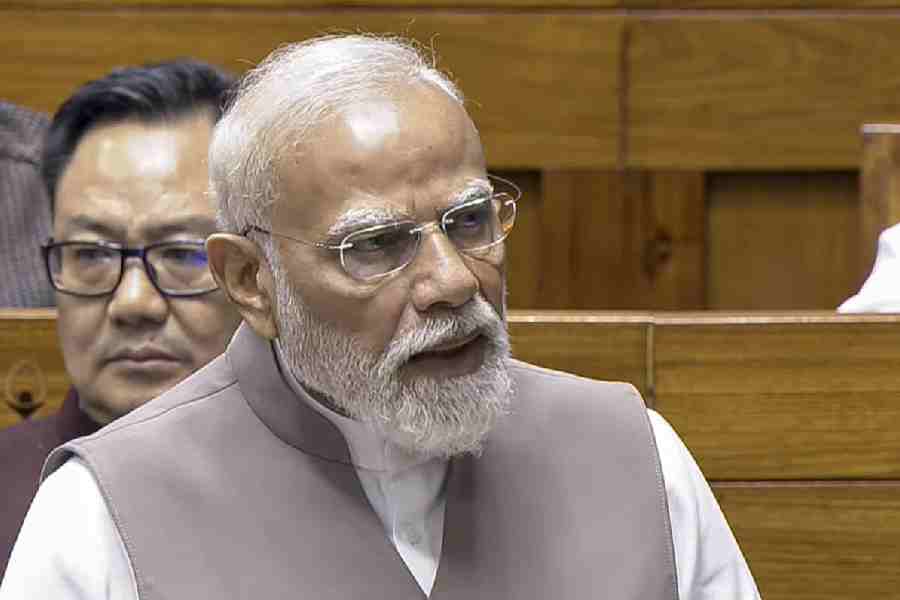
| P. Chidambaram in New Delhi on Thursday. (PTI) |
New Delhi, Aug. 20: The government today increased its buying prices of paddy and pulses to protect drought-hit farmers from resorting to distress sales.
The Cabinet Committee of Economic Affairs increased the minimum support prices of paddy and pulses by Rs 100 and up to Rs 300 per quintal, respectively.
“We are offering an attractive price. It (drought) is an evolving situation. The government will respond. The minimum support brings relief to farmers,” home minister P. Chidambaram told reporters after a meeting of the cabinet committee on economic affairs.
The support price for common paddy will now stand at Rs 950 a quintal, while the A-grade variety will get Rs 980 per quintal — an increase of Rs 100 a quintal for both.
The support price of toor dal has been increased to Rs 2,300 from Rs 2,000, moong to Rs 2,760 from Rs 2,520 and sesame to Rs 2,850 from Rs 2,750 per quintal.
Chidambaram said the government had enough stocks of rice and wheat. “The government has rice, wheat stocks for 30 months.”
The Centre has procured a record 32.6 million tonnes of rice and 25.3 million tonnes of wheat during the current marketing season.
The huge procurement is expected to provide some relief to the Centre in its efforts to mitigate the impact of drought or drought-like situation in 209 districts across the country. The country had 32.9 million tonnes of wheat as on July 1 this year against the buffer food security norm of 17.1 million tonnes. Similarly, 19.6 million tonnes of rice are in reserve against a buffer requirement of 9.8 million tonnes.
The rate of inflation stayed in negative territory at (-)1.53 per cent during the week ended August 10 even as food prices continued to rise amid an erratic and deficient monsoon.
Borrowing relief
The cabinet today allowed states to borrow up to 4 per cent of their respective gross state domestic product during 2009-10.
The ministry of finance has been fixing annual borrowing ceilings for states in line with fiscal deficit targets recommended by Twelfth Finance Commissions.