The Centre has held out hope that oil and gas prices would come down in the coming months, with global energy markets stabilising despite mounting geopolitical risks.
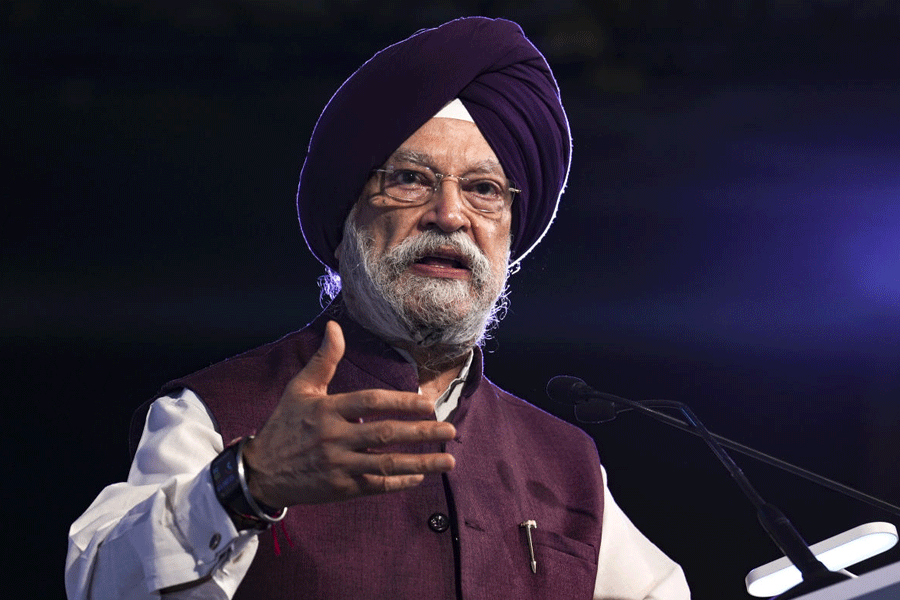
“Oil prices cannot remain at their current height for a very long time,” oil minister Hardeep Singh Puri said on Monday, even as government-owned fuel retailers have raised retail fuel prices four times since mid-May and domestic LPG twice.
Petrol prices have shot up by about 7.8 per cent and diesel by 8.6 per cent since the latest round of revisions began, ending a period during which PSU oil marketing companies had refrained from raising prices amid state elections.
The increases come as global crude oil prices have surged roughly 40 per cent since fighting intensified in February, pushing benchmark prices close to $100 a barrel. The conflict has severely disrupted shipping through the Strait of Hormuz, a critical maritime chokepoint that previously carried around one-fifth of the world’s oil and gas supplies.
The minister, however, cautioned that the situation could become ‘worrying’ if the conflict spread beyond its current location. He said India had built up strategic oil and gas reserves sufficient to meet domestic demand for between 76 and 80 days, providing a buffer against further supply shocks.
India, the world’s third-largest oil importer, has been particularly exposed to the disruption. Before the outbreak of hostilities, more than 40 per cent of the country’s crude oil imports and about 90 per cent of its liquefied petroleum gas (LPG) imports used for household cooking passed through the Strait of Hormuz.
Puri expressed confidence that suppliers from the western hemisphere, including the US and Canada, will make up for the shortages in shipments from West Asia.
While policymakers remain hopeful that alternative supplies and easing tensions will stabilise markets, analysts warn that any further escalation in the Gulf could intensify inflationary pressures in India.