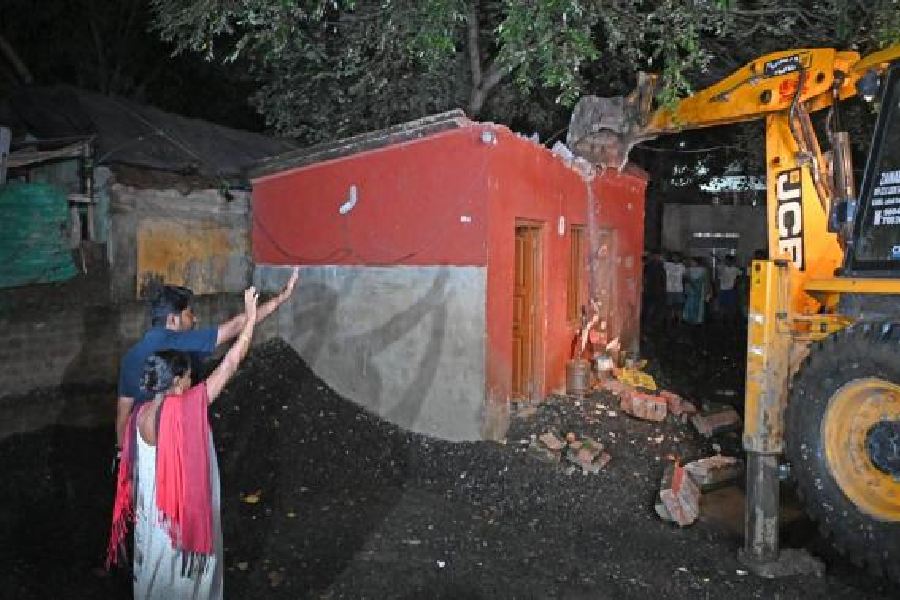
Two earthmovers rolled in past midnight and smashed 35 stalls that allegedly encroached on railway land outside Jadavpur station.
Protesters tried to form a human chain between the demolition squad and their targets, but were beaten back by a large contingent of police that turned a bustling pocket of Calcutta into a war zone, pierced with cries for help.
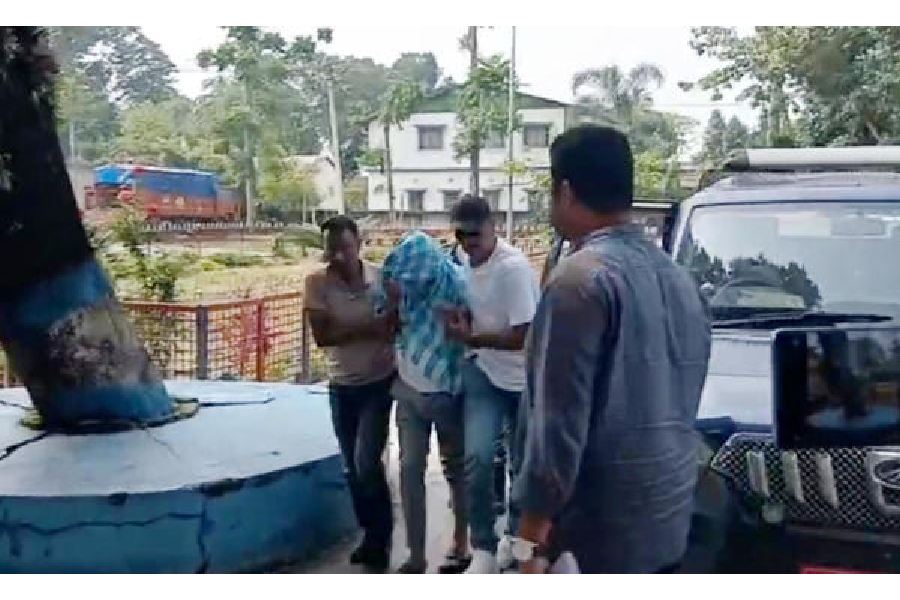
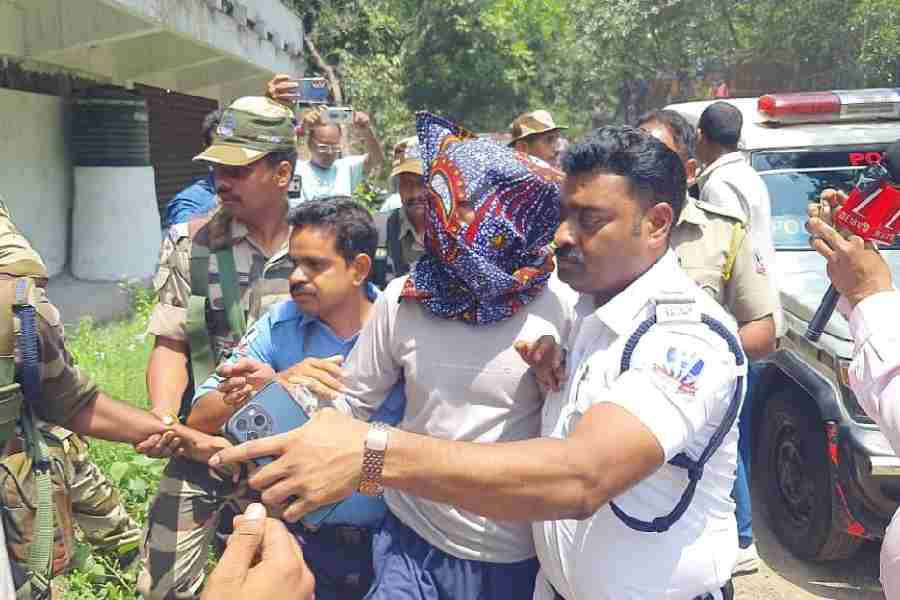
Several people suffered blows that left them with bleeding heads or hands. Five protesters were arrested, among them CPM leaders Sujan Chakraborty and Srijan Bhattacharya.
A senior railway official said none of the businesses paid any rent to the railways although they made “a lot of money”. The shops, which sold construction materials, hardware, repaired old tyres, and food, had been there since the 1980s.
“They paid rent for a year and stopped paying anything after that,” the railway official said.
The “bulldozer drive” raised questions yet again about whether due process had been followed. Many Calcuttans wrote on social media that if the new government was really serious about freeing up the city’s public spaces, it should not target some while leaving many others out of the ambit of punitive action.
The eviction was “unlawful” and violated a Calcutta High Court order that had stayed such action without providing alternative space, said a lawyer who filed a petition on Monday on behalf of the affected traders.
“Even those accused of illegally occupying public space should be served with a notice, given the opportunity for a hearing, and allowed to raise objections before they are evicted,” an elderly Jadavpur resident said.
The traders alleged that the railways had reneged on a promise of a three-week window to vacate the space.
Mintu Dasgupta, who lost his stall, said the traders had thwarted a previous attempt to pull down the stalls on June 2. The railway officials are then said to have promised three weeks’ time.
“How do you deal with a government authority that does not keep its word? They promised us three weeks but came back to demolish our shops in less than a week,” said Narayan Prasad Kanu, whose stall was smashed. “Many of us had material worth lakhs here. We don’t know whether or how we’ll be allowed to take them away.”
The build-up to the operation started around Sunday midnight, when a large team of police, central forces and Railway Protection Force personnel arrived. Then came the two payloaders. Earlier on Sunday evening, more than a dozen steel barricades had been placed along the plot’s perimeter, separating it from the road.
A narrow strip leading to the railway station that was still open was barricaded with steel poles that allowed pedestrians to pass through but not vehicles.
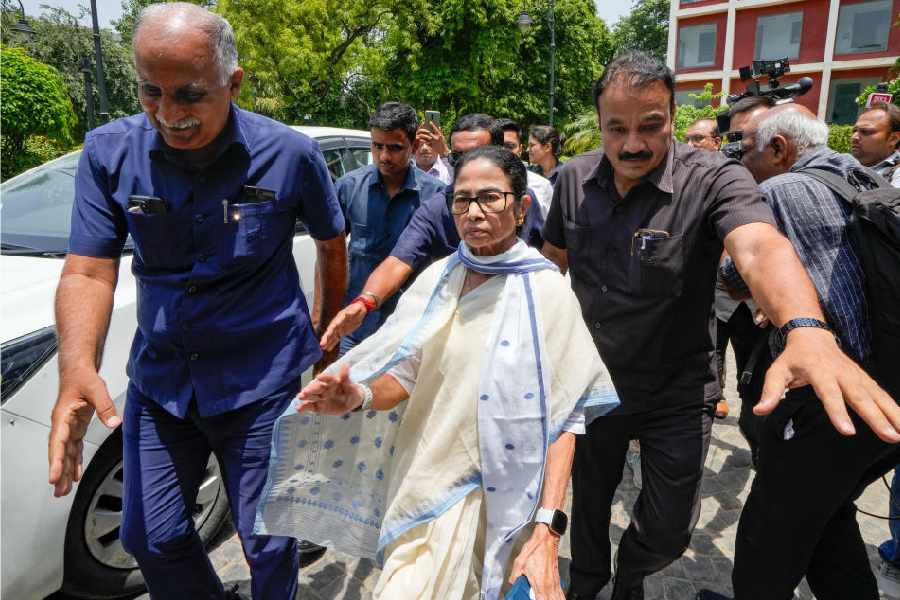
As word of the impending eviction spread, many arrived and tried to resist. Videos on social media showed CPM leader Chakraborty in a scuffle with police. Some Congress supporters also arrived.
After smashing the stalls, the demolition squad headed to a colony of over 20 settlers. The residents, who said they had been living there for decades, pleaded with the authorities to give them some time.
The residents said they should be served with a notice first. “We are not saying we will not move. We need more time to find a new place to live,” said Pintu Ghorai, a resident of the colony who works as a delivery partner with e-commerce companies.
The railways said late last month they served written notices on nearly 300 stalls at Jadavpur station, asking the owners to leave within 10 days.
A railway official said the traders and residents had no claim on the land. “We want the land for projects. There are plans to have a new booking counter and a footbridge. We want to increase the passenger circulation area at Jadavpur.”
Between 1.30am and 2am, 13 injured protesters were taken to KPC Medical College and Hospital. “They were administered first aid and discharged. One of them needed head stitches,” an official said.
The five arrested protesters were produced in an Alipore court on Monday and granted bail.
The stalls also employed many helpers. One of them, Nilesh Kumar, from Bihar’s Motihari district, said he and others like him might have to return to their native place now.
“We will have to look for something new. I will go back to Motihari first,” he said.