India and New Zealand on Monday signed a free trade agreement that will cut tariffs on products such as wine, apples and sheep meat for Indian consumers, while expanding market access for Indian exporters of textiles, garments and leather goods.
The FTA, India’s seventh in the last five years, will also deliver gains for Indian students and skilled professionals as NZ has created new visa pathways for up to 5,000 professionals, potentially helping India in IT, healthcare, education support, financial services and telecom-linked services.
“This is a once-in-a-generation agreement that gives New Zealand exporters unprecedented access to 1.4 billion people and an economy set to become the third-largest in the world,” New Zealand Prime Minister Christopher Luxon said in a post on X earlier in the day.
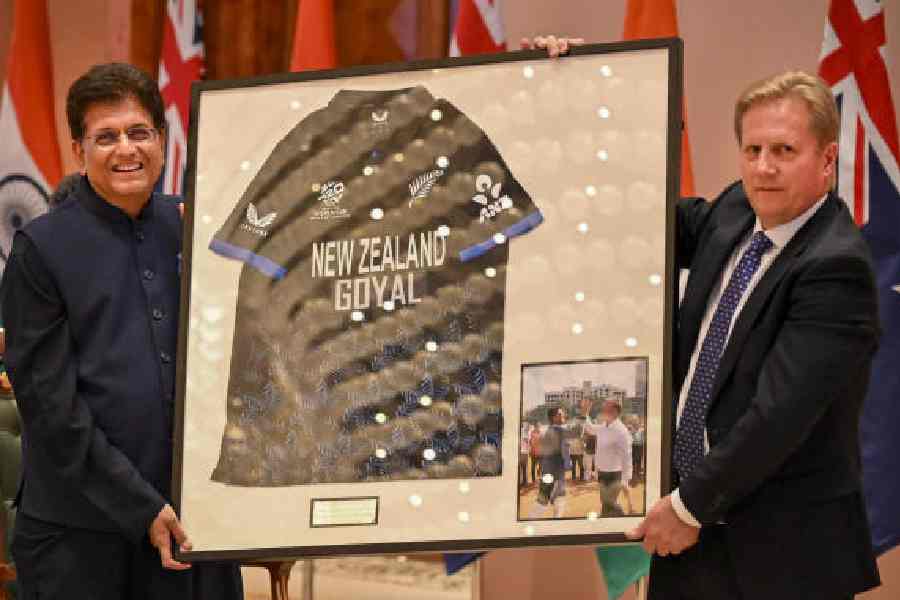
The deal was signed by commerce and industry minister Piyush Goyal and his counterpart, Todd McClay. “We meet at a time when the world economy is being recast. The lines are being redrawn,” Goyal said at the signing. “In this changing world, India and New Zealand have chosen each other.”
Later in the evening, Prime Minister Narendra Modi described the FTA as a landmark moment in the India-NZ partnership. “The investment commitment of $20 billion by New Zealand will further strengthen our cooperation in agriculture, manufacturing, innovation and technology, paving the way for a more prosperous and dynamic future for both countries,” he said in a post on X.
The agreement is expected to be operational in the next six months, while it gets a nod from the Indian cabinet and approval from NZ Parliament. Luxon has received bipartisan support on the deal even as one of his coalition partners has opposed the FTA, in a racist slur that said deals open up a ‘butter chicken tsunami’ in NZ.
Bilateral trade between India and New Zealand remained modest at $1.5 billion in calendar year 2025, including goods and services, but carries strategic significance for both parties.
The tariff cuts on consumer items such as wine, kiwis, and apples will be phased over a period of time. In wine, tariff cuts are based on price, with more expensive wines receiving sharper relief.
According to Ajay Srivastava, founder of trade intelligence firm GTRI, India’s benefit in trade may be limited as nearly 60 per cent of New Zealand’s tariff lines are already duty-free. Gains will mainly come in products that still face duties and will now become duty-free, such as textiles, garments, leather, carpets, ceramics, engineering goods and auto components, adding that services will see higher gains due to NZ’s concession on visas.