|
| Gaining strength |
New Delhi, March 10: Indian fertiliser firm Iffco is the world’s No. 1 seller of the nutrient, despatching an all-time global high of 10.4 million tonnes to farmers in 2008-09.
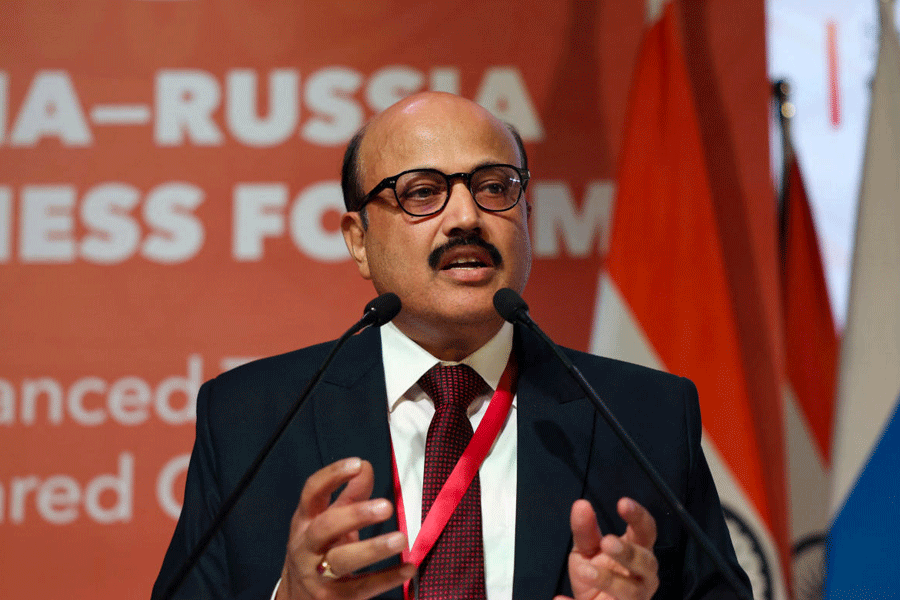
“We have become the world’s largest marketer of fertiliser. The slowdown has not affected the farm sector and consumption of fertiliser is actually growing,” U.S. Awasthi, managing director of Iffco told The Telegraph.
Iffco has beaten UK’s AstraZeneca, Norway’s Yara International and Russia’s Uralkali, who have sold less than 10 million tonnes.
On the back of the fertiliser sales, Iffco’s turnover has risen 50 per cent to Rs 15,000 crore.
In addition to fertilisers, Iffco is in the insurance business through Iffco-Tokyo, which has a turnover of Rs 1,400 crore.
“The whole aim is to have arms which focus on our core area ... rural India,” said Awasthi.
Iffco also has a Dubai-based trading arm and is into power production and SEZs.
It is currently setting up a thermal power plant of 1,000 megawatt capacity in Chhattisgarh near the coal mine and an agri-processing SEZ in Andhra Pradesh, while holding a substantial stake in commodities exchange NCDEX.
Besides, there are joint ventures in Egypt, Oman, Senegal and Jordan. In Indo Egyptian Fertiliser, Iffco holds 76 per cent; in Oman India Fertiliser Company, 25 per cent; in Industries Chimiques du Senegal, 20 per cent; and in Jordan India Fertiliser Industries, 52 per cent.
Iffco has also explored the possibility of a rural bank and a nation-wide retail chain. The expansion has been made possible by the gains in rural India.
According to Awasthi, “The farmers’ co-operative (Iffco) has been able to beat the slump in the economy as the slowdown has not so far hit the rural peasants, who have not been much driven by the consumption driven economy of urban India.”
However, greater fertiliser consumption has not increased productivity. Awasthi suggested a greater emphasis on bio-fertilisers.
He favoured subsidies directly to farmers rather than being routed to them via the fertiliser firms.
According to studies, farmers get less than 40 per cent of the subsidy.
Fertiliser subsidy has risen from Rs 36,000 crore in 2007-08 to Rs 1.02 lakh crore this fiscal and is likely to go up further by another Rs 12,000 crore by the end of this month, the government told Parliament.
“Farm growth is actually plateauing out. What we need is a new green revolution which works on increasing soil productivity. If we can do that you could see rural India booming,” said Awasthi.