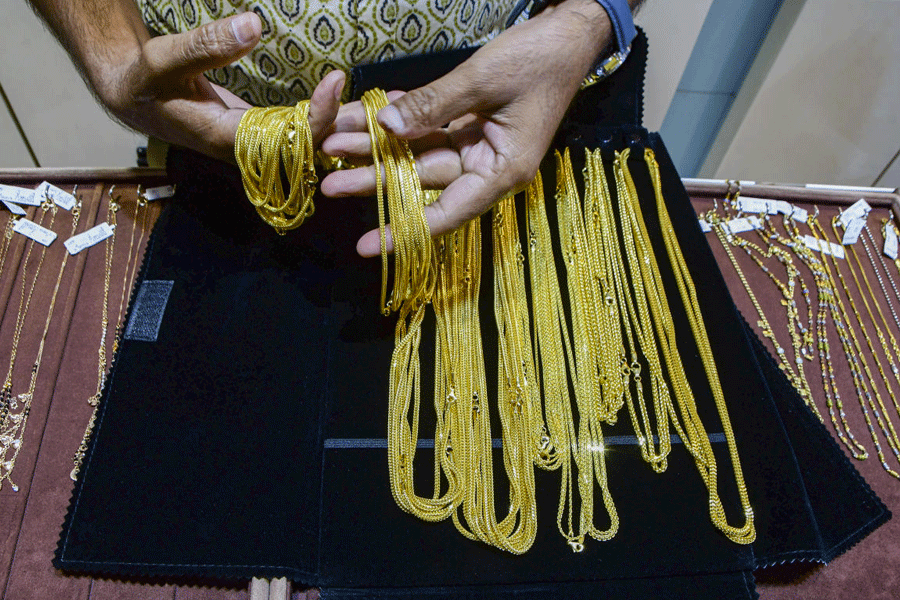
India on Wednesday raised import duty on gold and silver to 15 per cent from 6 per cent, citing pressure on foreign exchange reserves due to the ongoing West Asia crisis, even as the gems and jewellery industry warned that the move could fuel smuggling, inflate prices and hurt demand.
The government also increased duty on platinum from 6.4 per cent to 15.4 per cent, with consequential changes made to gold and silver dore, coins and findings. The revised rates came into effect on May 13.
The duty hike follows Prime Minister Narendra Modi’s recent call for austerity measures, including curbs on gold purchases and avoidable foreign exchange expenditure, amid rising global uncertainties linked to the West Asia conflict.
Govt cites external stress, forex pressure
Government sources described the move as a “preventive measure” amid “extraordinary external conditions” and said it reflects prudent economic management aimed at reducing non-essential imports.
“During periods of external stress, measured moderation of discretionary imports may contribute significantly to overall macro-economic stability and prudent external-sector management,” a source said.
Another source said, “Rather than resorting to quantitative restrictions or more severe import-management tools, the approach relies on moderate price-based disincentives that preserve market flexibility and consumer choice.”
Sources said the increase in customs duty on precious metals is intended to moderate avoidable import demand and ease pressure on the external account. The move was described as a “calibrated and proportionate intervention” aimed at encouraging moderation in non-essential imports while prioritising foreign exchange for essential goods such as crude oil, fertilisers, industrial raw materials and capital goods.
The government’s concern comes amid rising import costs triggered by the West Asia conflict and disruption around the Strait of Hormuz. Brent crude prices have risen from around USD 73 per barrel before the war began on February 28 to nearly USD 107 per barrel, after touching a four-year high of USD 126 per barrel on April 30.
India imports nearly 87 per cent of its crude oil requirements, with 46 per cent of supplies passing through or near the Strait of Hormuz. More than 90 per cent of India’s LPG imports also come via the Gulf region.
Chief Economic Advisor V Anantha Nageswaran on Tuesday termed the ongoing West Asia crisis a “live balance of payments stress test”, with implications for inflation, the current account deficit and the exchange rate. The Indian rupee had hit a record low of 95.63 against the US dollar on Tuesday.
Gold prices surge as imports hit record high
India’s gold imports surged over 24 per cent to a record USD 71.98 billion in 2025-26, although import volumes fell 4.76 per cent to 721.03 tonnes.
Gold prices have also climbed sharply, rising from USD 76,617.48 per kg in FY25 to USD 99,825.38 per kg in FY26.
In the national capital, gold prices rose by Rs 1,500 to Rs 1,56,800 per 10 grams on Tuesday, while silver prices jumped Rs 12,000 to Rs 2,77,000 per kg.
## Industry fears rise in grey market, weaker demand
Industry bodies and jewellers expressed concern that the steep increase in import duty could encourage illegal trade and hurt the organised jewellery sector.
All India Gems and Jewellery Council (GJC) chairman Rajesh Rokde said the revised structure would sharply raise bullion prices.
“What the industry fears is that this will give rise to the grey market... smuggling is likely to grow, setting up a parallel economy in the country,” Rokde said.
Explaining the impact, he said the revised import duty structure, including Customs Duty, GST and Agricultural Cess, would increase gold prices by around Rs 27,000 per 10 grams from the earlier Rs 13,500 per 10 grams.
Rokde added that the GJC had called a meeting of industry associations in Mumbai to discuss the government’s policy decisions and decide on further action.
Senco Gold and Diamonds MD and CEO Suvankar Sen said the higher duty regime may continue as long as geopolitical tensions persist.
“So maybe for around one year it shall stay at these levels. The volumes might get impacted by 10-15 per cent, but value wise it will remain at a higher level. Consumers will buy lighter-weight jewellery,” he said.
GJEPC urges govt dialogue, policy support
The Gem & Jewellery Export Promotion Council (GJEPC) said higher import duties do not necessarily reduce imports and instead make gold more expensive while increasing pressure on exporters and MSMEs.
“Hiking import duties rarely curbs gold imports, it merely inflates prices. Despite gold prices doubling recently, imports have not declined proportionally,” the council said.
The industry body warned that higher duties could fuel smuggling and increase export costs, noting that exporters are now required to furnish bank guarantees of Rs 28-30 lakh per kg of duty-free gold sourced from nominated agencies.
“The most severe impact would be on MSME manufacturers, who account for 80 per cent of GJEPC's membership and are facing a ‘critical liquidity crunch’,” it said.
GJEPC said it had written to Prime Minister Modi proposing measures to reduce imports sustainably, including promoting 18-karat and 14-karat jewellery, encouraging old-gold exchange programmes, reviving the Gold Monetisation Scheme and discouraging investment demand for bars, billets and coins.
“GJEPC urges the government to engage in dialogue for sustainable solutions that align fiscal goals with export growth,” it added.
Jewellery stocks extend losses
Jewellery stocks remained under pressure for the third straight session following the duty hike announcement and concerns over weaker consumer demand.
Shares of Sky Gold and Diamonds plunged 11.11 per cent on the BSE, while Kalyan Jewellers fell 6 per cent. Senco Gold declined 4.30 per cent, PC Jeweller slipped 3.65 per cent, Tribhovandas Bhimji Zaveri dropped 1.74 per cent and Titan Company fell 1.64 per cent.
Prime Minister Modi, while addressing a rally in Hyderabad on Sunday, had urged citizens to reduce petrol and diesel consumption, postpone gold purchases and avoid unnecessary foreign travel to help conserve foreign exchange reserves during the ongoing crisis.