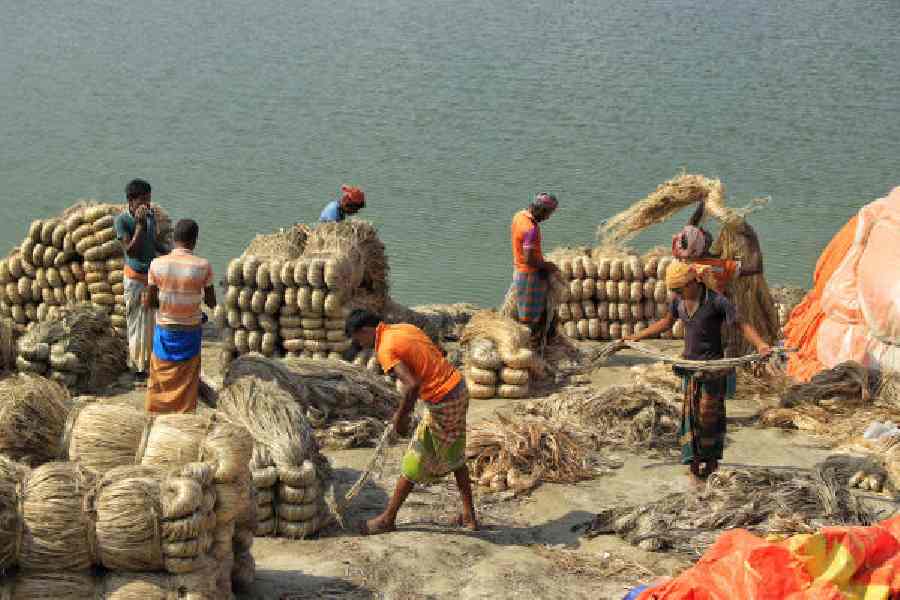
The Union textile ministry has enforced strict jute stock limits after prices reached a high of ₹13,500 per quintal on January 18, a 2.38 times jump from the minimum support price (MSP) of ₹5,650 per quintal approved by the government for the jute season 2025-26.
The move from the Centre comes amid concerns over raw jute availability and speculative practices in the trade of raw jute.
Under the new limits imposed by the office of the jute commissioner via a January 19 notification, the stock limits are 1200 quintals. 25 quintals and 5 quintals for raw jute balers with on premises bailing press, other stockists and unregistered raw jute traders respectively. For jute mills, the limit has been set at a maximum of 45 days’ consumption as per current production rates.
Union textiles minister Giriraj Singh has taken stock of the market situation, and the government has indicated its intent that it will review the stock limits from time to time to maintain market stability.
“The volatility in the prices and speculative increases has the potential to threaten the jute industry and has the potential for disruption in the production and employment in the industry. These measures are intended to stabilise the jute supply, prevent market manipulation and support interest of farmers, manufacturers and consumers nationwide,” the textiles ministry said.
Industry sources told The Telegraph on Wednesday that raw jute prices have eased to around ₹12,600 per quintal since the January 18 high, but volatility in prices is expected to persist, with potential for prices to harden again after clarity emerges on stock limits and enforcement
In their representation to the textile ministry, jute balers and traders said that the increased consumption at mills, along with reduced interest for farmers after prices fell below MSP to ₹4,200 last season, has contributed to the price rise
Trade sources claimed cash-rich jute mills, with stronger balance sheets and easier access to credit, have been aggressively cornering available fibre to secure future production, intensifying price volatility, while smaller and financially stressed mills are unable to match and are largely sidelined.
Mills said that around 25-30 lakhs of the raw jute crop of 2025-26 is still available with upcountry traders and middlemen.