Book: The Girl from Fergana: Secrets of My Mother's Chinese Tea Chest
Author: Jonathan Gill Harris
Published by: Aleph
Price: Rs 899
Charting the criss-crossed lines of fate and intention in the migratory history of his family tree, piecing it through the prism of fragments of paper that are palimpests of the past, and placing it in the larger context of global, pluralistic history, Jonathan Gil Harris chronicles the story of his mother, Stella Harris, in The Girl from Fergana. He intertwines a poignant portrait of hers with a sweeping narrative of 2,500 years of Jewish presence and cultural exchange along the Silk Roads — the ancient network of trade routes connecting Europe to Persia, China and India.
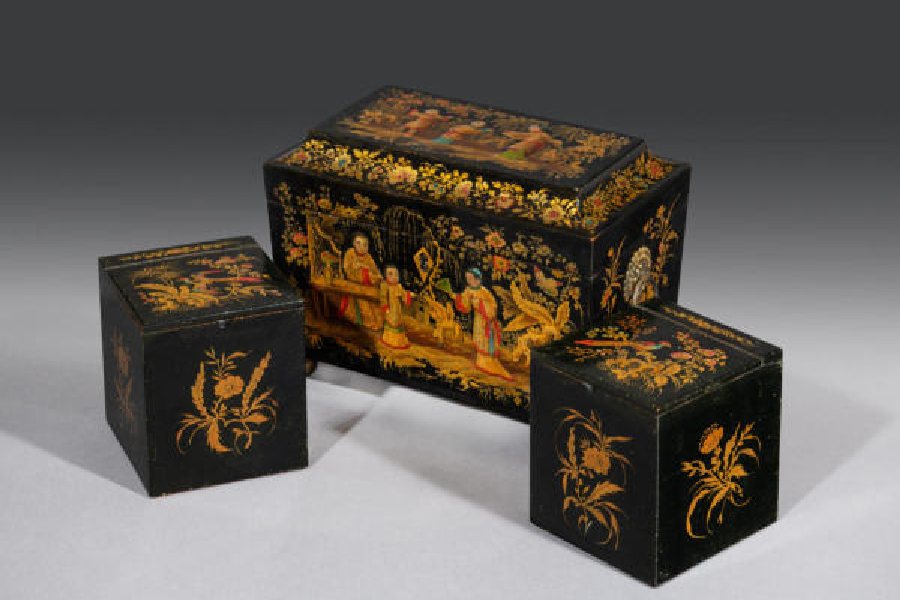
The memoir unspools material memory through a time capsule of a tea chest that reconstructs a woman’s life at a time when her memory is fading on account of Alzheimer’s: “As the layers of her memory were serially erased, her Chinese tea chest increasingly became a way for me to commune with her.” Thus, Stella remains largely silent about her past, leaving Harris to “read” the objects she left behind to understand her escape from the Nazis. A life shaped by displacement is thus revealed through the motley contents of an ornate, oriental tea chest.
In choosing to relay his mother’s story in third person, Harris distils personal history and places it in the larger context of a global one: “for individuals often without noticing carry the weight of deep history in their pockets.” The mobile, physical archive — the mysterious tea chest — houses neatly-folded reams of paper, faded photographs, scraps of correspondence, maps and identity documents, a record of the precarious nature of the woman’s citizenship. Harris covers the full arc of her journey from Uzbekistan to British India (Shimla and Delhi)
and, eventually, to South Africa and the United Kingdom, a curious blending of cultures, reflected in the warp and weft of Russian, Central Asian, and European influences.
Readers discover, in the footsteps of the seven-year-old Stella, the strife in her childhood as she flees her elegant Warsaw apartment with her family in 1939. After crossing the Bug River to escape Nazi-occupied Poland and narrowly escaping deportation to Auschwitz, she endures a series of harrowing incidents before her journey brings her to the Fergana Valley. There, among the ghosts of once-thriving trade routes where cultures intertwined and coexisted, from China to Persia to India, the story of Stella becomes part of a much older tale.
The book is a visually enriching montage as it paints the contrast between the world of war-torn Europe with the vibrant, ancient and dusty landscape of the Fergana Valley. The writer gently unveils Stella’s personal trauma as he records his mother’s loss of memory. “As her memory crumbled, her younger selves started to make themselves heard. She had begun to forget English — the last of many languages she had learned — and would often chatter with me in Polish of her childhood and the Hebrew of her teens...”
Juxtaposed with personal history is the parallel past, that of a syncretic heritage; this is where Harris’s rigour as an intellectual and researcher comes to the fore. Here, the themes of exile merge with a larger historical context in highlighting that Fergana was once a melting pot of cultures — Jewish, Muslim, Chinese, and Russian — long before modern borders tightened and ethnonationalism marred human connections.
This book is at once a poignant family memoir, a rediscovery of the author’s rich and complex Jewish heritage as well as an elegy to the vanished cosmopolitan spirit of the Silk Roads. The Girl from Fergana is more than a family history; it is a profound meditation on how we carry the maps of our ancestors within us even when the borders they crossed no longer exist.