Book: RAILSONG: A NOVEL
Author: Rahul Bhattacharya
Published by: Bloomsbury
Price: Rs 799
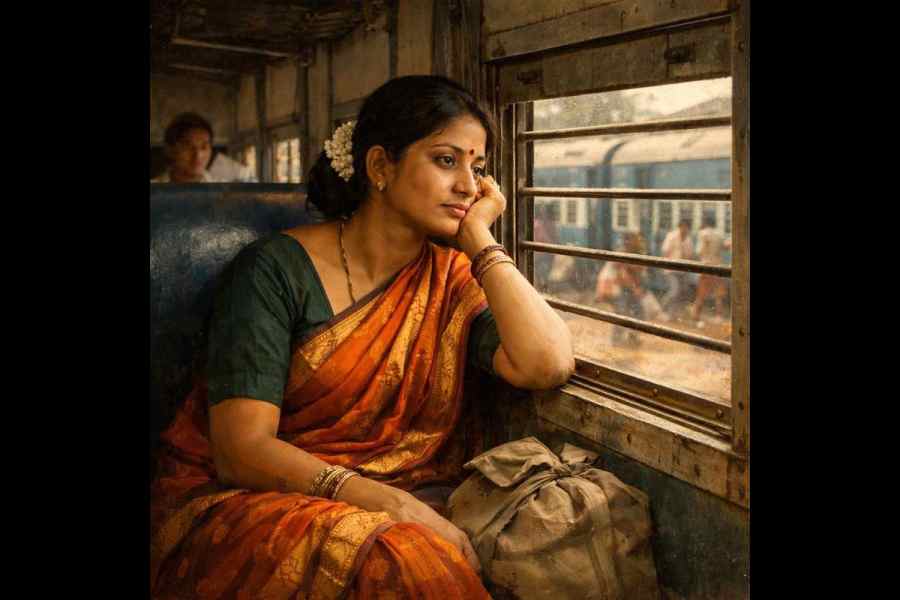
Ever so often there comes an Indian novel that brings about a character who represents a microcosm of the nation. Rahul Bhattacharya’s latest novel captures the bureaucracy of the Indian railways between the 1960s and the 1990s revealing, in turn, the significant changes that swept the nation with lines of division becoming distinct through its inimitable, common woman-heroine, Charulata Chitol.
A middle child, Charu was born to a Bihari Kayastha mother, Jigyasa, and a Bengali Brahmin father, Animesh Kumar Chitol. She is sister to Ananda and Dhrubo. Her father, a Chattopadhyay, was firm in his humanist values and gave up his caste identity for a caste ambiguous title, Chitol. He worked as a foreman in the railway township of Bhombalpur.
Charu lost her mother at an early age and was annoyed by the difference in treatment between her brothers and her in the running of the household. Her father, who harboured modern thought and didn’t believe in superstitious practices, also accepted her role as a growing girl child who is often coerced
into chores by her grandmother. At 16, she fled to Mumbai in search of a new life. She worked as a “smart girl”in a shoe store before joining the railways as a Grade 3 clerk taking on various roles within the span of a few years.
The railways, in their inception, were considered a sign of modernity. In a long monologue, a character describes it as a human network. It connects the entire nation and rightly so for India comes to a standstill during the workers’ strike in 1974. Bhattacharya’s suave prose captures the lives of the sweepers, clerks, inspectors, and officers as well as the corruption at every level in the system. The author’s research becomes significant plot points in Charu’s professional life, making the information interesting. Further, the class, caste, religious and gender divisions are mentioned subtly through the people that Charu encounters.
In this saga, Bhattacharya creates a past that evokes nostalgia not only through the nuances of the time but also through the sublime mention of the census — a crucial act that bestowed importance to the lowermost strata of people. The novel begins with Charu’s desire to count people from the train, and ends with her volunteering as an enumerator.
Unlike many classical and modern-day authors who educate and empower their women only for them to succumb to a male figure in love/marriage or to death, Bhattacharya creates a character who is empowered through her street experiences and retains her independence and agency even after marriage to a Gujarati Baniya. She isn’t afraid to dissociate herself from the fervent Hindu-nationalist politics of her parents-in-law that manifests in the reclaiming of Ayodhya and the demolition of the Babri Masjid.
Charulata Chitol jumps into action to secure her financial freedom and chases the thrill of journeying in trains. She pushes the boundaries of what’s imaginably accessible to a working-class woman in those decades but isn’t reckless with her life. She listens to her desire for newness and lives by it no matter who she leaves behind. Her life is not coloured by remorse; rather it’s measured by her loyalty to her principles and values. She is a woman everyone should have around, be it in reality or fiction.
Bhattacharya’s unforgettable character, a woman
in a man’s world, inspires
awe and challenges readers to put women at the centre while examining the various facets of history.