Patna, Feb. 23: The economic survey for the financial year 2010-11 which was tabled in the Assembly today brings both good and bad news for the state.
The good news is that Bihar’s per capita income in 2009-10 stood at Rs 17,590 —more than double than what it was in 2004-05. When the NDA came to Bihar that year, the figure was Rs 8,528.
Now for the bad news: Bihar is still at rock bottom and far less than the national per capita average of around Rs 40,000.
The second bit of optimism is that Bihar will maintain a growth rate of over 10 per cent. But what is worrying is that the figure has slipped owing to agriculture taking a hit because of the drought. Also, in spite of the claims of over 10 per cent growth, Bihar still has about 1.4 crore families living below the poverty line.
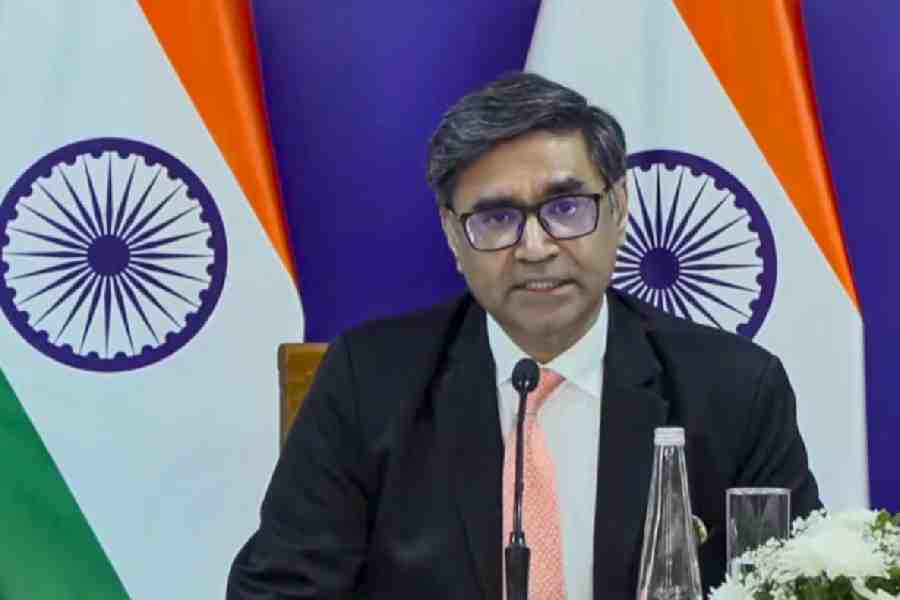
Deputy chief minister Sushil Kumar Modi, who holds the finance portfolio, however, appeared undeterred by the contradictions.
“The figures show that there have been substantial diversions towards the secondary and tertiary sectors. The state is no longer dependent on agriculture as it used to be when we took over when agriculture contributed as high as 26 per cent. Today it just contributes 17 per cent. In any booming economy, the main thrust is on secondary and tertiary sectors. In the US, the dependence on agriculture is just 2 per cent,” Modi said after tabling the economic survey — a pre-budget exercise started by the NDA government five years ago.
He declared that despite a slight slowdown, the Gross State Domestic Product (GSDP) growth was still higher than the national average. Trade, hotel along with construction, contributes 41 per cent of the GSDP, which stood at Rs 1,68,603 crore in 2009-10 against just Rs 75,608 in 2004-05.
But it was in areas like transport, telecommunications and industry that Modi had strong figures to show in comparison with the RJD regime.
The number of registered vehicles rose from 80,000 in 2005-06 to 3.1 lakh in 2009. The revenue collection in road tax was just Rs 133 crore in 2002-03 and has increased to Rs 373 crore. In telecommunications, Bihar has registered a 10-fold increase in comparison to 2005-06 when the total number of connections was just 42 lakh. In 2010-11 it crossed 414 lakh connections.
In the industry sector, where the government has been accused to have failed, Modi begged to differ.
The State Investment Promotion Board (SIPB), he said, had cleared 398 projects with a proposed investment of Rs 1.81 lakh crore. “Around 45 of these units are in production today, 104 are at an advanced stage and 249 of them are at different stages of implementation. A sum of Rs 1,102 crore has already been invested in the state,” Modi said.
He stressed that key fiscal indicators show a marked improvement in the fiscal position during the last five years.