|
 |
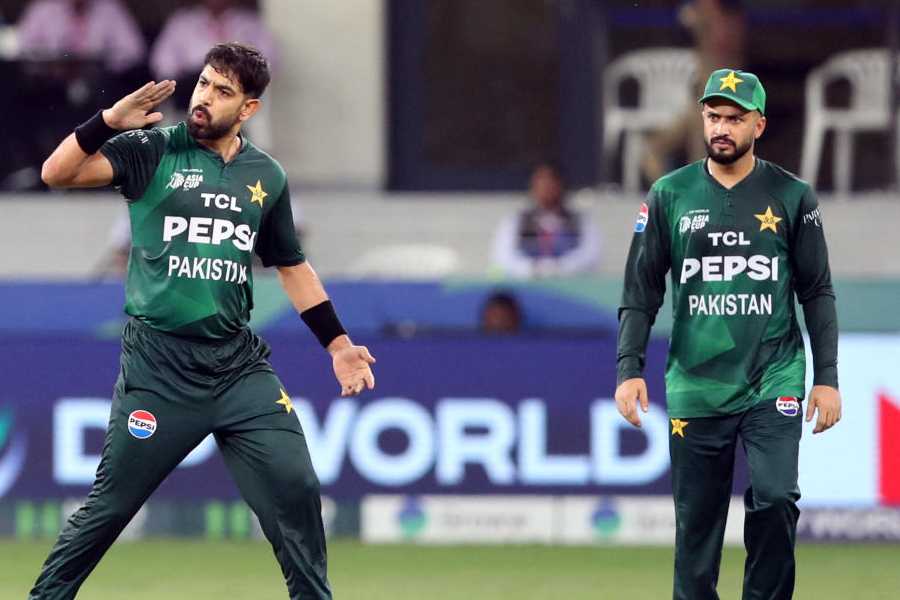
| Lalu Prasad and Rabri Devi at RJD’s Lathi Rally at Gandhi Maidan in the summer of 2003 and (above) workers slog to make the ground fit for JD(U)’s Adhikar Rally on November 4. Telegraph pictures |
Lalu Prasad organised rallies at the Gandhi Maidan to showcase his strength every now and then. In the 15-year RJD regime, he hosted 13 such huge congregations.
Lathi me tel pilawan (soaking cane in oil) rally on April 30, 2003 in the run-up to the 2004 Lok Sabha elections with the call to overthrow the Vajpayee government then at the Centre was the last of his major rallies. Lalu, the RJD chief, had announced in the rally: “Our lathi will smash trishul (trident).”
To an extent, the rally despite its rustic nomenclature was a big hit. The RJD won 24 Lok Sabha seats and played a major role in replacing the Vajpayee-led NDA government with the Manmohan Singh-led UPA in 2004.
But that was Lalu’s last political show in his typical earthy style as the RJD lost to the Nitish Kumar-led NDA in 2005. Incidentally, the BJP activists had shunned the symbolism of trishul when they forged company with Nitish’s JD(U).
While replacing the Lalu-Rabri regime, chief minister Nitish virtually decided to replace the political culture that Lalu represented. While Lalu was famous for organising rallies, Nitish virtually shunned the practice and adopted yatras (journeys) as his way to stay in touch with the masses.
For the first time after coming to power with the BJP, Nitish’s JD(U) would hold a large congregation — Adhikar Rally — on November 4. But unlike Lalu’s goalless shows of strength, Nitish’s rally ostensibly has well-defined objective — securing special category status to Bihar.
Some political observers have described Nitish’s Adhikar Rally also as an exercise to measure his strength amid the talks of the 16-year-old JD(U)-BJP alliance drifting apart, but Nitish has never talked about proving his strength through the rally. Fanning out in the state hinterlands to solicit support for the rally, the chief minister has stuck to the book: “The rally is aimed at showing how it manifested the popular wish to secure the special category status for Bihar.”
Nitish faced violent protests from the contractual teachers clamouring for the regularisation of their services. He, at times, drew the people’s attention as to how his political opponent (Lalu) was plotting to add a bad name to the rally through the protests. But by and large, he stuck to the message that he wished to drive home through the rally.
He largely stayed away from putting up in government accommodations while garnering support for the rally and kept away his bureaucratic set-up from the rally.
Nitish, apparently, has taken care of the concern of the people and the governing system in the context of the rally. He changed its date from November 6 (Tuesday) to November 4 (Sunday). It ensured school and college students were not affected because of the rally and the officials, teachers and professionals could turn up at the event without any hindrance.
His administration appears to be cautious to ensure public property was not misused and laws of the land were followed. For instance, the district administration was busy on Wednesday removing the hoardings put up without paying the required revenue to the Patna Municipal Corporation. The police have lodged FIR with the incarcerated party “don” Munna Shukla for making a ransom call to one Sant Lal Yadav on the pretext of the rally.
Whether rally sets an example in discipline would be known only on Sunday, but there are visible instances of Nitish resorting to caution to ensure that his Adhikar Rally is not equated with anything that Lalu’s rallies were identified with.
When it came to rallies, Lalu had a tendency to make it free for all. There used to be reports of the party activists seizing buses and other vehicles of the transporters at will before Lalu’s rallies. His rallies, usually, sent shivers down the spine of the Patna residents with lathi-wielding RJD cadres patrolling the streets all around.
Nitish’s Adhikar Rally is devoid of such intimidating scenes and also the high decibel rhetoric.
Gariba Maharaila was the first rally that Lalu organised a year after becoming the chief minister in 1990. The maharaila was marked with welcome arches made up of torn and soiled saaris and banana tree trunks supporting the banner with the message “garibon ka messiah” (saviour of the poor) dotting the city. That maharaila set the tone, tenor and colour of Lalu’s successive rallies.
Read these columns on Monday to check out what Nitish’s rally would be like.