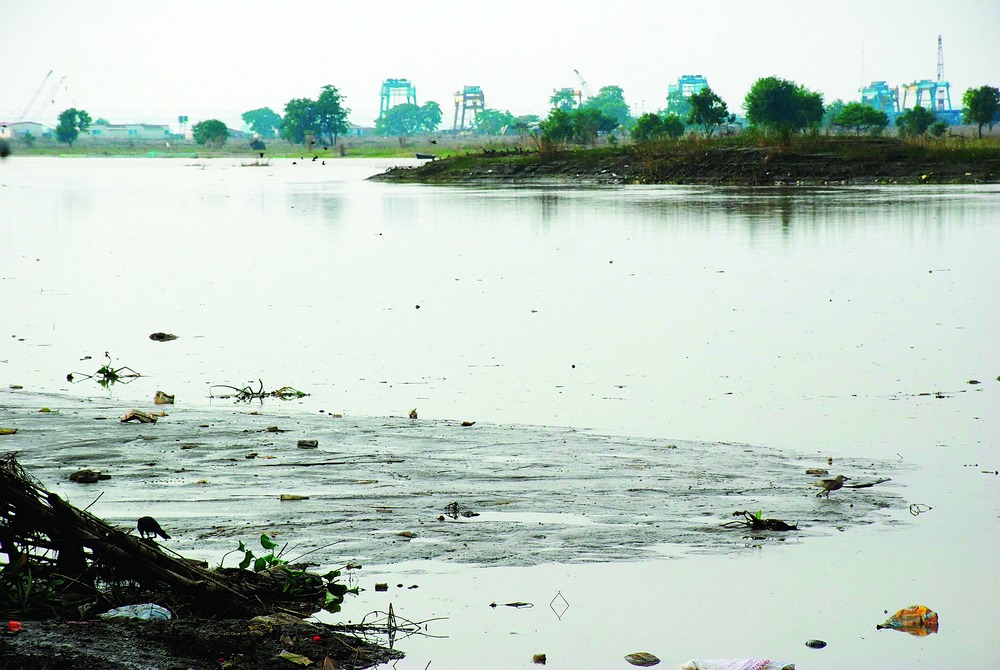

Huge quantities of loam and silt left behind by floodwater have started getting visible on the banks of the Ganga along Patna as the river is receding rapidly.
Mounds of soil and mud with grass can be seen on the banks at places like Kurji, Ashok Rajpath and Digha among others.
Agricultural experts have claimed that agro-productivity in diaras (riverine) areas may be benefitted owing to the floods.
"Farmers in the diaras are accustomed to rise in the water level in monsoon and they tweak their cropping pattern accordingly. The floods basically do two things in diaras - depositing fresh layer of sand or clay and removing pests. The high current in the floodwater at times erode the existing layer of soil and sand," said Anil Jha, an expert in the agriculture department.
He added: "If the floodwater deposits fresh layer of clay, it adds to the fertility of the soil. However, it has mostly been seen that floodwater from the Ganga and the Sone mostly deposit sand on the riverbank. But the farmers are accustomed to such situations and they dig 50-60cm below the surface using hand tools to find soil. The best benefit of the floods is in the form of removal of pests."
Twelve districts in the state, including Patna, were in the grip of floodwater from the Ganga, as Madhya Pradesh discharged a whopping 11.67 lakh cusec water in the Sone over Indrapuri barrage in the wee hours of August 20, which reached Ganga near Buxar. The floods affected around 40 lakh people till date.
Those fond of MV Ganga Vihar, popularly known as the floating restaurant, and another small ship recently brought by Bihar State Tourism Development Corporation (BSTDC) would also have to wait for a month or even longer to enjoy the joy rides.
Officials in the Bihar State Transport Development Corporation have informed that the two vessels would not be able to operate as the jetty (landing stage for docking of ships) as well as gangway (a raised platform providing a passage) at Gandhi Ghat have shifted and damaged by the high current of the floodwater.
"The high current in the river damaged the gangway connecting the jetty at Gandhi Ghat and shifted both the jetty and the gangway from their normal positions. In fact, the gangway damaged the iron railings at Gandhi Ghat by the strong current of the floodwater," said an official of BSTDC at Gandhi Ghat.
The official added that the only possibility of running the two vessels is to shift them to another ghat but it would require putting the gangway and jetty at the new location.
"Besides, it would have to be seen the location where the ships can be operated as fresh silt deposition must have happened owing to the floods," said the BTSDC official.
Ships apart, experts have claimed that the floodwater brought by the Sone were unlikely to cause any positive influence in bringing Ganga closer to Patna.
Ganga had shifted 2.5-3km away from its original course along Patna over the past couple of decades. However, the river was flowing close to the city owing to the floodwater.
Water management experts claimed that the Ganga was most likely to go back to its existing stream (2.5km away from Patna) as floodwater recedes.
Rather, the heavy volume of silt brought by the Sone may get deposited near the Ganga banks along Patna, leading to further shifting of the river away from the city or formation of sandbars like Sabbalpur Diara.