
As someone born in Patna to Bihari parents, growing up in Delhi and now living in Mumbai, I have always experienced surprised reactions about my identity. In the mid-90s walking around in an upscale Delhi shopping enclave, I overheard a shopkeeper shout at one his workers in Hindi, "What are you doing? Are you a damn Bihari?"
At a dinner more recently, someone talked about goats and sheep being tied outside houses in Bihar. Some Biharis even concealed their identities. Why did Bihar become synonymous with backwardness?
In public forums, Biharis resort to common arguments to defend Bihar because we see the misfortune of modern history as only a blip in an otherwise golden record. These arguments rely on historical references such as Aryabhatta and Asoka or Nalanda and success in UPSC.
Had Bihar been a country, it would have been Italy and France put together. Bihar's population density of 1,106 people is almost three times that of India on average. Across most socio-economic measures, it lags behind India averages. Compared to Punjab, another land-locked state of India not bordering or harbouring a metropolis, the contrast could not be starker. Bihar's per-capita is a third, literacy rate behind by 14 percentage points, tele-density half, infant mortality double and poverty rate four times.
Bihar was already lagging behind the rest of India pre-Independence. The difference got exacerbated in the 90s especially, with liberalisation, as many of the other states grew much faster in leaps and bounds while Bihar continued to languish.
Under the British government, Bihar and Orissa were the most funds-deprived regions of colonial India. The zamindari system along with the Permanent Settlement policy were implemented by the British in eastern parts of India. Under this system, the tax revenue collected from agrarian landlords was fixed regardless of the fields' output for the year. It dis-incentivised any investment to develop these lands or improve productivity. In Madras and later in Bombay provinces, on the other hand, the British colonial masters implemented the Ryotwari system, in which the tax collection was directly linked to the agricultural output.
The zamindari system in Bihar also sowed the seeds for deep-rooted caste-based hatred and politics in the many years to come. Even though post-Independence, Bihar was one of the first states to abolish the zamindari system, it never quite got implemented with full zest in the first decade.
Moreover the inequity in the Union government's funding of states - both formulaic and discretionary continued for decades. Between 1947 and 1980s, Bihar continued to lag behind most Indian states. In 1981 it was at 60% of the national per-capita but by 1999 it had slid to 35%.What in 1950s was a small difference in literacy rates between Bihar and India - widened four folds over the next five decades.
Bihar had 40 change of hands in just 70 years. On average chief ministers of Bihar had a tenure of 1.5 years. In fact many stayed in office for just a few months. Bihar has had 23 different chief ministers in its 70 years history, compared to 14 for Punjab. There are only six chief ministers of Bihar who stayed in office for more than four years: Sri Krishna Sinha, Jagannath Mishra, KB Sahay, Lalu Prasad, Rabri Devi and Nitish Kumar.
The very first chief minister of Bihar, Sri Krishna Sinha, was regarded as an architect of modern Bihar. He led the abolition of the zamindari system and worked for the upliftment of Dalits. He was born in an upper caste Bhumiar family, studied at Patna College and practised law before meeting Mahatma Gandhi in Benares. In 1921, he joined the non-cooperation movement and abandoned his law practice.
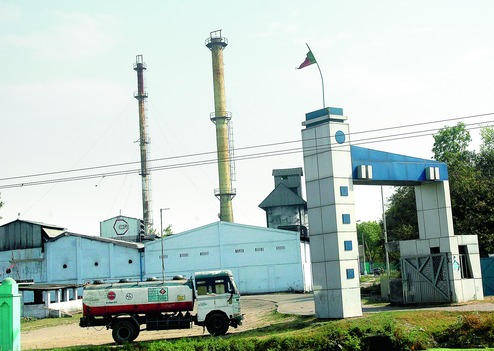
Sri Krishna Sinha (Singh) also pushed for industrialisation of the state and during his tenure, the Barauni oil refinery, HEC plant at Hatia and the Bokaro Steel Plant along with other projects were set up.
While colonial India's permanent settlement policy took away Bihar's agricultural productivity, independent India's freight equalization policy destroyed Bihar's industrial ambitions. Being near the minerals and raw materials of Bihar was no longer necessary for manufacturers as there was no cost advantage in that. President Pranab Mukherjee, who had earlier served as a finance minister of India, in a rare admission recently said that the Union government's freight equalization policy caused backwardness of Bihar.
The 70s and 80s went by without much progress for Bihar given the lack of attractiveness of setting up shop there. Jagannath Mishra had three terms during these two decades, however, most of his terms in office were short-lived and interspersed with President's rule and rival politics. Bihar just wasn't ready for the opportunity liberalisation of the 90s would give it. All this while, Bihar had the worst record for getting benefits from the Centre. It was never enough to close the gap.
Either by accident or design, Bihar's history in the 90s under the rule of Lalu Prasad is of consistent under-investment into the state's infrastructure. Crime grew without check, corruption went through the roof and Bihar transitioned from being backward to becoming dangerous.
While undivided Bihar invested heavily in the southern parts of the state, creation of Jharkhand in November 2000 to separate out the tribal areas took away the minerals base, leaving it empty handed.
Since 2000, mostly under the leadership of current chief minister Nitish Kumar, Bihar has experienced some progress on socio-economic fronts. In some years it has also achieved the distinction of being the fastest growing state though with a low base, small numbers turn into large percentages. The people of Bihar remain as optimistic as ever. Asoka did rule India from Patna after all.
The author is a former investment banker and currently works as a strategy professional in the telecom industry. The views and ideas expressed are personal.