|
 |
 |
 |
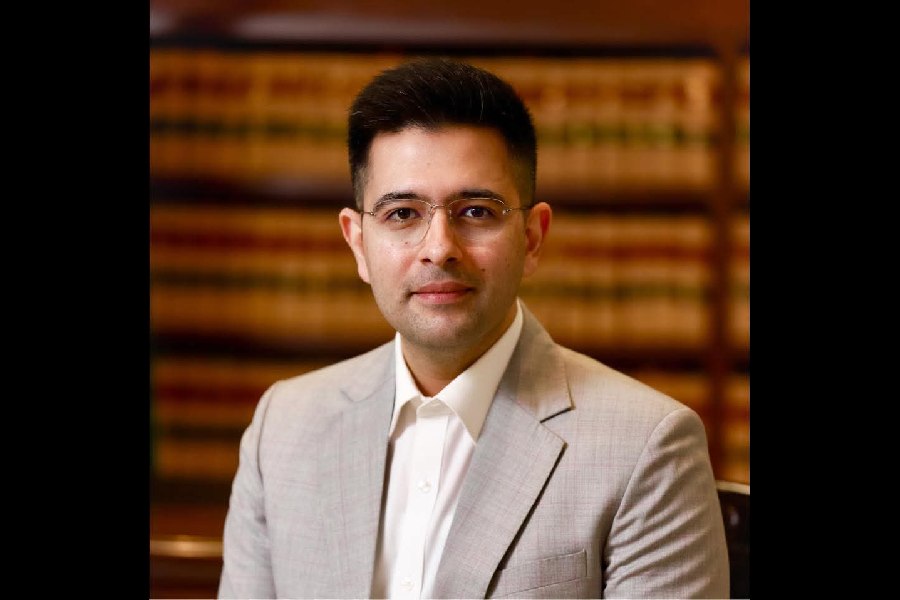
| Stooping to conquer: (From top) Krishna Kumari with her mother Dilhar Kumari; Pradyot Deb Burman; Raghavendra Rathore; and Soha Ali Khan |
It’s a clichéd designation, but Pradyot Deb Burman nonetheless calls himself a jack of all trades. The reason is obvious. He’s 30, and his CV is exhaustive. Journalist, hotelier, Congress affiliate, social worker — Deb Burman wears many plumes on his cap. “I also play the guitar, and am a dog lover. I have 65 of them at home,” he laughs.
He also happens to be a king. He ascended the throne — notionally, though — of the erstwhile princely state of Tripura in 2006. Some would call him the 41st emperor of the Manikya dynasty. “But I was brought up as a common man,” says Deb Burman, who runs the Royal Heritage Hotel in Shillong and a monthly called The Northeast Today. “I played cricket, not polo. And when it came to renovating one of our outhouses for the hotel, I chose not to approach my father for money but took a bank loan instead,” he says.
Deb Burman isn’t the only one among India’s new princely generation to have broken out of the royal mould. Over 60 years after the maharajas of India became mere titular heads, palace doors are opening to embrace more civilian ways of life. The previous royal generation — those who gave up their kingdoms and came to terms with the new life — were perhaps shell-shocked by their loss of power. The transition for some of them was difficult, and many preferred to walk elite avenues that kept them at arm’s length from the janta. But their children seem to be taking life as it comes, reinventing their identity in a modern context.
Hear it from agriculturist Krishna Kumari of the Bundela dynasty of Madhya Pradesh who now grows cash crops on a 500-acre farm near her hometown, Panna. “When I was growing up in Mumbai, my parents sent me to school in a school bus,” says the Sophia College alumna, sitting in the heirloom-strewn drawing room of the Rajmandir Palace in Panna. “Back home, we may be kings. But I would kill myself in shame if someone walked up to me in Mumbai and touched my feet, just because I’m a princess,” she laughs. “Things have changed. We can’t pretend to remain maharajas any longer.”
The three siblings of the Pataudi house, Saba and actors Saif and Soha, need no introduction. “From the very outset, I wanted to be known for what I was, and not for where I came from,” says jewellery designer Saba Ali Khan. Raghavendra Rathore, great-grandson of Sardar Singh, 34th maharaja of Jodhpur, is a fashion designer. Manvendra Singh Gohil, heir apparent to the throne of Rajpipla, Gujarat, was the first among India’s royalty to admit he’s gay, and now works as an organic farmer and a human rights activist. Ashok Vardhan Singh Deo, younger son of politician K.P. Singh Deo of Dhenkanal, wears a pilot’s wing with Kingfisher Airlines. Like any other pilot, he’s overworked. “I haven’t gone home for over a year now,” he says.
To be sure, some still ply the more elite trades of their parents. Udaipur princesses Padmaja Kumari and Bhargavi Kumari, for instance, are now on board the management team of the HRH Group of hotels, founded by their father, Arvind Singh Mewar. Padmaja Kumari studied international relations and worked in the hospitality industry in New York for nearly three years. “Hospitality encompasses multiple industries. We constantly have to think on our feet. What is a day like? I really can’t say, because it’s never the same.”
Cultural entrepreneurship is still a favourite occupation with many nobles, following in the footsteps of designer, revivalist and hotelier Richard Holkar of Indore.
Examples of royals doubling as socialites and cultural promoters aren’t uncommon. Several chapters of the Indian National Trust for Art and Cultural Heritage in Rajasthan are run by local princes. Some have jumped on the sports bandwagon, like Srikanta Datta Narasimharaja Wodeyar of Mysore, who presides over the Karnataka State Cricket Association.
And then there’s politics, which remains — in a familial vein — the stock choice among many of India’s contemporary princes. Jyotiraditya Scindia, Ajatshatru Singh, Samarjitsingh Gaekwad and Ranninder Singh, scions of the royal houses of Gwalior, Kashmir, Baroda and Patiala, respectively, have all taken up politics as their calling, like their politician fathers.
Yet other young royals have tried their hands at more ordinary jobs, often meeting with great success. That’s the outcome of cosmopolitanism, some argue. “One could say it’s an impact of globalisation,” says Shail Mayaram, scholar, Centre for the Study of Developing Societies, Delhi. “The royalty has entered the burgeoning middle class, and their traditional roles have changed. Besides, their role in the traditional sense has shrunk, because limits have been set to their powers by democracy,” she says.
Sitting in his chocolate coloured office in upscale south Delhi, Raghavendra Rathore couldn’t agree more. “What we see today is the democratisation of royalty,” he reflects. Back in Jodhpur, Ajit Bhawan — his regal sandstone palace — has been partially converted into a luxury hotel. “As today’s royals, we are a practical lot, as our fathers embedded in us a sense of respect towards the changes that we went through while growing up,” he adds.
Others, meanwhile, trace all this back to the abolition of privy purses in 1971, which pulled the plug on the stipends that the royalty used to receive in return for ceding their territories. “It made us think of different modes of revenue generation,” says Gohil. “A part of our palace was converted into a hotel that very year... we realised rather early on that to survive we had to leave behind our reservations,” he says.
But even as they cross the royal threshold to step into a classless world, many of today’s princes say it is difficult to altogether jettison the duties of their forefathers. “Back home in Orissa, I fill in for dad (K.P. Singh Deo), so people often come to me with their problems,” says Amar Jyoti Singh Deo, agriculturist and Dhenkanal’s elder prince. “They have immense faith in the royalty, especially at times of crisis, and I simply can’t turn them away, although there’s little I can do,” he observes.
Delhi-based sociologist Dipankar Gupta explains why the royal image still continues to click with the masses. “Royalty has become even more important today, since the mass marketing of Indian culture has given a purpose and meaning to the concept,” he says.
That is perhaps why Krishna Kumari may have to bear with the feet-touching, at the expense of being embarrassed, while Singh Deo Jr continues to hold mock court sessions with his villagers. The royalty, after all, isn’t a spent force. It’s just had a second coming.