Crossings

NO, NOT another dose of Tagore nostalgia, I groaned inwardly, the moment the cab driver suggested a ride to Tagore Hill. I was in Ranchi for work and between a soporific seminar and the night train back to Calcutta, I desperately needed some fresh air. "Tagore ji ne uss pahari mein hi Gitanjali ki rachna ki thi (Tagore composed the Gitanjali on that hill)," Acche Lal Srivastava, the driver, beamed as he shared his pearl of wisdom.
Not wanting to dampen his enthusiasm, I played along. But I doubted his claim.
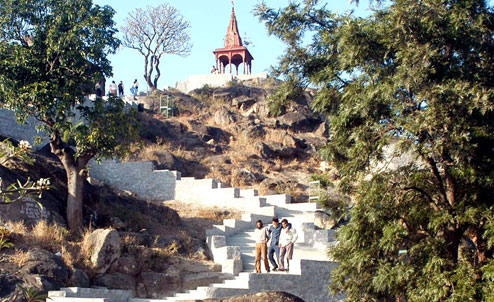
The wooded Morabadi Hill on the northern fringes of Ranchi had still not been clawed by real-estate ambitions at the time. On either side of it we saw bulldozers and demolition crew flattening hillocks. But this particular feature had survived their ingress.
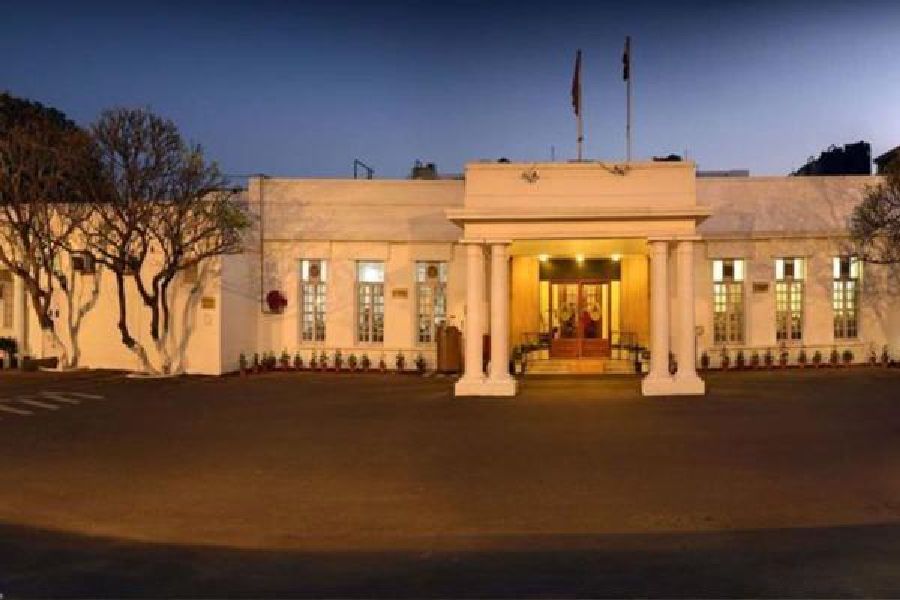
Halfway up the hill a white mansion loomed into view. I was right. The hill and the house atop - Shanti Dham - had nothing to do with Rabindranath Tagore; it used to be home to his elder brother, Jyotirindranath. This is where he spent his final years after the death of his wife, Kadambari Devi.

The hillock was bought by Jyotirindra-nath in 1908 and two years later he built the house. Some years before that, Kadambari had consumed poison and died in Jorasanko, the Tagore ancestral home in Calcutta. After that, Jyotirindranath gradually withdrew from the larger family. He made Ranchi his home. Many of his relatives visited him at this hermitage, but not his beloved younger brother, Rabi, even though he was quite the globetrotter. Whispers abound hinting at an estrangement over Kadambari's death, but no one has ever spelt it out.
The plaques around Shanti Dham, too, are silent. They tell a sketchy biography of the fifth son of Debendranath Tagore. Was his stay here a penance of sorts for a marriage gone wrong? Did he spend the last two decades of his life here ruminating over the follies and failures of life?

These questions swirled in my head as I walked up another 100 steps. On top of the hill is Brahma Sthal, a meditation spot comprising a concrete canopy supported by pillars. Apparently, masons from Benares built it.
Dusk was about to fall. Amorous couples dotted the foliage. I could not help but think back to the lovelorn Jyotirindranath, sitting in lotus position and watching tribal families go about their humdrum rhythms. The self-taught artist would make pen and ink sketches here - mostly portraits of people who visited him. It is here the polyglot poet would sit down on mornings to translate Bal Gangadhar Tilak's Marathi version of the Gita.
It is said that Jyotirindranath was the first to spot Tagore's flair for poetry, music and literature. The raw talent was further nurtured by his wife, Kadambari, who was more of a friend to the teenaged Rabi. The budding poet in him would sometimes compose just to impress her. She was also a scathing critic of many of his compositions.
Her death left an indelible mark on young Tagore. He wrote in Jiban Smriti (Memories of My Life): "The person near me whom I knew so well, disappeared... and I looked at the world and thought, what is the meaning of this strange annihilation." Tagore described his beloved bouthakurani as a "veena with a sensitive soul" and expressed anger at those who forced that music to die. Was Jyotirindranath the target of his barbs? Standing at Brahma Sthal, I wondered.

Some literary experts believe Jyotirindra-nath was a greater genius than his more famous younger brother, but could never bring his talent to flourish. When Acche Lal broke my reverie, the sun had gone down. As I made my way down the steps I imagined Shanti Dham reverberating with Jyotirindranath's sonorous singing. " Oi je dekha jai ananda dham... Shok tapita jon cholo sokol dukkho hobey mochon/ Shanti paibe hriday majhe, prem jagibey ontorey." (There lies the abode of joy... Come hither all aggrieved souls to end your woes/Find peace, find love.)
On May 9, Rabindranath's 155th birth anniversary will be celebrated with the usual grandeur; but May 4 - Jyotirindranath's 168th birthday - passed unnoticed, as ever.
Prasun Chaudhuri