 |
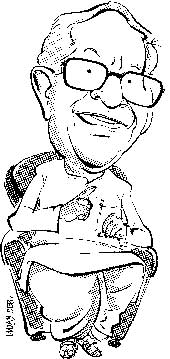
There’s an odd-looking table lamp staring at me. I inspect it surreptitiously, for folklore has it that the room in Writers’ Buildings where the chief minister meets the press has a microphone buried somewhere. In the five minutes that I have been waiting there for Buddhadeb Bhattacharjee, sitting on the left of a throne-like seat reserved for him, I have been asked thrice — the last urging from his press secretary was polite, but firm — to take a chair to his right. That’s just next to the table lamp.
The lamp is awkwardly shaped and looks like it could hide a mini-camera as well. But I suspect that if there was indeed a microphone, it may have long been dismantled. Certainly, the phrase “bourgeois press”, once almost a Left jingle, doesn’t seem to exist in Bhattacharjee’s list of most-used words. On the contrary, the 63-year-old Marxist is open and affable.
It has been 30 years since Bhattacharjee joined the Left Front government, and I want to know what those years have meant for him. But you can’t catch 30 years in 60 minutes — not when the occasion is the 30th year of the Left Front government.
“We didn’t have a television set at home those days — the news of our victory came on the radio and in newspapers,” says the West Bengal chief minister. Bhattacharjee won from Kashipur, a constituency that he later gave up for Jadavpur after a defeat in 1982. “It was the first time I fought an election, the first time I won, and the first time I became a minister. It was also the first time I entered Writers’ Buildings.”
In 1977, Writers’ wouldn’t have looked as anachronistic as it does today. Ancient typewriters clutter aged desks, and stacks of dusty files form little beige mounds. And the few minutes that I spend in the reception room indicate that babudom — an occasional synonym for Writers’ — still rules. One man urges me to put an ‘F’ next to my name to specify my gender. Another tells me that it won’t do to merely write CM on the scrap of paper that demands to know whom I am meeting. “CMS, CMS,” he instructs. “CM’s secretariat.”
But as elsewhere in Calcutta, where gloss easily rubs shoulders with grime, the ‘F’ wing of the building suddenly leads into a well-lit modern-day office. Here the walls are spotless and the chairs new. This, then, is the CMS.
Change, clearly, is the leitmotif of the CMS, and not just in its looks. The government too has changed, moving its focus from land and agriculture to industry. Its backers have changed — many of Bhattacharjee’s supporters today are from Calcutta’s middle class, who once sniffed at the Left. And, of course, Bhattacharjee himself has changed — from a radical romantic who wrote poetry and plays to an avowed realist.
“We have to be willing to move with the times. But there are some people who stick to their old thinking,” he says. “I am very conscious of what I am doing. You can’t have socialism in one part of the country — you have to accept private capital.”
Bhattacharjee has seen change, and among the many developments is one that’s grown right under his eyes in his Palm Avenue home. His daughter, Suchetana, is an environmentalist. And the politburo member of a party that has long ignored issues such as the environment doesn’t fumble when he says “sustainable development”.
“The environment is a serious issue. So I understand when my daughter says: ‘Baba, jongol na banchle tomrao banchbe na (Dad, you won’t survive either if there are no jungles left).” Bhattacharjee says this the way presumably his daughter does, with a grimace and through clenched teeth.
“We were straitjacketed once, one-dimensional. But now we have to be multi-dimensional. And it is tough. We have to learn new things. I am reading books on global warming. I attended a seminar. I have to learn from my daughter, too.”
The family, indeed, has had its impact on the turns that Bhattacharjee has taken. There was a Hindu orthodox stream in his family — his grandfather wrote the first Bengali book on idol worship. Tagore’s writings and songs figured prominently in his north Calcutta home. And Bengal’s radical poet, Sukanta, was his uncle. The poet stayed with the family before he was hospitalised for consumption, and Bhattacharjee remembers as a three-year-old being told not to enter his room. “That was the first time I saw a bedpan. It’s curious, the things you remember.”
Memory can also play its tricks on the mind. In 1979, in the midst of a raging movement against what was perceived as cultural impurity, German ballerina Pina Bausch staged Stravinsky’s The Rite of Spring in Calcutta. Just before the climax, a group of protesters stormed in. The rumour then was that the disruptors had Bhattacharjee’s backing.
“That’s not true. I am not orthodox, and I don’t believe in the philosophy of bans. There were some murmurs about the screening of Lady Chatterley’s Lover at our film festival, and I said, let it be screened. I rejected a move to ban a book by Samaresh Basu,” he says. “A group disrupted the ballet — but I was never with them.”
Bhattacharjee wasn’t in the group, but he has taken part in enough protest marches himself. The one that he recalls is the CPI(M)’s first rally after the party was formed in 1964. He was then studying Bengali literature at Presidency College and toying with the philosophy of existentialism (“Sartre influenced me”). But the Left beckoned with a lure more rooted in reality, and he responded. “We were concerned that our people were still poor after all these years. And we were also influenced by the war in Vietnam.”
So the 20-year-old joined the CPI(M) march, and then, along with a few friends, left for Puri the same night. “It was while sitting by the sea that I decided to join the party,” he says. “And would you believe it, I have never gone back to Puri? I feel terrible about that,” he says, looking accusingly at his secretary.
Clearly, in these 30 years, there are many things that Bhattacharjee has had to forego — particularly since becoming chief minister. He doesn’t get the time to write anymore — the days when he translated Gabriel Garcia Marquez and Vladimir Mayakovsky into Bengali are long gone. “I used to write while travelling on train, on my way to Darjeeling,” he says. “They don’t let me take a train any more.”
He gets the time to read, though. Right now, he is revelling in the works of Turkish writer Orhan Pamuk, and has even given one of his books to Governor Gopal Krishna Gandhi.
But that was probably before Nandigram. Relations between the Governor and the government were strained for a while after Gandhi voiced his concern over the March 14 police firing. The repercussions of Nandigram, and the continuing agitation over Singur, are still reverberating. They are, arguably, the darkest hours in Bhattacharjee’s seven-year-old rule so far.
Yet, industry remains his refrain. “Bengal was once the most industrialised state. We want to bring back its lost glory,' he says, and lists the investments that have come in — in iron and steel, petrochemicals, information technology, leather and cement. “Almost every month, there is a new investment,” he says.
It’s clear, though, that Bhattacharjee’s take on industry and investment is not shared by some of his colleagues. “On agriculture, we were unanimous. But when it comes to industry, the traditional Left gets stuck in its groove. ‘Mitsubishi? Ratan Tata? IBM?’,” he says, raising his voice in mock horror.
So does that mean he is still a communist after all? Didn’t he once say that they were communists 50 years ago, but were realists now?
“I am a communist and proud of that. We are not fools, but realists. We learn from our mistakes. An American top man — I won’t name him — said to me, ‘After all that has happened in the communist world, won’t you change the name of your party?’ And I said, ‘Our crimes and mistakes are greatly surpassed by those that your country committed in Vietnam. Are you ready to change the name of your party and the colour of your flag? Then why are you asking me to change the name of my party, and the colour of my flag?’ He was silenced.”
Perhaps that rebel spirit of ’64 — the one that led Bhattacharjee to set aside Sartre for Marx — is still alive. The flag is still red, but it was at its crimson best when an apocryphal story about Bhattacharjee did the rounds of Left circles several years ago. It was said that a worker who had been slapped by his powerful boss went to Bhattacharjee for help, and was told: “If you’d slapped him back, we would have helped you.”
“No, no, the story is not like that. Workers turned violent at a Pepsi plant. I sent the police. Later, one of them said to me: ‘Couldn’t you have spoken with us before sending the police?’ And I replied, ‘Did you speak with me before indulging in violence’?”
The story about the slapped worker may be no more than a fable. It recalls a Bhattacharjee who exited the radical stage a long time ago, along with agriculture, Mayakovsky and the train to Darjeeling. Perhaps the Pepsi story is the real-life story of the man who has replaced him — just as fields of rice are making way for industry and iron.