

For Satyanarayana Cherukuri, 57, a Vijayawada-based archery coach, the target was simple - to showcase the history and culture of his truncated state, even if it meant spending Rs 25 lakh out of his own pocket and undertaking a back-breaking journey across what is left of Andhra Pradesh.
The result, after travelling 9,000 kilometres and shooting at some 240 historical locations, is a short video album singing paeans to Andhra Pradesh and its proposed new capital, Amaravati.
"It is said that Amaravati was the city of the Gods and later the capital of the Satavahana kings. Now it will be our capital," Cherukuri says. Lakhs of people have already seen his month-old video on YouTube.
Anil Babu Ponnam, a 55-year-old farmer from Narasingapalem, around 30km from Vijayawada, is on a different mission altogether. He is part of a campaign to collect 1 crore "e-bricks" by November 15 for the new city. He will go door to door asking people to buy e-bricks for building Amaravati. He has already bought 1,000 e-bricks, each brick costing Rs 10, under the state government's "My Brick, My Amaravati" scheme.
Around 37 lakh e-bricks have been bought by more than 58,000 people ever since a website was launched on October 16 by the state government. The pace picked up after October 22, when Prime Minister Narendra Modi laid the foundation stone for the new capital at Uddandarayunipalem village in Guntur district. The government plans to buy bricks with the money for building government offices and promises to name the top contributors on a monument to be constructed in Amaravati.
The government approved Amaravati as the name of the new capital in April and a bhoomi puja was done on June 7.
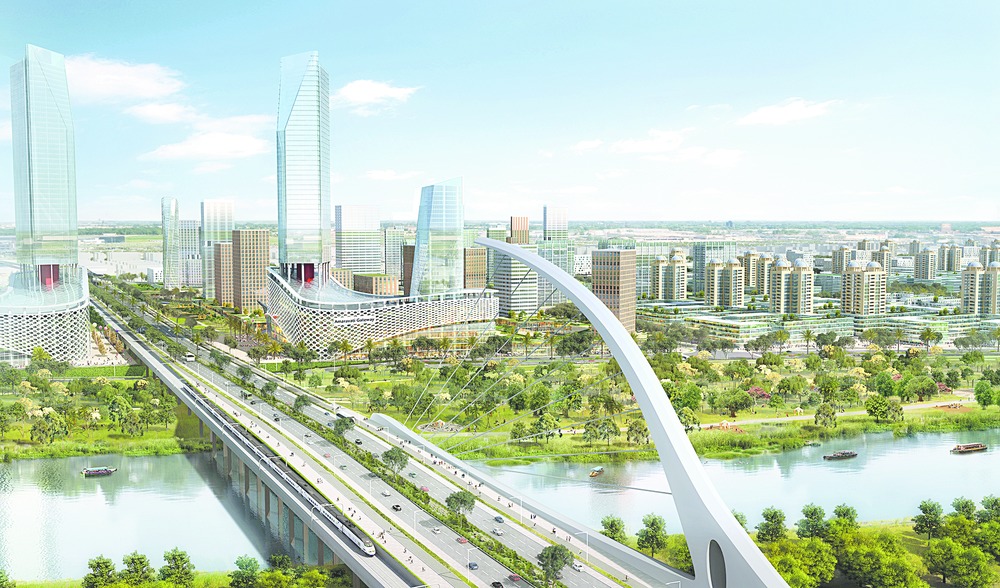
Excitement among the people of the area around the proposed city is palpable. Digital images of the proposed city with swanky multi-storey buildings, boulevards, water parks, gardens, golf courses, bridges, waterfront and a metro rail have only added to the fervour. Prepared by a Singapore-based firm, the images in the masterplan promise that a new Singapore will spring up on the east coast of India.
Although Hyderabad will be the joint capital of Telangana and Andhra Pradesh until 2024, under the Andhra Pradesh Reorganisation Act, 2014, passed by Parliament, chief minister N. Chandrababu Naidu is in a hurry. He wants to be in the new capital by the time the state goes for Assembly polls in 2019.
"By next June, state government employees will be encouraged to move to Vijayawada. By 2018, we hope to complete most government buildings such as the Raj Bhavan, secretariat, offices for ministers and so on," says Parakala Prabhakar, Andhra Pradesh's communications advisor.
By the end of 2018, the government and the Singapore consortium hope to build most of what is called the Seed Capital Area (SCA) spread over 16.9 sqkm, with a resident population of around 3 lakh. The state estimates that investments of around US $3 billion will be needed in the first phase.
By 2050, however, there will be 140 lakh people in the capital region comprising an area of about 8,350 sqkm and carved out of the districts of Krishna and Guntur on either side of the river Krishna ( see map), covering the cities of Vijayawada, Guntur, Tenali and Mangalagiri (VGTM). Amaravati, the capital, alone will have 40 lakh residents.
According to the state government, it chose the core area for the capital keeping in mind its central location and minimum effect on multi-cropped agricultural land.
What it doesn't mention is that Naidu's astrologers believe that it is Vaastu-friendly. Insiders say that Naidu is convinced that it is Amaravati that will win him his future elections. River Krishna flows on the north of the proposed city and goes towards the east, considered most Vaastu-friendly.
"I think this was the most important consideration when he chose this place. The impact on the environment, local agriculture and others simply took a backseat," Hyderabad-based architect Shankar Narayan says.
This region is considered very fertile and farmers grow at least three crops in a year. The water table is among the best in the country.
The Capital Region Development Authority (CRDA), the state body responsible for executing the plans on Amaravati, has already acquired 33,000 acres through a land pooling scheme. The landholders of the area have been promised residential and commercial plots in the capital region according to the land they donate. They will also be given an annuity of Rs 30,000-50,000 an acre, depending on the quality of land acquired, with an increase of 10 per cent each year for 10 years.
"It is a win-win situation for everybody," Prabhakar says.
But critics of the policy say that farmers unwilling to part with the land have been intimidated by the state government. "The government has played mind games with hundreds of farmers who have not signed on the dotted line. They are being harassed," says C. Ramachandraiah, professor at the Centre for Economic and Social Studies (CESS), Hyderabad. "Amaravati is a dream being sold with a lot of hype. And most people have bought the dream without looking at the reality."
The masterplan and the speed at which everything has been conceived have left many baffled. "The plans look like a preconceived image of a city superimposed on the land. A city cannot be planned in such a hurry," Narayan says.
Ramachandraiah holds that no workshops were conducted by the government or the Singapore-based project managers. "They didn't consult demographers, local town planners, environmentalists or social scientists on the impact of such a large project. It's been a very hush-hush affair," he says.
Singapore's Surbana Jurong, which prepared the masterplan for Amaravati, didn't reply to The Telegraph's queries.
Some urban planners stress that Naidu should look around him. "No matter what you plan, it is the people that will make the city. Unless people see a future, they will not move in and it could remain a ghost city with only government offices functioning during the day," says Sudeshna Chatterjee, the brain behind the design vision for Naya Raipur, the new capital of Chhattisgarh, which is functioning but where people are still to move to.
Meanwhile, land in the allotted area is selling for Rs 2-5 crore an acre, rivalling rates in Hyderabad. "Land prices have shot up to such an extent that you cannot even own a hairdressing salon there," says D.V. Somayajulu, former economic advisor to the Andhra Pradesh government and currently with the YSR Congress. "I don't think private companies will invest hundreds of millions of dollars in this pipe dream."
The capital will need around Rs 1 lakh crore. Where will that come from?
"Chandrababu hain na," TDP general secretary Varla Ramaiah replies. "People from across the world have promised to invest, and Naidu is sure to follow up on every promise. Just wait and watch."
Prabhakar rattles a list of Indian and multinational companies and educational institutions that have shown interest in buying land. CRDA officials say they have been busy taking delegations from embassies, foreign consultants, investors and others on tours of the proposed city.
Amaravati is said to have been a celestial abode and a historical city. Will it be a successful modern capital? The 2019 election result, perhaps, holds the key.
Amaravati, 2050: In numbers
- 4.5 million resident population
- 1.8 million jobs
- 135km public transport corridors, 1,000km road network
- 20 per cent of the area reserved for green spaces and water within the city
- 30km of public river waterfront
- 8,060 hectares earmarked for residential land
- 9,860 hectares kept for parks and open spaces
- 7.745 hectares for commercial purposes