Pope Leo XIV blasts 'delusion of omnipotence' fueling US-Israeli war in Iran
In his strongest words yet, Pope Leo XIV on Saturday denounced the "delusion of omnipotence" that is fueling the US-Israel war in Iran and demanded political leaders stop and negotiate peace.
Leo presided over an evening prayer service in St. Peter's Basilica on the same day the United States and Iran began face-to-face negotiations in Pakistan and as a fragile ceasefire held.
History's first US-born pope didn't mention the United States or President Donald Trump in his prayer, which was planned before the talks were announced. But Leo's tone and message appeared directed at Trump and US officials, who have boasted of US military superiority and justified the war in religious terms.
"Enough of the idolatry of self and money!" Leo demanded. "Enough of the display of power! Enough of war!"
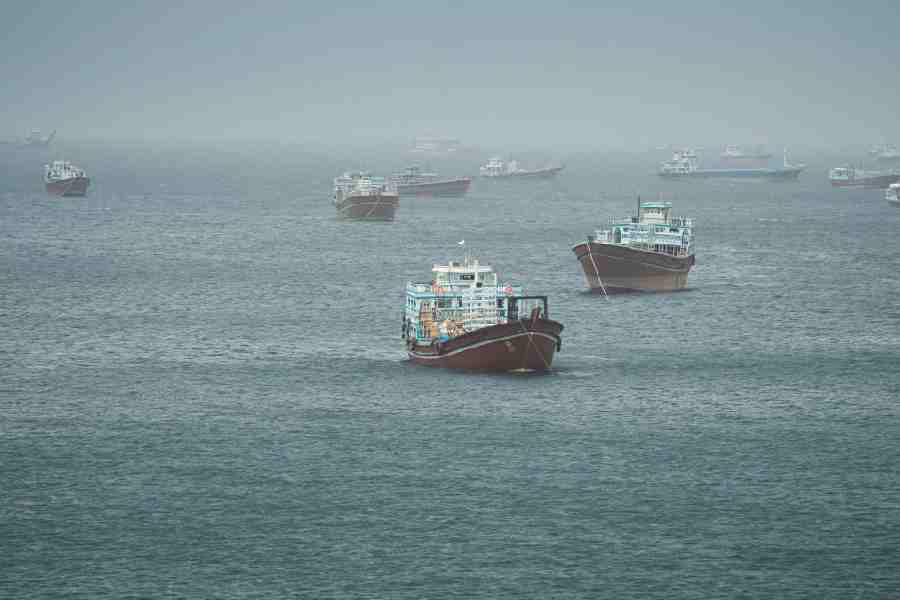
Two naval destroyers transit Strait of Hormuz: US
The US military said two destroyers transited the Iran-gripped Strait of Hormuz ahead of mine-clearing work, a first since the war began.
Iran's state media, however, earlier said Iran forced a US military ship that was attempting to cross the strait to turn around.
Qatari official says Iranian attacks have decreased but 'not stopped'
Qatar's Foreign Ministry spokesperson said that attacks against any Gulf state constitute an attack on all of them, denying that Qatar pays Iran to stop attacks against its territory.
"Qatar does not pay in exchange for stopping attacks on it," said Majed al-Ansari in a televised interview with Al Jazeera, adding that Qatar intercepts the Iranian attacks.
Al-Ansari added Iran had also attacked civilian and industrial targets, despite Iran's claim that it was only targeting military sites.
Iraq elects Kurdish politician Nizar Amidi as president amid war fallout
Iraq's parliament voted Saturday to elect Nizar Amidi, a political official with one of the country's two main Kurdish parties, as president, five months after a parliamentary election that didn't produce a bloc with a decisive majority.
His election comes as Iraq is reeling from the fallout of the US-Israeli war on Iran. Iraq became caught in the middle of the conflict, with Iran-backed militias launching attacks on US bases and diplomatic facilities as well as on critical energy infrastructure. Meanwhile, the US and Israel carried out airstrikes targeting the militias, some of which killed members of the Iraqi military.
The war and Iran's closure of the Strait of Hormuz also largely halted the oil exports upon which Iraq's economy depends.
Amidi, a member of the political bureau of the Patriotic Union of Kurdistan party, beat out a roster of candidates that included Iraq's current Foreign Minister, Fuad Hussein, who was the pick of the rival Kurdistan Democratic Party.
By convention, Iraq's president is always Kurdish, while the more powerful prime minister is Shiite and the parliamentary speaker is Sunni.
Macron says he held talks with Pezeshkian
French President Emmanuel Macron said on Saturday that he had spoken with Iran's President Masoud Pezeshkian, and had highlighted to him the importance of de-escalating the current situation through the ceasefire talks in Pakistan.
"I stressed the need for Iran to restore freedom of navigation and security in the Strait of Hormuz as quickly as possible, to which France stands ready to contribute. I insisted on the importance of fully respecting the ceasefire, including in Lebanon," Macron said in a post on X.
Trump says he has no idea how talks will go with Iran
US President Donald Trump confirmed in a phone interview with NewsNation that talks among the US, Iran and Pakistan had begun, though he does not know how successful they could be.
When asked how negotiations would go, Trump said: "I have no idea."
The US president said he would know shortly if he felt Iran was acting in good faith about resolving the war.
Trump added that the US knew where mines had been placed in the Strait of Hormuz and that the military was bringing equipment to remove them.
Full team of US experts on relevant subjects present at Islamabad: White House official
A full team of US experts on the relevant subject areas are present in the Islamabad peace talks, said a White House official.
US official says US military ship did not receive warning from Iran to retreat
A US official said that the US did not receive any warning from Iran, in response to a Tasnim report that a US military ship retreated from the Strait of Hormuz after Iran issues a warning.
Israel says it struck over 200 Hezbollah targets in last 24 hours
The Israeli military said its air force hit infrastructure of the Iran-backed militant group in Lebanon and was continuing to support its ground forces operating in southern Lebanon.
The statement came as Teheran was pressing for a halt to Israeli strikes on Hezbollah in three-party talks that began Saturday afternoon between Iran and the US in Pakistan.
Earlier Saturday, the Lebanese state-run news agency reported at least three people killed in Israeli strikes in southern Lebanon. There were no reported strikes in the afternoon hours.
In Israeli communities along the border with Lebanon sirens continued to warn of drone and rocket attacks from Lebanon throughout the day Saturday. There were no reports of injuries.
Iranian official says deal is possible if US put 'America first,' not Israel
Mohammad Reza Aref, Iran's first vice president, said on Saturday US-Iran peace talks could produce a deal if US officials worked in the interest of their country in line with President Donald Trump's "America First" doctrine.
"However, if we face representatives of Israel First,' there will be no deal," Aref said in a social media post.
He warned that "the world will face greater costs," if the talks failed and the US and Israel resumed the war against Iran.
'Several US Navy ships crossed the Strait of Hormuz on Saturday': US official, Iran denies US claim
A US official said that several American Navy ships crossed the Strait of Hormuz on Saturday, according to a social media post by Axios on X.
A senior Iranian military official denied reports of any US vessel crossing the Strait of Hormuz, according to Iranian state TV.
Iran peace talks in Islamabad have begun, CBS reporter says
Peace talks to end the six-week-old war in the Middle East have commenced in Islamabad, CBS reporter Jennifer Jacobs said in an X post, citing sources.
Iran's Fars news agency also reported that the peace talks have begun.
In touch with Lebanon to make sure that commitments on ceasefire are respected on all fronts: Iran spokesperson
Iran has been in touch with Lebanon to make sure ceasefire commitments were being respected on all fronts, the Iranian foreign ministry spokesperson told state TV on Saturday from Islamabad, where talks involving senior U.S. and Iranian officials are taking place to end their six-week-old war.
Lebanese officials close to Hezbollah told Reuters on Friday that the group was supportive of the Pakistan dialogue, and said it was the right approach instead of a separate set of talks in Washington next week.
An Iraninan state TV reporter in Islamabad says the Iran delegation is expected to continue discussions about the violations of ceasefire in Lebanon.
Importance of including Lebanon in Iran's ceasefire: French President Macron
French President Macron said that he told Turkish President Erdogan of the imporance of including Lebanon in Iran's ceasefire.
"We initially discussed the situation in the Middle East, and called for all parties to respect the ceasefire and to make sure this applies to Lebanon, and for all parties to respect the freedom of navigation in the Straits of Hormuz, and we highlighted the importance of getting a strong and lasting diplomatic solution," wrote Macron on X.
Massive numbers of empty oil tankers headed to US right now: US President Trump
"Massive numbers of completely empty oil tankers, some of the largest anywhere in the world, are heading, right now, to United States to load up with oil (and gas!) anywhere in world," said US President Donald Trump, according to a Reuters report.
"We are now starting the process of clearing out the Strait of Hormuz," Trump added.
"All 28 of Iran's mine dropper boats are lying at the bottom of the sea," he said.
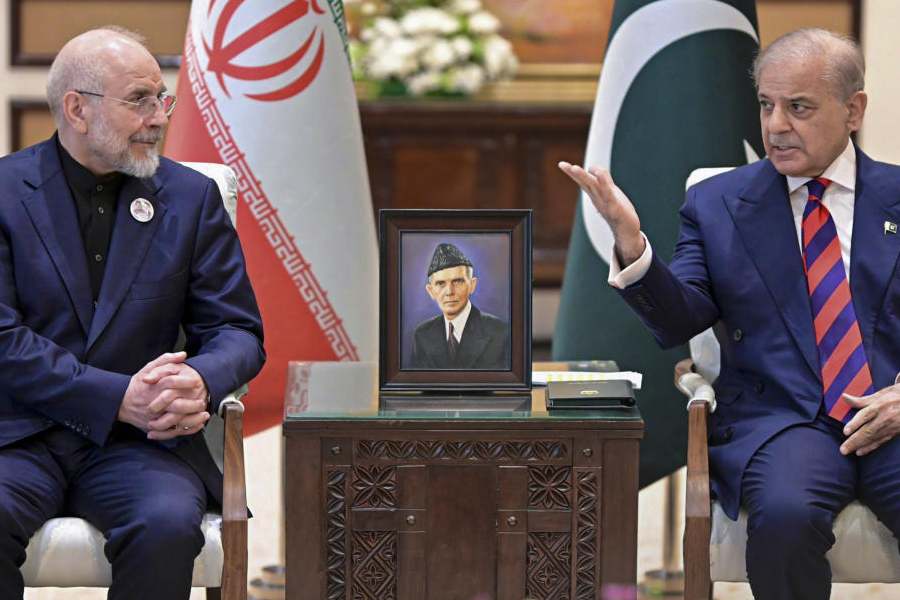
Iran sends proposals, outlines red lines to Pakistan PM
Iran’s proposals and red lines have been forwarded to the Pakistan PM, an Iran state TV reporter said from Islamabad.
Iran’s red lines include the Strait of Hormuz, payment of war reparations, the release of Iran’s blocked assets and a ceasefire across the region, the reporter added.
US Vice President Vance holds talks with Pakistan PM Sharif
U.S. Vice President JD Vance held talks with Pakistani Prime Minister Shehbaz Sharif on Saturday, the White House and Sharif's office said, with special envoy Steve Witkoff and President Donald Trump's son-in-law Jared Kushner also taking part.
"Prime Minister expressed the hope that these talks would serve as a stepping stone toward durable peace in the region," Sharif's office said.
Vance is in Pakistani capital Islamabad for talks to settle the six-week war with Iran.
US has not agreed to unfreeze Iranian assets, White House official says
A U.S. official on Saturday denied reports that Washington has agreed to unfreeze Iranian assets.
Reuters reported earlier in the day that the U.S. had agreed to release Iranian frozen assets held in Qatar and other foreign banks, citing a senior Iranian source.
Iranian state reporter in Islamabad confirms that the US has agreed to unfreeze Iran's funds
Iranian source says US has agreed to release frozen Iranian assets in Qatar, other banks
A senior Iranian source said on Saturday the U.S. had agreed to release Iranian frozen assets that were held in Qatar and other foreign banks, welcoming the move as a sign of "seriousness" in reaching a deal with Washington in talks in Islamabad.
The United States has not made any public comments on the issue of unfreezing assets.
The source, who declined to be named due to the sensitivity of the matter, told Reuters that unfreezing the assets was "directly linked to ensuring safe passage through Strait of Hormuz", which is expected to be a key issue in the talks.
Watch video: Pakistan foreign minister hopes US, Iran will engage constructively in peace talks
Pakistani Foreign Minister Ishaq Dar said on Saturday that he hoped the United States and Iran would engage constructively in peace talks as the U.S. delegation landed in the Pakistani capital.
Dar also reiterated Islamabad's desire to continue facilitating the parties to reach a "lasting and durable solution to the conflict", according to a statement from Pakistan's foreign ministry.