Sunday, 31 May 2026
Sunday, 31 May 2026
Sunday, 31 May 2026
The death toll from Sunday’s collision between two high-speed trains in southern Spain has risen to 39, with 152 people injured, state broadcaster RTVE reported on Monday, citing police sources. Authorities described the accident, which occurred on a modern stretch of track, as “very serious” and unusual. Prime Minister Pedro Sanchez has cleared his agenda for the day, his office said.
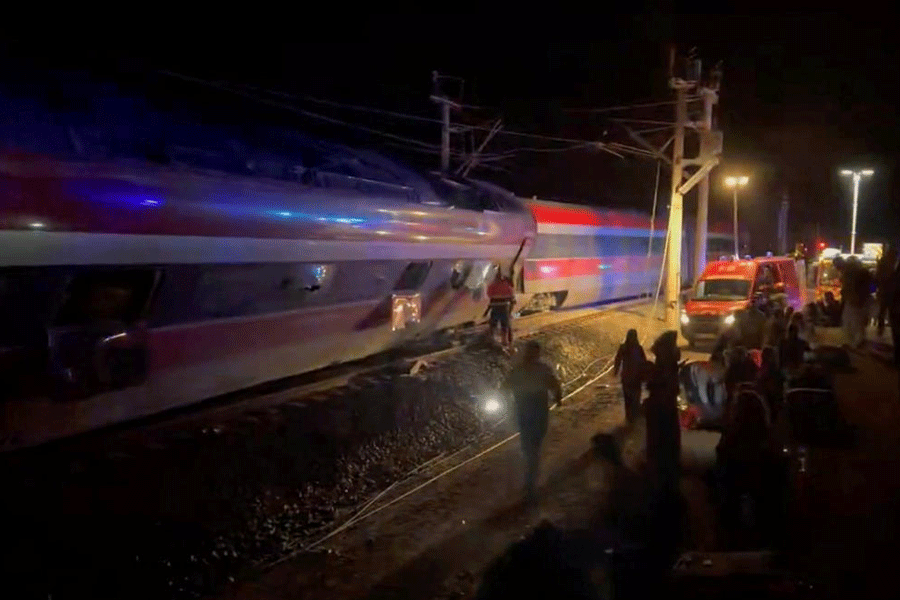
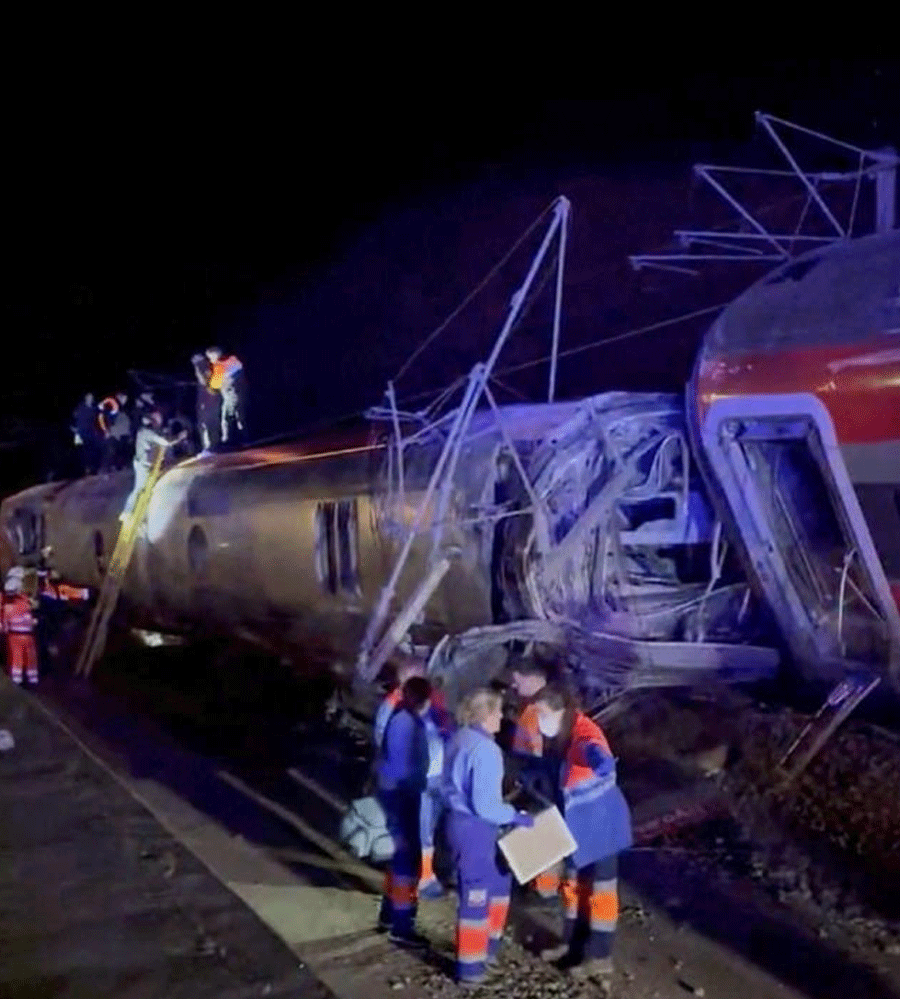
The crash occurred near the town of Adamuz in Cordoba province when a high-speed train travelling from Malaga to Madrid derailed and ended up on the adjacent track, where it struck an oncoming train heading from Madrid to Huelva, according to police sources and rail operator Adif.
Police confirmed to Reuters that 21 people had been killed.
State broadcaster Television Espanola (TVE) reported that around 100 people were injured, including at least 25 seriously.
Andalusia’s regional health chief Antonio Sanz later said 73 injured passengers had been taken to six hospitals.
“The Iryo 6189 Malaga - (to Madrid) train has derailed from the track at Adamuz, crashing onto the adjacent track. The (Madrid) to Huelva train which was travelling on the adjacent track has also derailed,” Adif said in a social media post.
Adif said the accident happened at around 6:40 p.m. local time, shortly after the Iryo-operated train left Cordoba heading towards Madrid. The train had more than 300 passengers on board, while the Renfe-operated train carried between 100 and 200 people.
Spain’s Transport Minister Oscar Puente said the back part of the first train derailed and crashed into the front of the second train, knocking its first two carriages off the track and down a slope.
“The latest information is very serious,” Puente wrote on X earlier. “The impact was terrible, causing the first two carriages of the Renfe train to be thrown off the track. The number of victims cannot be confirmed at this time. The most important thing now is to help the victims.”
After midnight, Puente confirmed the death toll had reached 21 and said rescue teams had removed all survivors, although more victims could still be identified. He said the causes of the crash were unknown and described it as “a truly strange” incident because it occurred on a flat section of track renovated in May. When asked how long an inquiry could take, he said it could be a month.
Iryo, a private rail operator majority-owned by Italian state-controlled Ferrovie dello Stato, said the train involved was a Freccia 1000 model and that it “deeply regretted what had happened” and had activated all emergency protocols to work closely with authorities. Renfe, Spain’s state rail operator, did not immediately respond to requests for comment.
‘The scene is horrific’
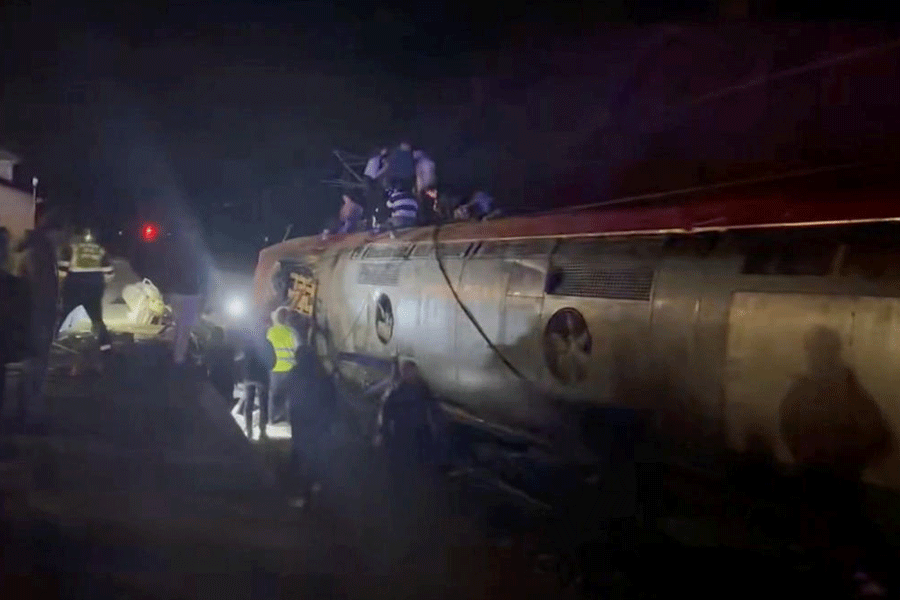
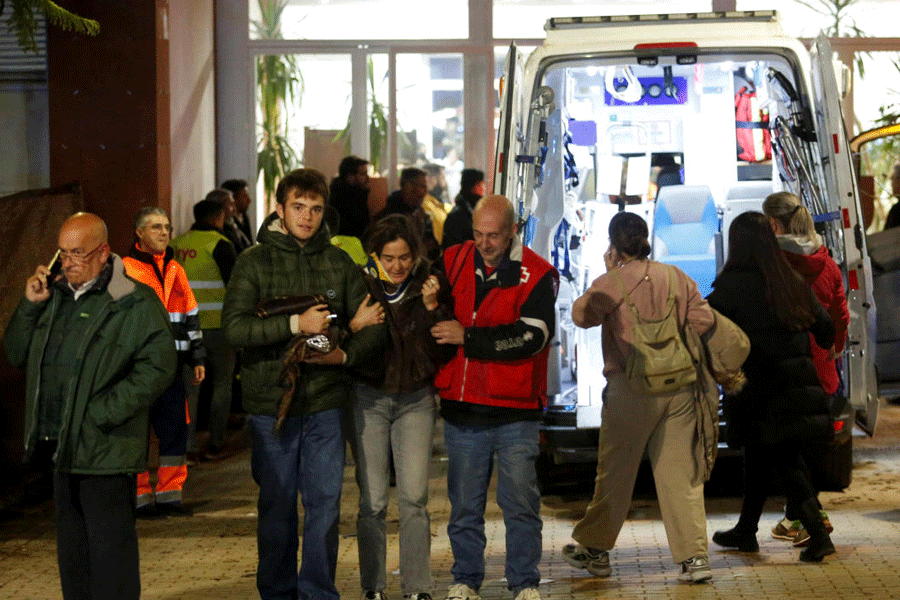
Emergency services described chaotic scenes at the crash site, which is in a hard-to-reach area. Paco Carmona, Cordoba fire chief, told TVE that the Malaga-to-Madrid train had been evacuated, while the other train’s carriages were badly damaged.
“There are still people trapped. We don't know how many people have died and the operation is concentrating on getting people out of areas which are very narrow,” he said. “We have to remove the bodies to reach anyone who is still alive. It is proving to be a complicated task.”
The mayor of Adamuz, Rafael Moreno, told El Pais newspaper he arrived early at the scene with local police.
“The scene is horrific,” he said. “I don't think they were on the same track, but it's not clear. Now the mayors and residents of the area are focused on helping the passengers.”
Francisco Carmona, the firefighter chief of Cordoba, told Spanish national radio RNE that one of the trains was badly mangled, with at least four wagons off the rails. Andalusia’s civil protection chief, Maria Belen Moya Rojas, told Canal Sur the crash site was difficult to access.
“The situation at the crash site is very serious,” Sanz said. “We have a very difficult night ahead.”
Passengers recount chaos
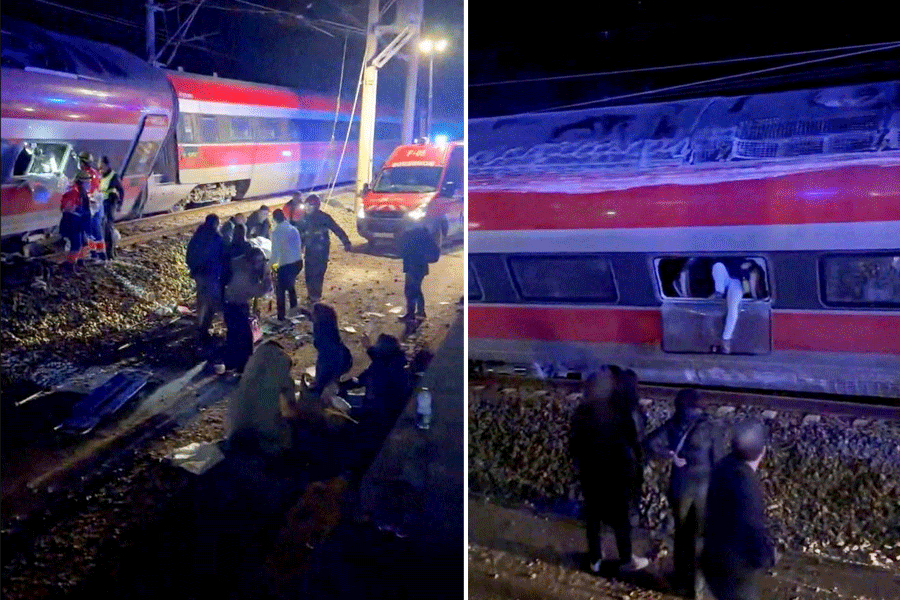
Passengers described terrifying moments as the trains derailed. A woman named Carmen, who said she was on the Iryo train to Madrid, wrote on X: “Ten minutes after departing (from Cordoba) the train started to shake a lot, and it derailed from coach 6 behind us. The lights went out.”
Footage shared on social media showed passengers smashing windows with emergency hammers and climbing out of darkened carriages. An Iryo staff member was seen instructing passengers to remain seated and to conserve mobile phone batteries.
Salvador Jimenez, a journalist for Spanish broadcaster RTVE who was on board the Iryo train, told TVE by phone that “there was a moment when it felt like an earthquake and the train had indeed derailed.”
He said passengers used emergency hammers to break windows and that some people escaped without serious injuries. Later, standing beside the wreckage, Jimenez said: “There's a certain uncertainty about when we'll get to Madrid, where we'll spend the night, we've had no message from the train company yet. It's very cold but here we are.”
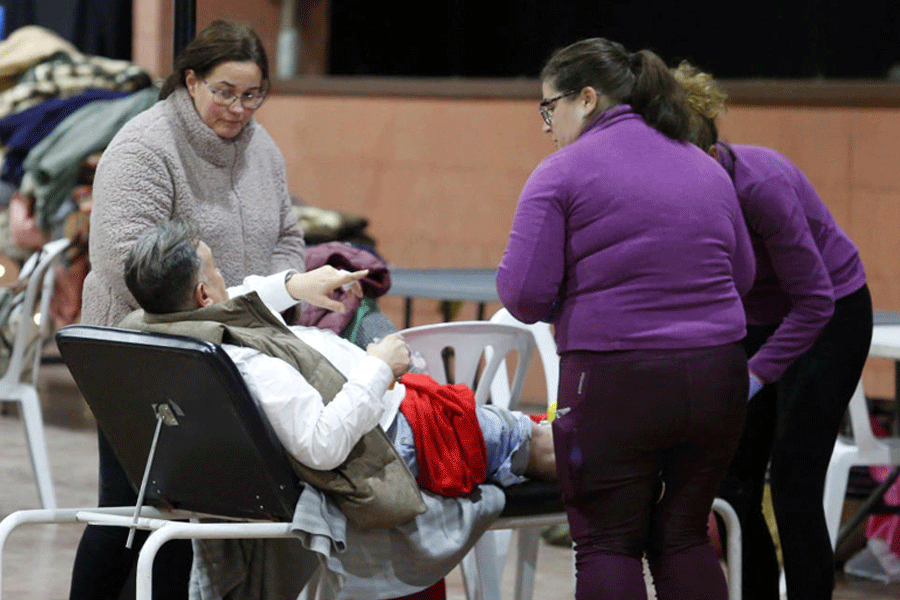
Images broadcast on local television showed a reception centre set up in Adamuz, a town of about 5,000 people, with residents bringing food and blankets to help survivors as night-time temperatures fell to around 6 degrees Celsius.
Services suspended, investigation under way
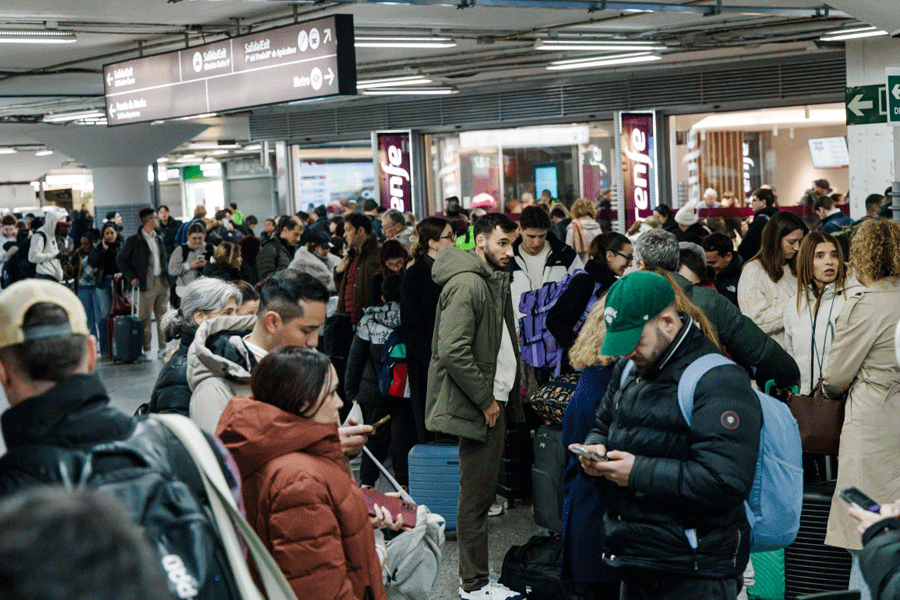
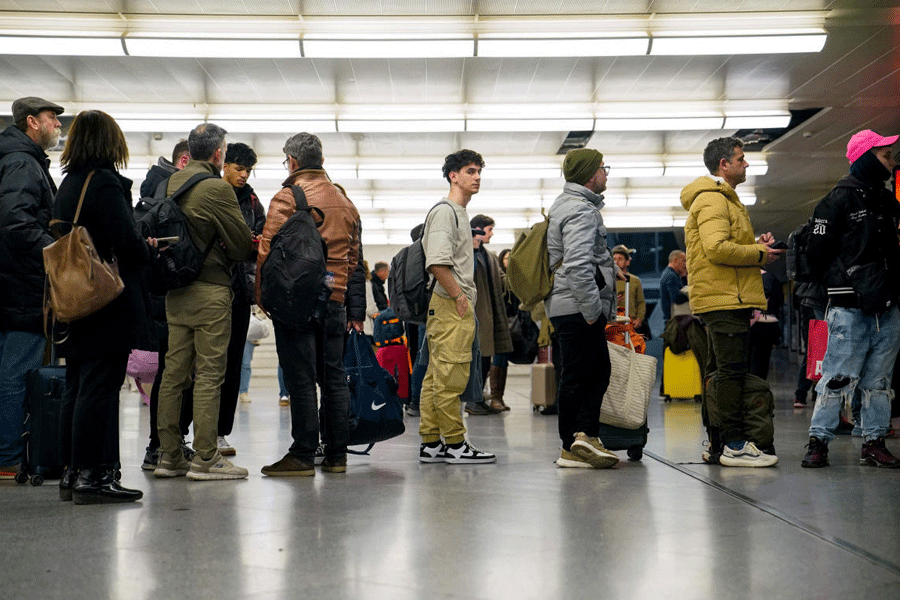
Adif said all rail services between Madrid and Andalusia were suspended, adding later that trains would not run on Monday. Spain’s military emergency relief units and the Red Cross joined rescue operations alongside regional and local emergency services.
European Commission President Ursula von der Leyen said she was following “the terrible news” from Cordoba. “Tonight you are in my thoughts,” she wrote in Spanish on X.
High-speed rail is a popular mode of transport in Spain, which has one of Europe’s most extensive high-speed rail networks. Authorities said investigations into the cause of the derailment and collision were under way.