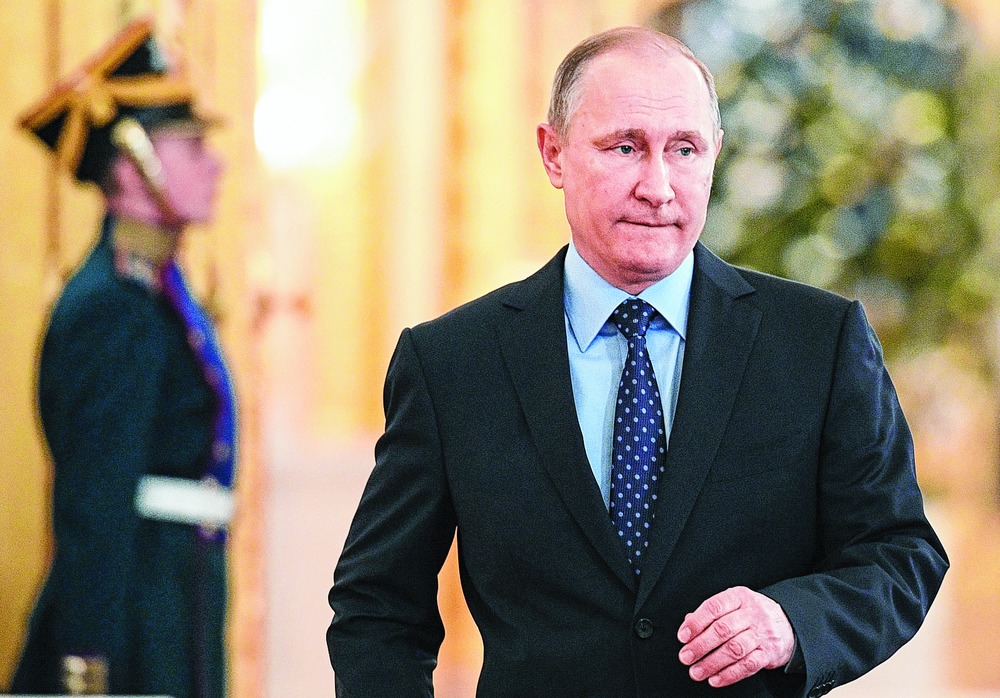

Moscow, Dec. 30: In a head-spinning turn of events today, President Vladimir V. Putin of Russia announced that he would not retaliate against the US' decision to expel Russian diplomats and impose new sanctions - hours after his foreign minister recommended doing just that.
Putin, betting on improved relations with the next American President, said he would not eject 35 diplomats or close any diplomatic facilities, rejecting a tit-for-tat response to actions taken by the Obama administration yesterday.
In an statement on the Kremlin's website, Putin said he did not want to deprive children of access to a recreational area on an island in the Moscow river that his foreign minister had recommended closing. He went one step further, inviting all children of American diplomats accredited in Russia to participate in the traditional New Year and the Russian Orthodox Christmas parties at the Kremlin.
"While we reserve the right to take reciprocal measures, we're not going to downgrade ourselves to the level of irresponsible 'kitchen' diplomacy," his statement said, using a common Russian idiom for quarrelsome and unseemly acts.
"In our future steps on the way towards the restoration of Russia-US relations, we will proceed from the policy pursued by the administration of D. Trump."
Putin called it "unfortunate" that the Obama administration chose to end its relationship with Russia this way, but sent New Year's greetings to President Obama, his family, Trump, and "all the American people".
The switch was remarkable, given that the foreign minister, Sergey V. Lavrov, had just made the recommendation in remarks broadcast live on national television, and given the long history of tit-for-tat expulsions between the two countries. Russian officials have traditionally been sticklers for diplomatic protocol.
Yesterday, the Obama administration declared 35 Russians suspected of being intelligence operatives "persona non grata"; imposed sanctions on two of Russia's leading intelligence services; and penalised four top officers of one of those services, the powerful military intelligence unit known as the GRU, because of its efforts to influence the presidential election. As part of the punishment, the state department said that it would close two waterfront estates - one in New York, the other in Maryland - that it said were used for Russian intelligence activities.
The actions amounted to the strongest American response yet to a state-sponsored cyberattack.
US intelligence agencies have concluded that the GRU, with the approval of the Kremlin, ordered the attacks on the Democratic National Committee and other political organisations, and that the Russian government enabled the publication of the emails it obtained to benefit Trump's presidential campaign.
The Obama administration announced sanctions against Russia and released a report that states that the Russian government deployed computer hackers to attack the Democratic Party's computers.
In addition to giving 35 Russian diplomats and their families 72 hours to leave the country, the measures announced by Obama imposed sanctions on Russia's two main intelligence services. Washington described the diplomats as intelligence agents working under the cover of diplomacy.
The administration also penalised four top officers from one of the highly secretive services and also blacklisted dozens of individuals, some of them close friends of Putin's who were considered crucial in the annexation of Crimea in 2014 and in destabilising Ukraine.
NEW YORK TIMES NEWS SERVICE