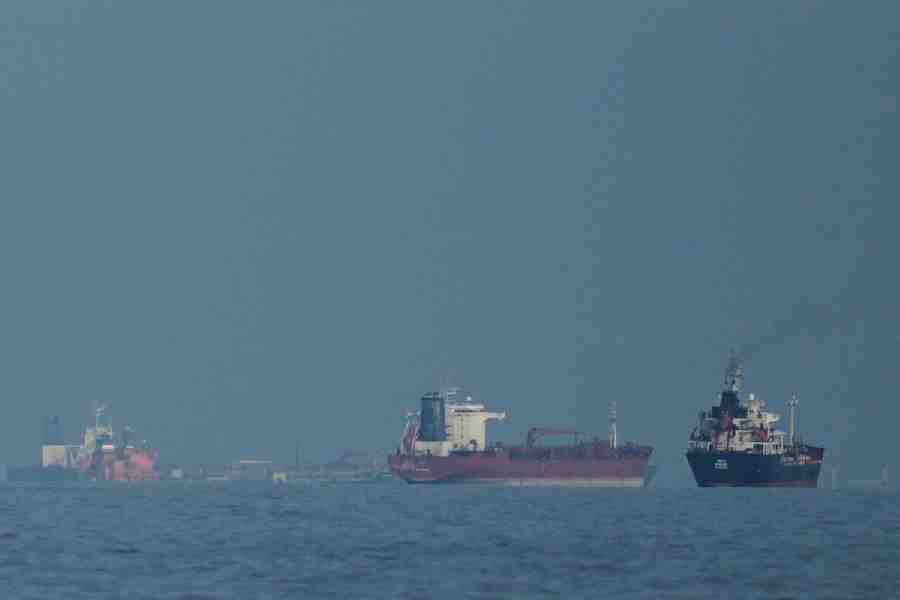
Two merchant ships from Pakistan were allowed to cross the Strait of Hormuz and sail to Kuwait and the UAE on Monday after initially being denied permission to pass.
Two merchant ships, Shalimar and Khairpur, of the Pakistan National Shipping Corporation (PNSC) are the first Pakistani ships to go into the Persian Gulf since the war broke out between Iran, the US and Israel.
Initially, the two ships were stopped by Iranian authorities and told to go back from the Strait of Hormuz on Sunday, a PNSC official said. “But shortly afterwards they were allowed to cross the Strait of Hormuz into the Persian Gulf,” he added.
The ship captains, Asif and Shaheen, are now on their way to Kuwait and Das Island, from where they will bring back vessels loaded with millions of litres of diesel and crude oil.
On April 10, MV Selen, became the first Pakistani vessel to reach the Karachi Port since the reopening of the Strait of Hormuz in the wake of the ceasefire between Iran and the US.
The Strait of Hormuz is one of the world’s most important energy thoroughfares and its effective closure since the US and Israel began strikes on Iran six weeks ago has resulted in unprecedented supply disruption. Its reopening has been a crucial point of discussion during weekend negotiations, but remains an area of disagreement.
In recent weeks, several ships have attempted to transit the strait only to abort their efforts, reflecting a constantly changing security situation and persistently high risks. The vast majority have been attempting to leave the Persian Gulf, but empty tankers are also needed inside, to be loaded with new cargoes.
After hours of negotiations in Pakistan between US and Iran, talks have reached a stalemate as US Vice President JD Vance said that no agreement has been reached in talks with Iran. He said that while they would be returning to the US, the development is a "bad news for Iran" than it is for the United States.
Addressing reporters from Islamabad, Vance said that during the negotiations that took place for 21 hours, several substantial discussions were held however, no conclusions were reached.
"We've had a number of substance agreements with the Iranians- that is the good news. The bad news is that we have not reached an agreement. That is bad news for Iran, much more than it is bad news for the United States of America."