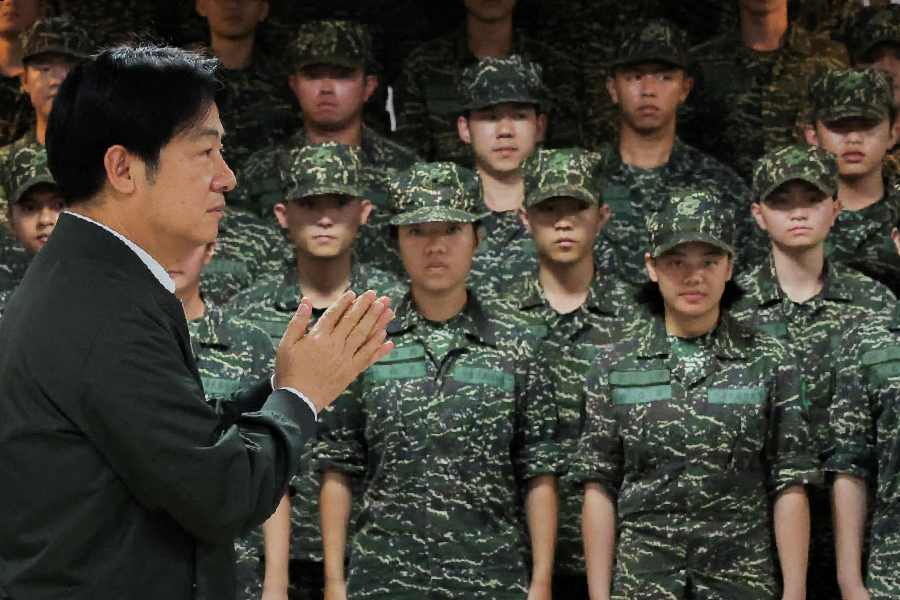
Any attempt to change Taiwan's status quo by force or coercion cannot bring true peace, Taiwan President Lai Ching-te said in a letter to Pope Leo released by the presidential office on Friday.
The Vatican is one of only 12 countries to maintain formal diplomatic ties with Chinese-claimed Taiwan, and the only one in Europe, though the Vatican has worked to improve relations with Beijing, including the appointment of Catholic bishops.
Writing to Pope Leo in response to his January 1 World Day of Peace message, Lai said he had repeatedly emphasised that democracy, peace, and prosperity are "Taiwan's national path and also Taiwan's link with the world".
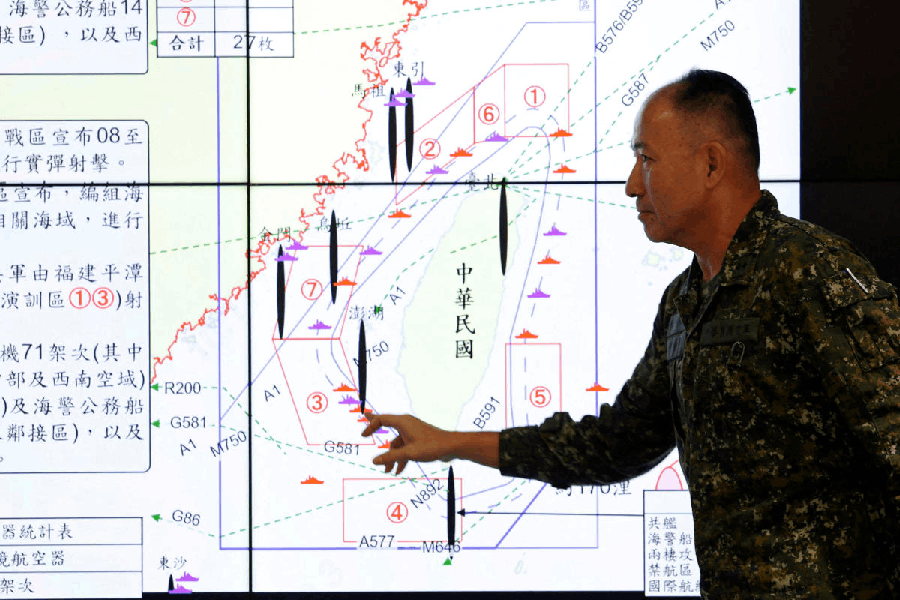
In the face of long-term military coercion and political intimidation from "authoritarian states in the region", Taiwan has always chosen to safeguard peace in the Taiwan Strait through concrete actions, Lai added, without directly naming China.
"I firmly believe that any attempt to change Taiwan's status quo through force or coercion cannot bring true peace," he said.
China's military operates near Taiwan on a daily basis in what the government in Taipei says is an ongoing pressure and harassment campaign. China held its latest war games around the island in late December.
China refuses to talk to Lai, believing he is a dangerous "separatist".
Lai says only Taiwan's people can decide their future.
In his letter to the Pope, Lai also called out "efforts to distort" World War Two documents and the interpretation of the 1971 U.N resolution, which led to Taipei losing the China seat at the global body to Beijing "in order to downgrade our sovereign status".
Beijing says World War Two documents like the Cairo Declaration, as well as the 1971 U.N. resolution, give international legal backing to its sovereignty claims over Taiwan.
The government in Taipei says that is nonsense given the U.N. resolution made no mention of Taiwan, and that the People's Republic of China did not exist until the end of World War Two.
Taiwan's formal name is the Republic of China, the name of the government that fought on the side of the Western allies in World War Two.
The republican government fled to Taiwan in 1949 after losing a civil war with Mao Zedong's communists who established the People's Republic of China.