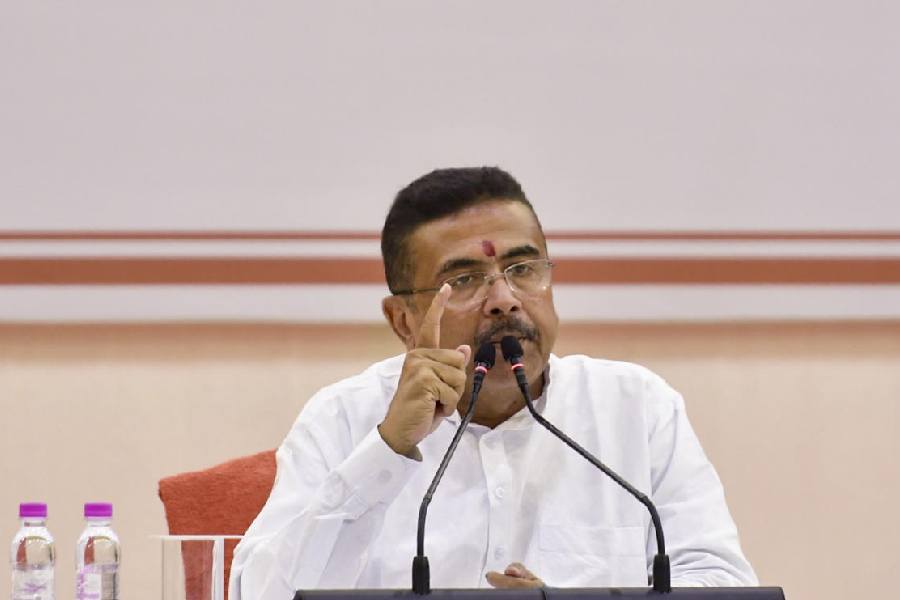
Beijing, March 15: China will abjure economic reforms in its agricultural sector and instead focus on creating “a new socialist countryside”, the country’s Premier Wen Jiabao said as China’s parliament ended its current legislative session here.
The move marks the creation of a new Chinese governance model that can be described as “one country, three systems”.
Originally, China had constructed the “one country, two systems” model in 1997 when it took over laissez-faire-loving Hong Kong and promised the island territory it could retain its political and economic freedoms.
Now by continuing to move China’s coastal industrial regions along a unique path of state-controlled capitalism but promising to administer China’s interior agricultural areas through a new socialist framework, Beijing will have to juggle three contrasting and often contradictory sets of realities at the same time.
Speaking at a stage-managed “news conference” traditionally held at the close of the National People’s Congress, as China’s parliament is called, Wen put on a confident and upbeat face.
“The new socialist countryside will be a key and significant step in building a society of moderate prosperity and putting the Chinese economy on more solid ground,” Wen said from the ornate Great Hall of the People at Tiananmen Square. “The issues of the san nong [or three ‘nongs’ ? Nong Min (peasants), Nong Ye (agriculture) and Nong Cun (rural communities)] are fundamental to China’s modernisation drive.”
At the heart of Beijing’s new socialist agriculture policies is the decision not to privatise agricultural land.
After the Communist Revolution of 1949, all land in China was taken over by the state and redistributed to farmers, who were granted approximately 35-year leases on individual plots.
Though the privatisation “mood” of recent years led the government to consider privatising land as well, “we have realised we just cannot do this”, said Ding Ningning, director of social studies at the Development Research Center of the State Council, recently said. “Privatising land will only allow rich people to slowly buy up huge amounts of land, and create landless peasants. That is where we came from and we don’t want to go back there.”
In a landmark decision, the government also announced farmers would be exempt from paying taxes. “In one stoke, our farmers have been freed of feudal or government taxes for the first time in 2500 years”, said He Bing Jun, vice-chief of Dong Chun village in China’s central Hunan province, who was in Beijing to try and win World Bank funding for a developmental project.
Beijing has also said it will transfer about $20 billion to local governments in poor, rural areas, both to make up for the shortfall in revenues to local governments because of the tax cuts, and to boost investment and research in farm-related activities.
Ding said such “new socialist countryside” initiatives were a much-needed response to growing criticisms from many quarters that the benefits of China’s frenetic economic growth were not trickling down to farmers.
While China’s relentless free-market reforms have turned it into the world’s fastest-growing economy, the benefits of this have been mostly cornered by connected “clans” and urban elite.
In contrast, Chinese farmers have seen their incomes fall and had their social services cut, said Professor Wang Hui, a professor of literature at Tsinghua University in Beijing.
, and a prominent member of a group of Chinese intellectuals who are being called the “new Left” for their criticism of China’s market reforms.
Anger over this and similar administrative failings has been swelling so much in China that last year more than 87,000 public protests erupted across the country, a rise of about 50 per cent over 2005, the ministry of public security has said.
Such tensions have also begun dividing China’s ruling elite, with some favouring widening free-market reforms, and others wanting to rein in the excesses of China’s crony capitalism with hefty doses of Marxism.
Among the “new Left’s” chief complaints is that the central government has cut social spending in rural areas too much, leaving local governments floundering for revenue-generating means. This, they say, is leading many village and county officials to burden farmers with excessive taxes and forcibly convert their farmland into revenue-generating industrial parks.
Gao Zhisheng, a public interest lawyer in Beijing whose anti-government litigation got him placed under house arrest just before the Congress convened, said over 10 million people have been illegally evicted from their homes over the last decade for little or unfair compensation. Those who try to resist, like Ye Guo Qiang, 32, who jumped off a bridge in Beijing to draw attention to the fact that his family’s house was taken over by the city government for no compensation, are jailed, beaten and intimidated.
Wen has said the government will combat this by making farmers’ leases more water-tight and taking measures to prevent coercive evictions.
Du Ying, the vice-minister of the National Development and Reform Commission, also said that if farmers’ land needed to be acquired for commercial development, they should be paid a “market price” by local authorities.
He, the village leader in Hunan province, said that while this sounded good, his main concern was whether the government would be able to implement its plans.
“This is the key”, he said. “Words in Beijing don’t automatically become actions in the villages”.