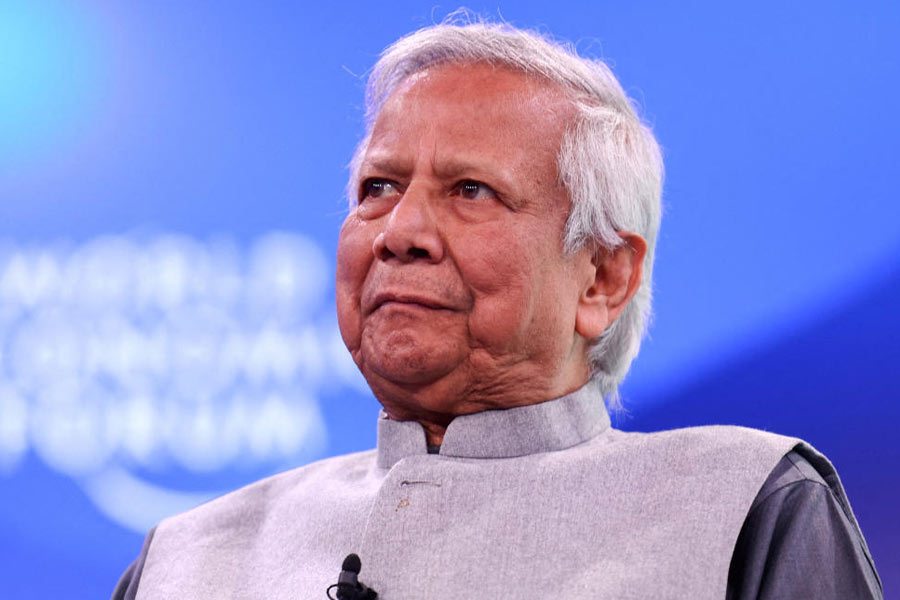
Bangladesh’s interim government chief Muhammad Yunus on Monday made a last-minute appeal to voters to back his proposed reform package by voting ‘Yes’ in the February 12 referendum, which will be held alongside the general elections.
Addressing senior secretaries and top bureaucrats as campaigning ended at midnight, 48 hours before polling in line with election laws, Yunus said, "If the 'Yes' vote wins in the referendum, Bangladesh's future will be built in a more positive way."
He argued that a ‘Yes’ outcome would keep "misrule" at bay, as his administration has actively campaigned over the past several weeks to mobilise public support for the wide-ranging 84-point reform package.
In line with a Bangladesh Bank directive, commercial banks displayed ‘Yes’ vote banners at government offices, while the central bank also instructed banks to use their corporate social responsibility funds to support NGO-led referendum campaigns.
State officials involved in conducting the polls continued canvassing until January 29, when the election commission barred government officials from such activities, describing it as a “punishable offence”.
Several legal experts said that since the referendum offers voters only a “Yes” or “No” choice, the interim government was expected to remain neutral rather than take an openly partisan stance, especially given the significant public expenditure involved.
Some jurists also questioned the referendum’s legitimacy, noting that the Bangladesh Constitution does not provide for such a process.
The referendum seeks public consent for reform proposals outlined in the “July National Charter-2025”, which Yunus unveiled at a high-profile ceremony on October 17 following prolonged consultations between political parties and the National Consensus Commission he chaired.
At the time, Yunus said the charter marked a transition toward a "civilised society from barbarism".
In a nationwide address last month, he again urged voters to cast ‘Yes’ ballots in support of his government’s reform agenda.
The referendum ballot carries a single question encompassing four major reform areas under the July Charter. Voters have been instructed to vote ‘Yes’ if they broadly agree with the proposals and ‘No’ if they disagree.
Critics, however, argued that the charter includes multiple complex reforms, making it difficult even for informed voters who may support some proposals but oppose others.
They also said the referendum aims to bind the next government to implement the charter and to legitimise the Yunus-led administration, which came to power after a student-led street movement known as the July Uprising ousted then prime minister Sheikh Hasina’s Awami League government on August 5, 2026.
The interim government subsequently secured President Mohammed Shabuddin’s signature on the proposal and issued an official gazette.
Legal experts continued to raise objections. “Most of the decisions taken in the July Charter, including those in the gazette, are contrary to the current Constitution,” said Swadhin Malik, a leading jurist.
He added that as the Constitution remains in force, the President lacks the legal authority to sign such a gazette, noting it might only have been valid if the Constitution had been annulled or suspended under martial law.
“Since neither has happened, everything should proceed according to the existing Constitution,” Malik said.