Thursday, 14 May 2026
Thursday, 14 May 2026
Thursday, 14 May 2026
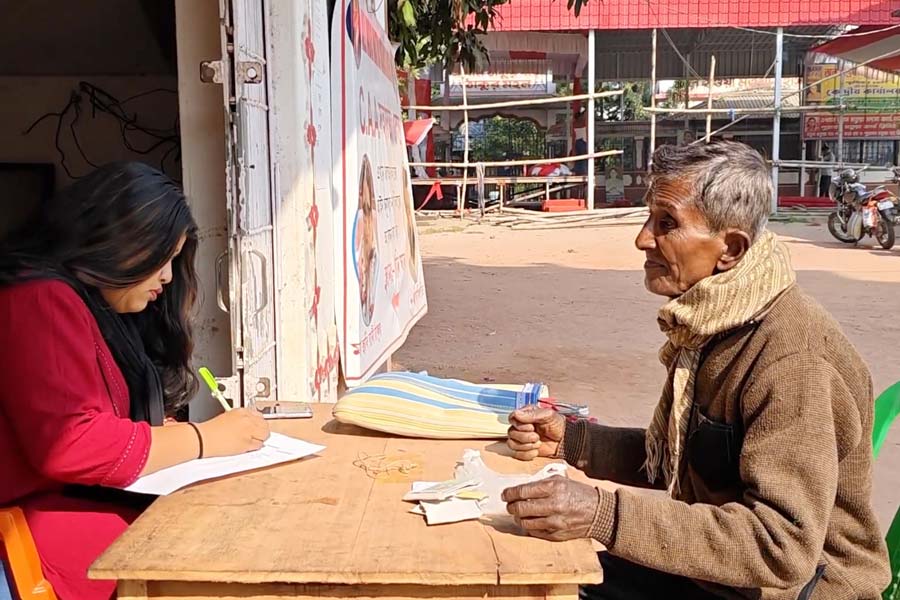
For many Matuas – a Hindu Dalit sect set up in the 19th century in present-day Bangladesh – in Bengal, the go-to destination these days for documents that make them eligible to become Indian citizens are the makeshift camps in the lanes around Thakurbari in Thakurnagar, around 65 km from Kolkata.
At these camps, Matuas from Bangladesh can apply for Indian citizenship under the Citizenship Amendment Act (CAA) enacted by the Narendra Modi government that lays out a path for Indian citizenship for persecuted minorities – except Muslims – from neighbouring countries.
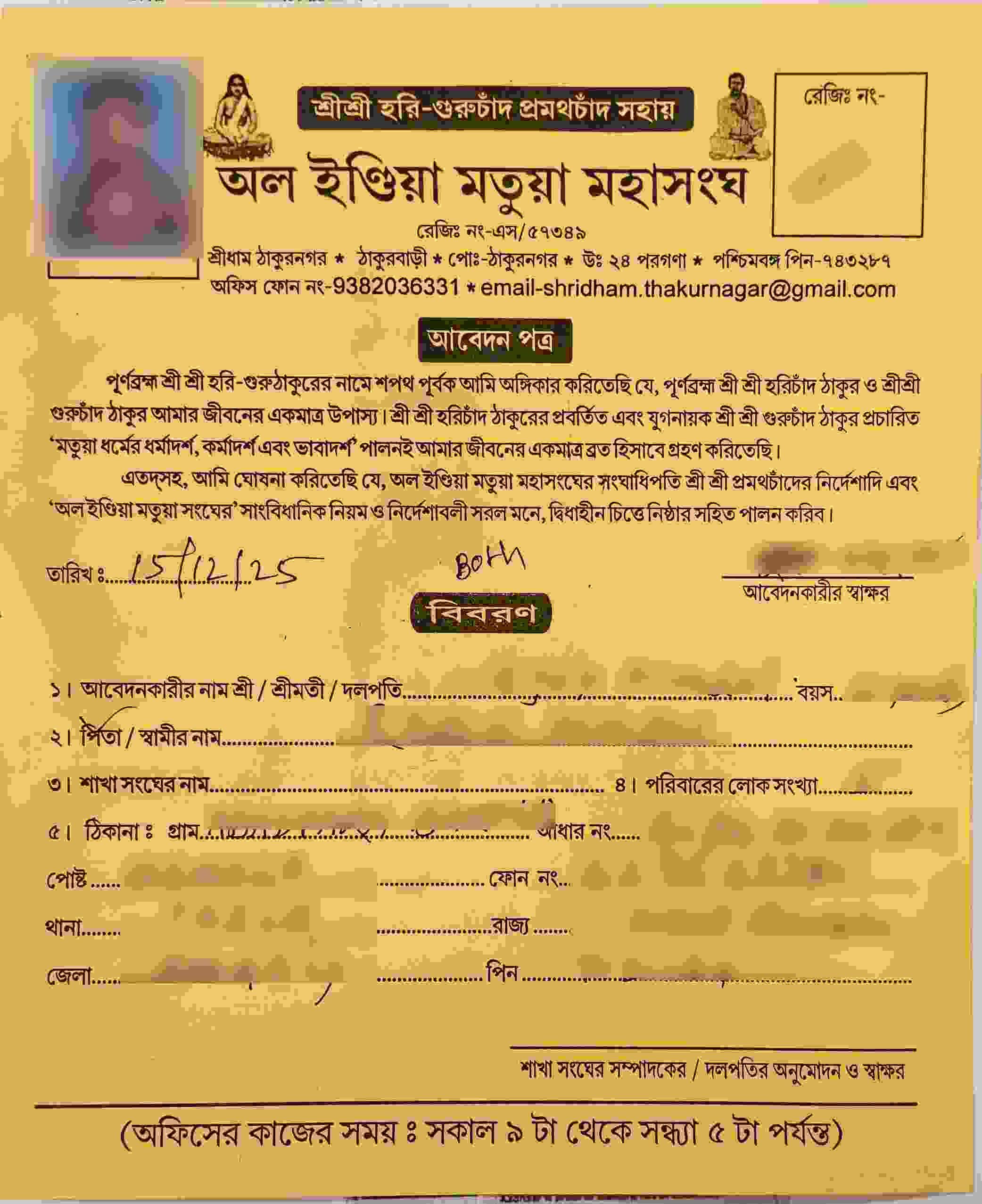
At these CAA camps, they can also get a religious “identity card” stating that they are Hindus.
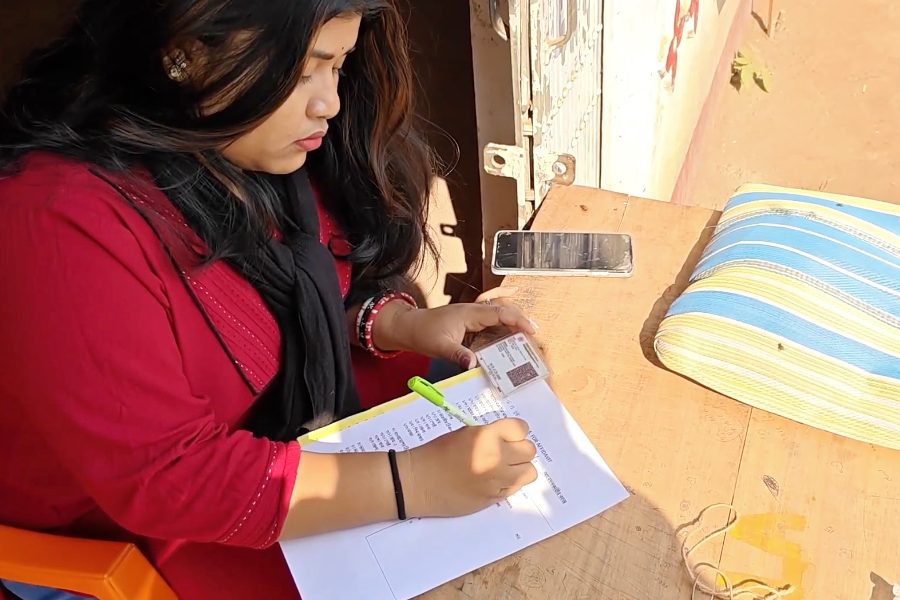
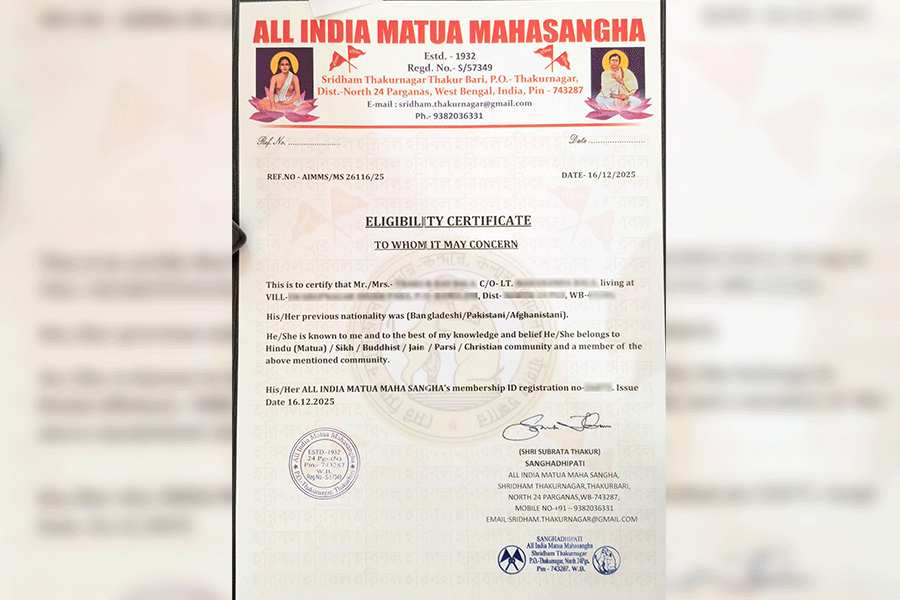
Many Matuas migrated under adverse circumstances to India and don’t have documents. To apply for citizenship under the CAA, they have to get themselves an eligibility certificate that is being handed out at the All India Matua Mahasangha’s CAA camps.
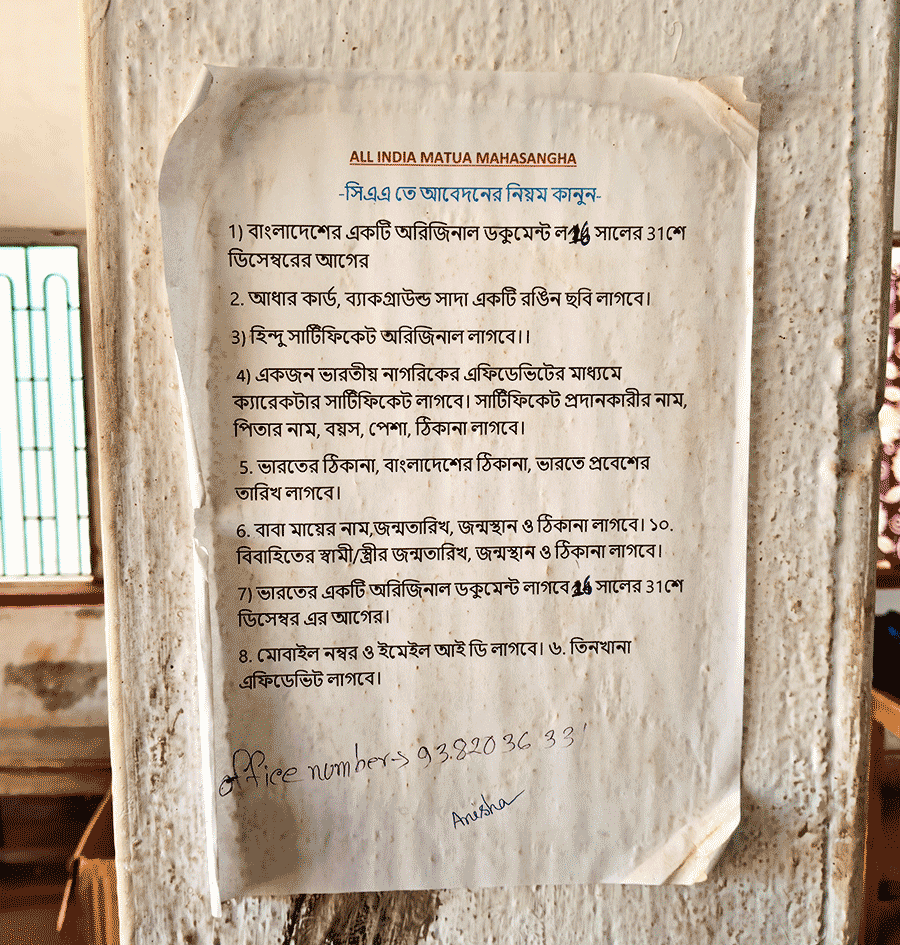
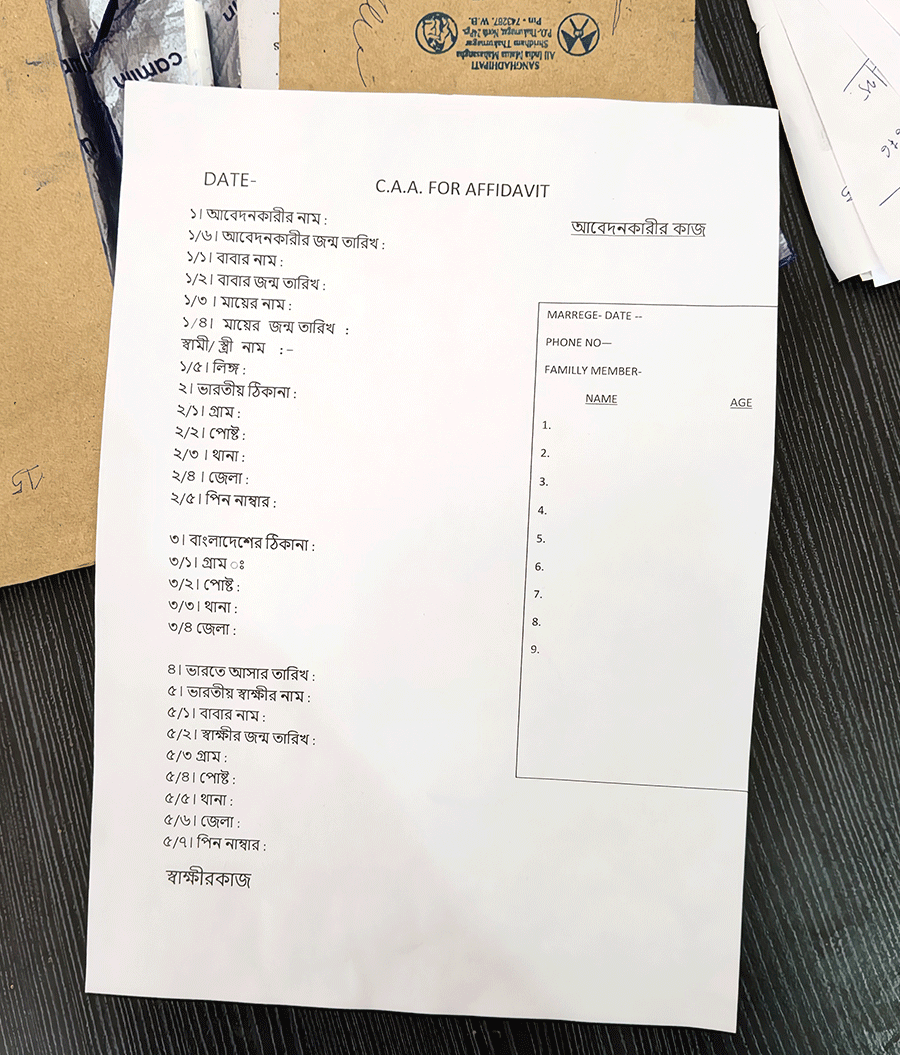
The certificate identifies the applicant as a Hindu (Matua) of Bangladeshi origin. This certificate is granted after a person applies for the CAA by filling out a form with their details and furnishing any address proof from Bangladesh along with their Aadhaar card and some other documents.
The cost is around Rs 700.
They might be called for a second visit for further verification.
If the applicant fails to provide address proof from Bangladesh, the members at the camp will contact their counterparts in that country to help procure an address proof from where the applicant used to stay.
This service costs extra.
The Telegraph Online spoke to one such applicant who said she was asked to pay Rs 2,000. She was still contemplating whether she wanted to pay that amount or not, because it was “quite expensive”.
But she was helpless; she could not find any other solution to getting an address proof from Bangladesh.
According to the Mahasangha members present at a CAA camp, this “Hindutva certificate” is “all they need” until they get their Indian citizenship.
Reportedly, over 2 lakh such certificates have been issued to date. The applicants are told this “Hindu card” will be beneficial in getting Indian citizenship.
However, some believe that this card might not be enough to protect them, despite the Mahasangha members claiming that the citizenship documents should arrive within two months of application.
Beyond these camps, there are several cyber cafés which also have posters up that say “CAA applications done here.”
When The Telegraph Online visited some of these camps, it seemed like anyone could get a “Hindu card” for Rs 100. No one was checking bonafides in some of the camps.
After paying the sum, the applicant receives a receipt that says Rs 100 has been given as donation. The applicant is asked to come back on a later date to collect their “Hindu card”.
The “Hindu card”, however, is no guarantee.
The Trinamool alleged in July that some Matua workers in Maharashtra were “harassed by the police” and branded as “Rohingya” despite possessing this “Hindu card” and other identification documents.
“The Pune police are reportedly refusing to recognise identity cards issued by the All India Matua Mahasangha, besides EPIC and Aadhaar cards,” TMC Rajya Sabha MP Samirul Islam had written on his X (formerly Twitter) account then.
The “lack of certainty” over when they will get their citizenship is making the members of the Matua community sceptical and anxious amid the ongoing special intensive revision (SIR) of electoral rolls underway in Bengal, said political analyst Suman Bhattacharya.
“They have seen people being put into detention camps in Assam, and that is what is scaring them,” Bhattacharya said.