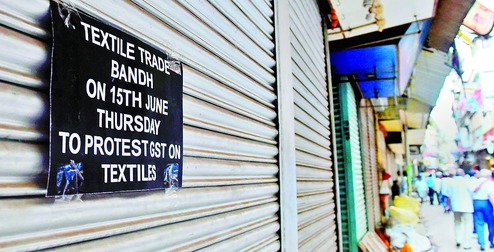

June 15: Textile traders in the city kept their shops shut today to protest the proposed imposition of 5 per cent goods and services tax (GST) on fabrics and the allegedly cumbersome process that they would have to follow to comply with the new tax rules.
All natural fibres, including cotton, cotton yarn, fabrics and ready-made garments valued below Rs 1,000, would attract a GST of 5 per cent. Garments priced above Rs 1,000 will be taxed at 12 per cent. Silk and jute have been exempted from the tax. However, the GST council has slapped an 18 per cent levy on man-made fibres and synthetic yarn.
According to the protesting traders, fabrics will be taxed for the first time in the country under the GST regime. "We have never paid taxes in the past six decades. With the rollout of GST on July 1, the livelihood of about 10 lakh people in this industry will be affected," said Brij Mohan Mohta, a senior vice-president of the Chamber of Textile Trade and Industry, which supported the strike.
The textile industry is second only to agriculture in the number of people it employs. The protesters feel that most textile workers do not have the education to follow the "complex procedures" that are mandatory under the GST.
About 50,000 shops in Calcutta, including those in at least 20 Burrabazar markets like Sadasukh Katra, Manohar Das Katra and Gariahat were shut. Those selling readymade or stitched garments did not take part in the strike since such items have always been taxed.
"We intend to start an indefinite agitation on July 1 if our demands are not met by the GST Council," said Arun Bhuwalka, the president of the chamber.
The national textile industry is pegged at around $40 billion, according to Investment Information and Credit Rating Agency of India (Icra) Limited. "The textile sector in Bengal contributes around 5 per cent to it," said Mohta. An official of the chamber said that there were 5 lakh textile traders in Bengal, including nearly 50,000 in Calcutta.
A trader spoke about the "complex" process of GST compliance. "We have to file purchase and sales statements thrice a month under GST. This is impractical. We often send material to a buyer without taking payment. The buyer makes the payment only after checking the material. This takes one or two months. Our purchase and sales statements will not tally because the material sent would be shown as sold but the payment will not arrive by then."