 |
It?s a shot that?s etched in everyone?s minds. Amidst the carnage and havoc of the Gujarat riots, there was a terrified Qutbuddin Ansari, with his hands folded, begging for mercy. The photograph was flashed around the world and it became the face of the chaos that had overtaken the state.
Amazingly, the photograph that outshadowed thousands of other images and words, didn?t win any awards that year. Says ace lensman Arko Datta who caught that split second of terror, ?The World Press Photo Awards jury members told the media that my photograph didn?t bag the award because they wanted to give someone else a chance. They thought the photograph definitely must have bagged a lot of other awards.?
Now the judges of the World Press Photo Awards have put things right. This time, the unforgettable image was one of a lone South Indian woman crouched on sandy ground, her mouth open in a wail, her palms turned to the sky and the arm of a tsunami victim visible in the corner. Once again, it was Reuters photojournalist Arko Datta on December 28, 2004, who caught the moment and immortalised the pain of tsunami victims around the Indian Ocean.
Says Datta, ?When the phone rang at 3.30am in the morning and a voice said that the call was from World Press Photo, I knew, I had got one of the category awards but nothing prepared me for the Best Photograph of the Year Award. And what makes it better is that everywhere it says ?Indian photographer bags World Press Photo Award?. That makes it doubly special.?
This time Datta is getting plenty of recognition for his shot. He will soon leave for London to pick up the Reuters Photographer of the Year Award. From there, it?s a short hop to Amsterdam where he will receive the World Press Photo Award and prize money of Rs 1 crore. Datta will be the second Indian to win the top prize at the World Press Photo Awards. The first was Pablo Bartholomew, whose photograph of the Union Carbide gas tragedy in December 1984 was another global award winner.
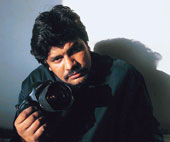
Datta has worked his way up through the ranks in the Indian newspaper industry. He started out with the Indian Express in Chennai and then moved to The Telegraph. After a few years, he shifted to the French newsagency AFP and then to Reuters. But the dream to capture the crucial moment was always there, even as a child. ?My mother bought me my first camera ? a box camera and I spent a lot of time shooting the construction workers outside my house. I was fascinated and there began my tryst with photography,? he says.
Datta is, first and foremost, a newshound with a camera in hand. He has chased all types of news stories, both big and small. But in the last two or three years, he has usually been sent out to capture the bigger moments. He has, for instance, been sent to cover the Olympics and also the World Cup in South Africa. He has also travelled to world troublespots like Iraq during the invasion and Afghanistan. More recently, he travelled to Tamil Nadu to cover the after-effects of the tsunami.
He?s known among friends and colleagues as the ?guy who bags all the photography awards?. And Datta certainly has picked up a string of them during his career. At the recently concluded Mumbai Press Photo contest 2004, Datta scored in extraordinary style. He won the News Photograph of the Year and also bagged awards in four categories: Spot News, General News, Sports News and Daily News.
The photo, which got him Mumbai?s top award, was yet another striking image shot in Tikrit, Iraq, during the peak of the US invasion. ?I don?t shoot anything with the thought of an award or prize. I am on assignment, on a job and I have to deliver the goods. But I?d be lying if I say that all the tragedy and mayhem does not affect me. It does and very much so, but I tell myself ? ?Arko you have work to do?. It is an emotional experience and the award is just a bonus,? he adds.
As a youth, Arko had thought about becoming an economist. But he changed gears after bumping into an old friend, who shared the same love for creativity. As a photojournalist, Arko believes the art is creative yet relevant. ?I have learnt from a lot of people but the man whose work really influenced me was Raghu Rai. He pioneered Indian photojournalism and took the profession to a new level and understanding. Today, a lot more people from good families look at photojournalism as a career option and not as the last resort,? he says.
Arko is an inveterate snapper who will spot a beautiful frame even in everyday moments. He likes to shoot life on the street and everyday situations. But he prefers to empathise with his subjects rather than sympathise. ?I am happy I got the award but the minute I think why I got the award, I am sad. It is ironical but yes, my success depended on someone else?s tragedy,? he says thoughtfully.
And though he has his moments of doubt, he always reminds himself why he?s at the job. After all, as he puts it, ?the sweetest songs are always the saddest?.