The election bugle has sounded across Bengal, but the issues in the Darjeeling hills are distinctly different from the plains where the special intensive revision (SIR) of electoral rolls has taken centrestage.
Identity politics, infrastructure and tea worker rights are the prime drivers of Darjeeling politics in the run-up to the Assembly polls.
Darjeeling MP Raju Bista, the face of the BJP in the region, met Prime Minister Narendra Modi, Union home minister Amit Shah and Union finance minister Nirmala Sitaraman on February 11, 12 and 13.
“For decades since independence, our region, despite being of critical importance from a national security perspective, had remained lacking in basic infrastructure...,” Bista said after his meeting with Modi, indicating infrastructure push had been his focus.
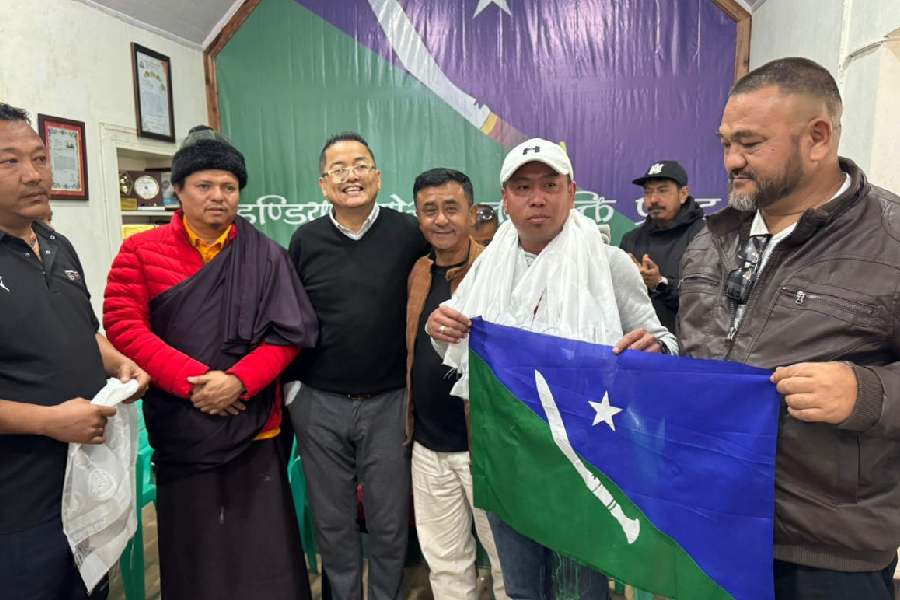
Ajoy Edwards (in black sweater), the president of the Indian Gorkha Janashakti Front, welcomes new joinees to the party in Darjeeling on Tuesday.
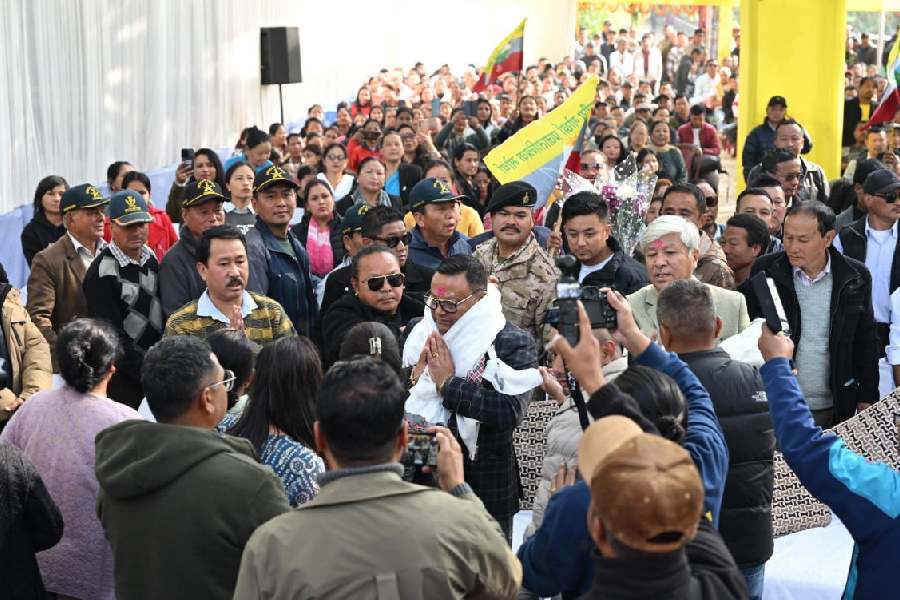
The BJP’s arch rival in the hills, the Bharatiya Gorkha Prajatantrik Morcha (BGPM), has been organising public meetings at Gorkhaland Territorial Administration (GTA) constituencies. Anit Thapa, the BGPM president who is also the GTA chief executive, has been flagging off issues such as development, identity-based politics and land rights for tea garden workers.
Thapa's only mention of the SIR has been to blame the BJP.
“We have been voting for the BJP and now they are questioning the legitimacy of our votes with which they won. SIR inconvenience is the gift for voting for the BJP,” said Thapa in a rare reference to the SIR during a recent public meeting.
The BJP has won the Darjeeling Lok Sabha seat since 2009.
The main opposition party in the GTA, the Ajoy Edwards-led Indian Gorkha Janshakti Front (IGJF), has also started a grassroots outreach. On Monday, the IGJF brought out a rally in Darjeeling demanding that minimum wages for tea workers be fixed.
The Bimal Gurung-led Gorkha Janmukti Morcha was granted an audience by Union home minister Shah on February 12 in New Delhi.
On the meeting, Roshan Giri, Morcha general secretary, said: “During the interaction, the Morcha delegation formally submitted a memorandum that again sought a permanent political solution for the region through the creation of a state or alternatively, a Union territory."