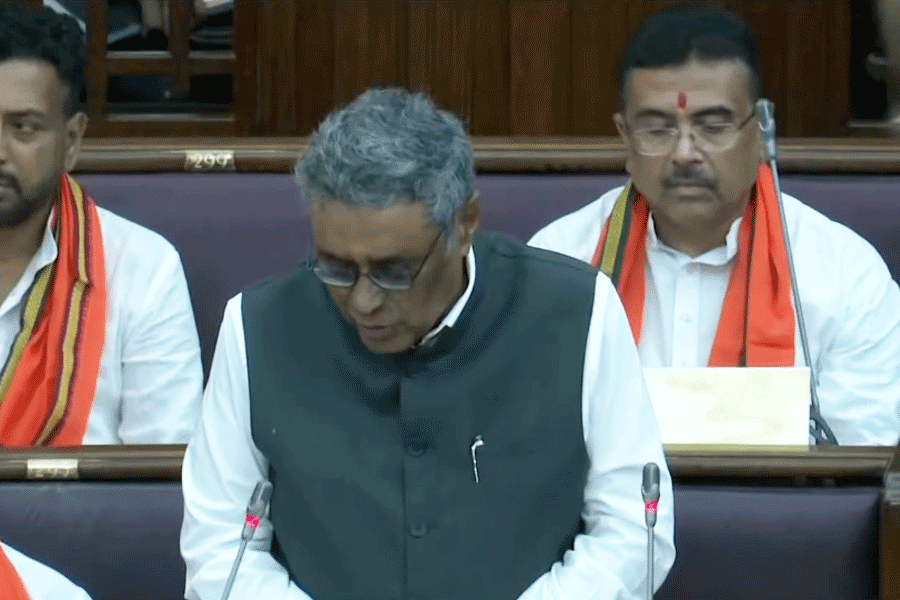
The Suvendu Adhikari government unveiled an ambitious and wide-ranging tourism road map as it tabled the budget for the 2026-2027 fiscal year in the Assembly on Monday.
The budget promised to transform Bengal into a globally competitive tourism destination by promoting inclusive, sustainable and heritage-based tourism across regions.
“The comprehensive tourism strategy aims to position Bengal as a cultural, spiritual, ecological, and adventure tourism hub by investing in infrastructure, branding, connectivity, heritage conservation and community participation,” tourism minister Shankar Ghosh said after his cabinet colleague Swapan Dasgupta placed the budget in the Assembly.
The government has emphasised leveraging Durga Puja as a global cultural tourism phenomenon.
Under a dedicated campaign titled “Durga Puja — A Global Festival, An Eternal Passion of Bengal”, the state plans to showcase the grandeur of themed pandals, traditional rituals, music, art, and community participation before international audiences, Ghosh added.
“A digital engagement platform will also be developed to connect the Bengali diaspora and global audiences with Durga Puja celebrations and Bengal’s cultural heritage,” said the tourism minister.
While reading out his speech, the finance minister said that the heritage commission would be reconstituted to prepare restoration plans for major heritage and religious sites across Bengal.
The sites include Kalighat Kali Temple, Tarapeeth, Jorasanko Thakurbari, Madanmohan Temple, Jalpesh Temple, Tarakeswar and Kankalitala.
“The plan is to develop a Shakti Peeth circuit by including major temples including Tarapeeth, Bakreshwar, Kankalitala, Nandikeshwari and Phullara. A separate pilgrimage circuit associated with Chaitanya Mahaprabhu and his disciples will also be developed. The government plans to transform Mayapur into a world-class spiritual tourism destination, with a proposed investment of Rs. 1,000 crore over three years,” said Dasgupta.
He also announced major tourism development plans for Darjeeling, Dooars, Sundarban and Jangal Mahal.
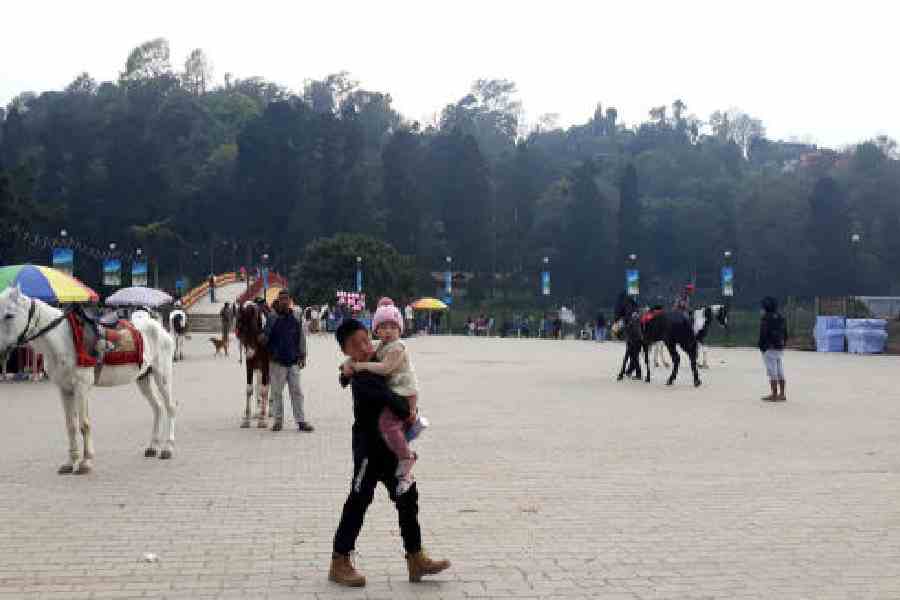
Darjeeling, he said, will be promoted as an eco-adventure tourism hub, focusing on mountain tourism, wellness tourism, tea heritage, adventure sports and experiential travel.
The Dooars and Cooch Behar regions will be developed as premier wildlife and tea tourism destinations.
For the Sundarban, the government announced plans to prepare a comprehensive tourism master plan focusing on eco-resorts, river tourism, floating glamping, electric watercraft, wildlife tourism and biodiversity-sensitive infrastructure.
In Purulia and Jangal Mahal, an integrated tourism circuit connecting Ayodhya Hills, Murguma, Khairabera, Joychandi Hills, and Garhpanchakot will be developed.
“A tiger safari spread across 160 acres at the Jangal Mahal Zoo in Jhargram has also been proposed with an allocation of Rs. 25 crore,” said Dasgupta, who allocated ₹527.84 crore for the tourism department.
In the coastal belt, the government has proposed upgrading Digha and the Mandarmani marine drive to international standards with emphasis on beach tourism, eco-tourism and water sports.
Also, to ensure proper treatment at important tourist locations, trauma care centres will be set up in Digha, Darjeeling and Farakka, said the finance minister.