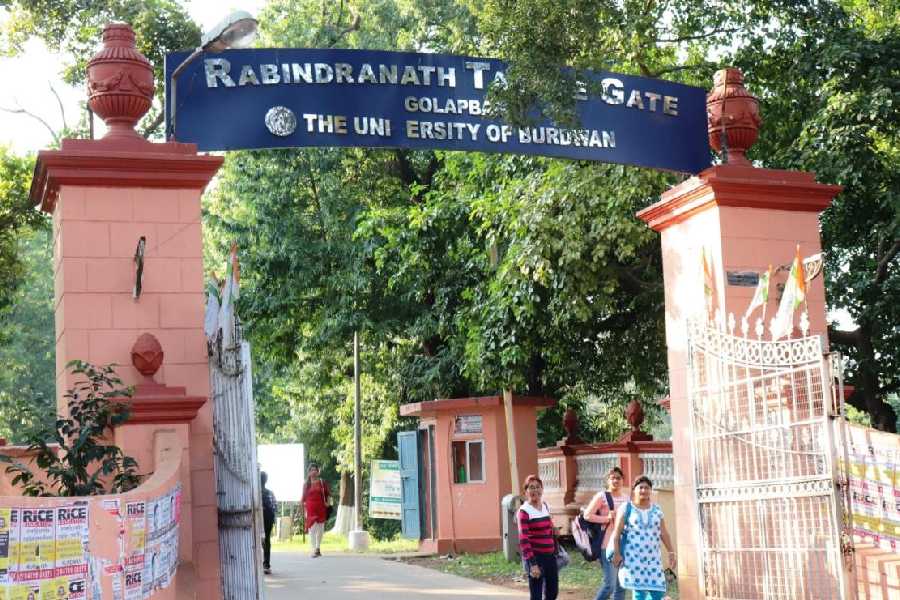
Calcutta: The state higher education department has indicated that it will not be able to release salaries of officers and non-teaching staff of the University of Burdwan in March because of an acute funds crunch, even as teachers’ salaries are set to be paid.
According to official estimates, over ₹6.55 crore is required to meet the salary bill for officers and non-teaching employees. In a written communication dated February 17, an assistant secretary of the higher education department’s university branch informed the university’s finance officer that the amount could not be released at present because of “paucity of funds”.
The letter said: “Residual amount of claim of salary grant ₹6,55,68,247 for the month of March 2026 in respect of non-teaching employees and officers, including vice-chancellor, could not be released at present due to paucity of fund.”
University officials said the higher education department had been alerted to the possibility of a delay in March salaries, and warned that if the situation persisted in April, the crisis could deepen.
An officer of the university, who did not wish to be named, said: “Such segregation and delay now appear to be natural and obvious since the government has changed its priority. For the government, ensuring funds for all financial assistance schemes has become the main priority. I suspect our money is being diverted to those schemes before the Assembly polls.”
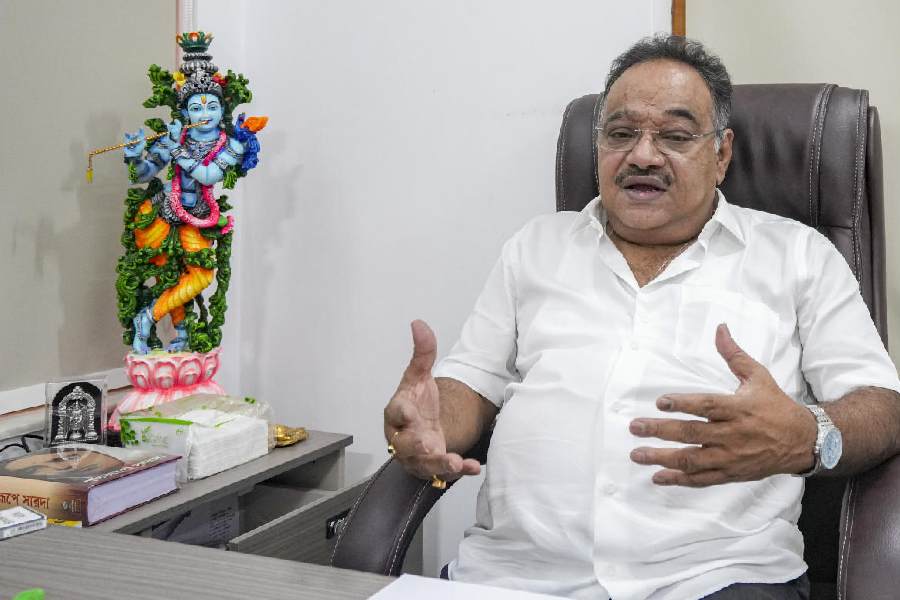
Vice-chancellor Shankar Kumar Nath said delays in pension and gratuity payments had already been affecting state-aided universities. “Amid this problem, a fresh problem cropped up in the payments of salaries to the officers and non-teaching staff. It would have been better if the department released the salary payments of the officials and non-teaching staff along with the teachers. The problem would hopefully be settled soon," the VC said.
A section of university employees pointed out that ₹3.48 crore had been released on February 6 towards teachers’ salaries. They asked why the crisis had affected only officers and non-teaching staff.
An official at Bikash Bhavan, the state education headquarters, said: “There is a funds crisis. Nevertheless, the salaries of the teachers were released only because the gross amount is nearly half of the amount required to pay officers and non-teaching staff.”
Senior officials explained that the allocated funds for the ongoing financial year had been largely exhausted in meeting pension liabilities and salary expenses for serving and retired employees. Additional allocations now require special approval from the state finance department.
“Before obtaining the approval, we have asked Burdwan University to submit utilisation certificates of funds incurred in the first three quarters of the year,” an official said, adding that similar problems could arise in universities with large numbers of pensioners and employees.
Documents accessed by university authorities show that the finance officer had written to the higher education department on January 9 seeking ₹34.69 crore to cover pensions and salaries of teachers, officers and non-teaching staff in the January-March quarter. University sources added that the requested amount did not include additional liabilities such as commuted pension payments for recently retired staff.
Officials from Jadavpur University and Calcutta University said they, too, occasionally faced similar financial stress, though they often tide over such situations using internal reserves.
Bhaskar Goswami, professor of economics and secretary of the Burdwan University Teachers' Association (BUTA), said: “This is quite an alarming situation. The most unfortunate part is that never before has such a division been created by any government while disbursing salaries of employees of Burdwan University. The officers and non-teaching employees are unsure of getting their legitimate dues after a month of labour. Unfortunately, many teachers, officers and non-teaching staff who retired recently were not even paid their basic dues,” he said.
The association also questioned how such a crisis could arise when expenditure was normally anticipated during budget allocations.
Senior higher education department officials, however, said the problem was temporary. “The crisis is because we are at the fag end of the ongoing financial year,” an official said.