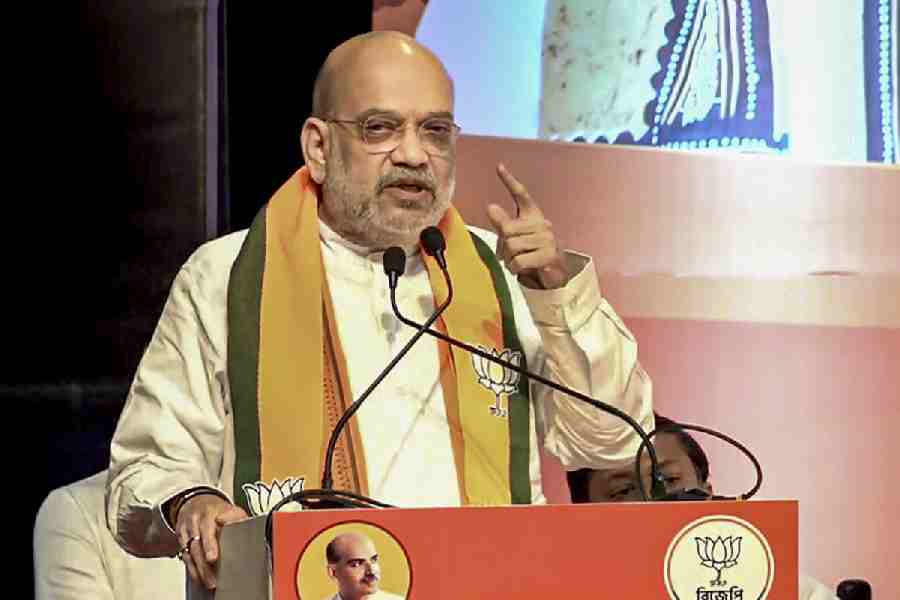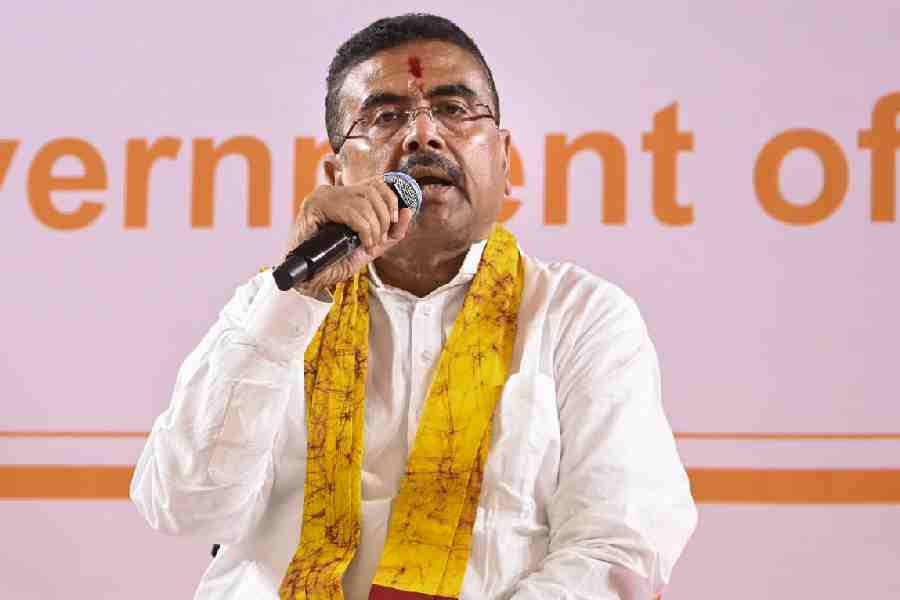
Bengal chief minister Suvendu Adhikari said on Tuesday that his government had already made it clear that no licence would be given to sell alcohol within a kilometre of schools, colleges and temples.
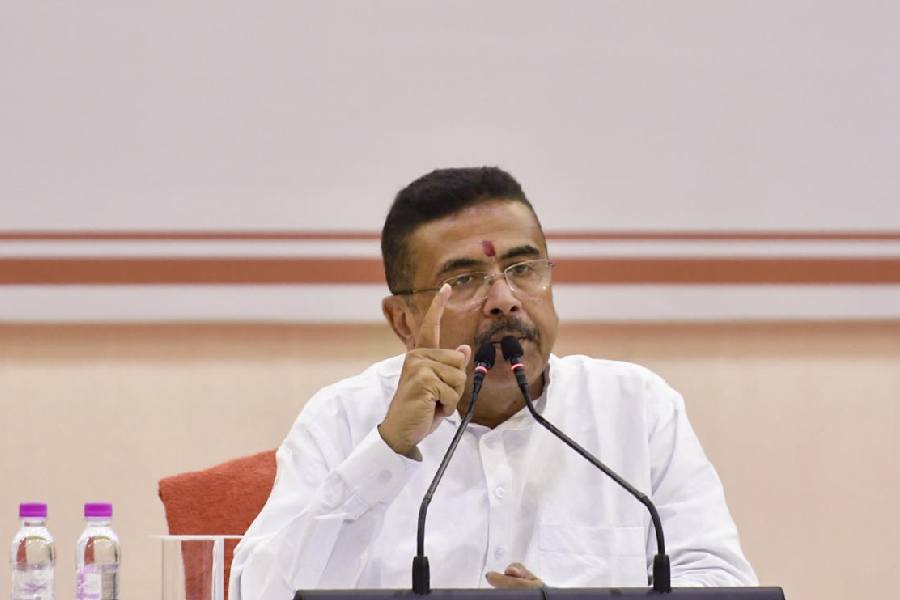
“We have already said that the ruler’s law will not work. The rule of law will. We have said that a licence for alcohol shops will not be given within a kilometre of schools, colleges and temples. This government will run differently. There is no reason for any concern,” Suvendu told reporters after an administrative review meeting in Kalyani.
Existing retailers have to renew their excise licence annually by paying a fee, like an insurance policy. They are issued a fresh licence valid for a financial year beginning on April 1 and valid till March 31 the next year.
Suvendu did not clarify if he meant scrapping the licences of existing shops or just a ban on the grant of new licences. Neither did he say anything about existing bars at restaurants, hotels and social clubs. But the comment triggered panic and disbelief.
No formal order had been issued till late Tuesday evening.
However, since Monday, excise officials have been calling retailers, prodding them to prepare a list of educational institutions and temples within a kilometre. The calls have deepened the anxiety among retailers.
If indeed a blanket ban is imposed on the sale of liquor within a 1km radius of educational institutions and temples — both in terms of existing licences and fresh ones — it will threaten Calcutta’s iconic and thriving wine-and-dine scene.
In a city like Calcutta, a school, college, or temple stands within a kilometre of almost every establishment that sells or serves liquor.
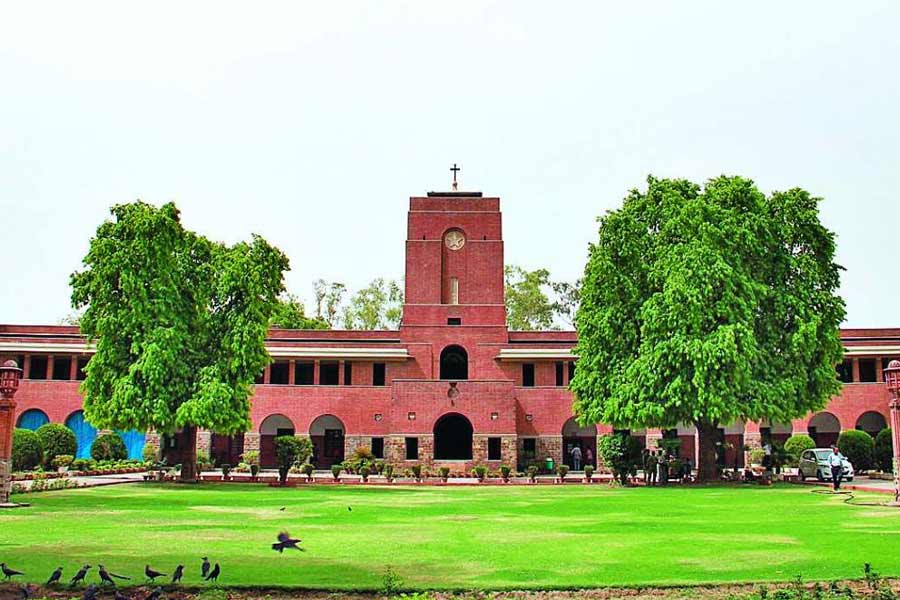
Park Street, for example. A nearly 200-year-old club, legendary restaurants that serve liquor and off-shops dot the neighbourhood. Not far from them stand Loreto House, St. Xavier’s Collegiate School, St. Xavier’s College, Apeejay School and Assembly of God Church.
From Southern Avenue to Central Avenue, as in most of the city, the situation is not very different.
“If the order extends to places selling and places also serving alcohol, Calcutta will be an almost dry city. It just cannot happen. My presumption is that the chief minister suggested that no new shop can come up within a radius of 1km (of schools, colleges and temples). But if he means a blanket ban, we have to seek legal recourse,” said a liquor distributor and retailer.
Besides loss of livelihood, the state exchequer will suffer a massive loss in case of a strict implementation of the 1km bar.
The state government collected excise revenue of around ₹18,850 crore in 2023-24. The current projected annual revenue is pegged at around ₹23,000 crore, said a source in the excise department.
In India, alcohol laws are governed at the state level. Bengal already has a policy of no liquor shop within 1,000ft (roughly 300m) of educational institutions, said sources in the excise department.
In Uttar Pradesh, liquor cannot be sold within 50 metres of educational institutions and temples in municipal areas and 100 metres in non-municipal areas. In Assam, liquor shops are not allowed within 50 metres of schools, colleges, places of worship and hospitals in a municipal corporation area. This distance increases to 100 metres in areas under municipal boards and town committees and 150 metres in panchayat areas. In Odisha, liquor cannot be sold within a radius of 500 metres of educational institutions. This distance is 300 metres when it comes to temples in urban areas and 500 metres in rural areas. All these states are ruled by the BJP.
A statewide association of liquor retailers in Bengal — including off-shops, on-shops, bars and hotels — has more than 5,500 members. “If a blanket ban is enforced, only about 500 shops may survive across Bengal. The rest will shut down. But that is improbable. We genuinely hope that the chief minister means that no new shops will come up. We are waiting for a formal order,” said Mihir Chakraborty, assistant general secretary of the association and a retailer in Nadia.
Calcutta and neighbouring districts endured a prolonged ban on the sale and serving of liquor in the run-up to the April 29 elections.
The Election Commission invoked a colonial-era law to impose the unprecedented ban starting April 20 on the sale and serving of liquor across Calcutta and other districts that voted in the second phase on April 29.
The standard poll-time ban, as imposed on most other states even in this round of Assembly polls, is 48 hours till the scheduled conclusion of polling.
The existing liquor sellers have already paid the fee for a fresh licence for the financial year 2026-27. But the Bengal elections delayed the process. They have received acknowledgement receipts but have yet to get the fresh licence.
A veteran restaurateur on Park Street declined to comment on the chief minister’s statement. “I should not be saying anything without seeing a formal order,” he said.