The aorta, the body’s largest artery, has emerged as a separate organ system because of the complexity of diseases affecting it and the specialised expertise required for surgical treatment, doctors said.
The aorta starts from the heart’s left ventricle and carries oxygen-rich blood to the entire body through branching arteries.
An aortic dissection is a condition in which there is a split in the aorta. The force of blood pumping can split the layers of the artery wall, allowing blood to leak in between them. An aortic aneurysm is a bulge in the wall of the aorta.
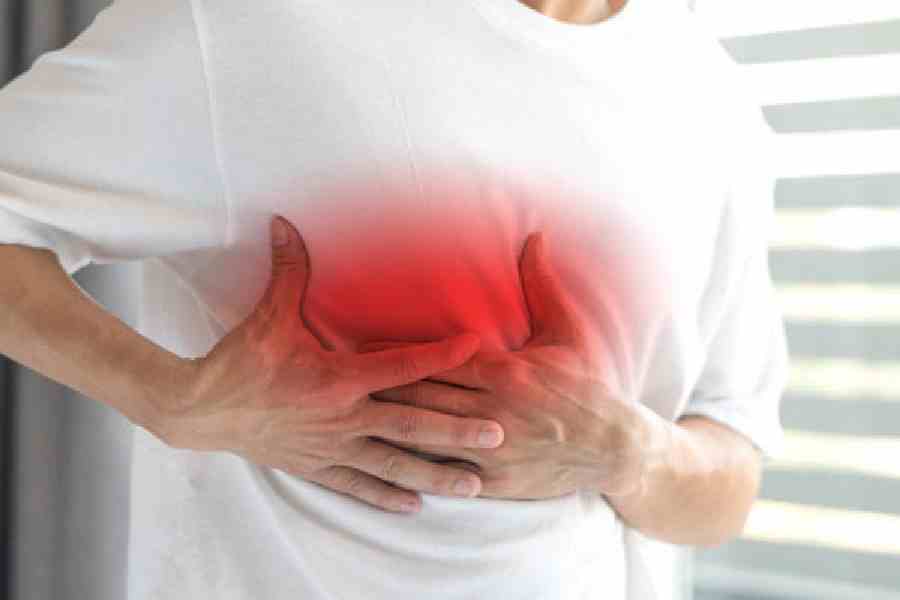
These conditions, which doctors said can be fatal, require precise diagnosis, advanced imaging, and coordinated multidisciplinary care. But such cases are often detected late, as symptoms resemble those of cardiac emergencies, particularly acute heart attacks, the doctors said.
Approximately 30 per cent of aortic cases are initially misdiagnosed as heart-related problems, they said.
“Aortic diseases are often silent or misunderstood until they become emergencies. The overlap of symptoms — chest pain, shortness of breath and palpitation — with cardiac ailments frequently leads to delayed diagnosis,” said Atanu Saha, senior consultant, cardiac surgery at Narayana RN Tagore Hospital, which recently hosted a programme to call for “focused attention on aortic health”.
“Early use of CT scan and echocardiography (ECHO) in patients presenting with chest pain can help differentiate aortic conditions from cardiac causes and guide appropriate management,” said Saha.
A team of doctors discussed some of the advanced surgical procedures to treat aortic conditions. One of them involves the insertion of an elephant trunk-shaped graft in the chest. This is known as frozen trunk surgery because the stent-graft is reinforced with pliable metal, which, when inflated, takes the shape of the aortic tube.
The process is expensive mainly because the implant is imported. A frozen trunk surgery could cost upwards of ₹10 lakh.
“Management of complex aortic disease demands a truly multidisciplinary approach,” said Shuvro H. Roy Choudhury, director and clinical lead, interventional and endovascular radiology, at Narayana RN Tagore Hospital.
Over the past few years, the hospital has seen patients travelling from across eastern and northeastern India for evaluation and management of advanced aortic conditions. The hospital has also treated patients from neighbouring countries such as Bhutan.
“We have conducted over 500 aortic procedures in the past decade,” said a spokesperson for the hospital.
Some of the patients who were treated at the hospital attended the programme on Wednesday, held at a hotel on Park Street. One of them was a businessman from Garia.
“My blood pressure levels dropped alarmingly. I went to a doctor who reduced the power of the hypertension pill. But there was no improvement,” said the man, who was later referred to the Mukundapur hospital, where he was diagnosed properly and then treated.
R. Venkatesh, group COO, Narayana Health, said: “Aortic diseases remain under-recognised despite their severity. Awareness among clinicians and the public that not all chest pain is cardiac in origin is essential”.