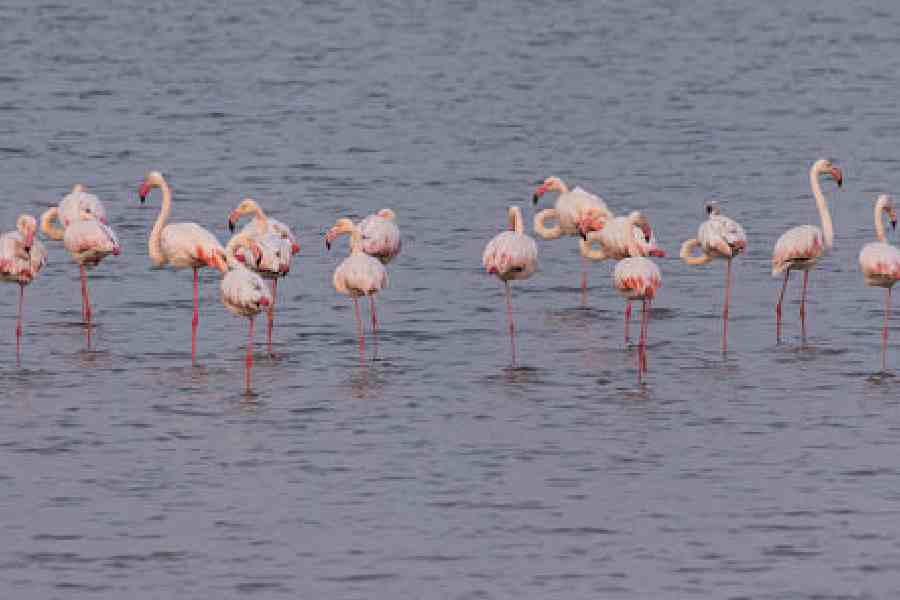
The Little Rann of Kutch (LRK) and Nalsarovar Bird Sanctuary together form one of western India’s most rewarding destinations for travel, birding, and wildlife photography during winter and early spring. LRK’s vast salt flats and grasslands offer dramatic landscapes where flamingos paint the horizon pink and the endangered Indian wild ass roams freely under open skies.
Just a few hours away, Nalsarovar unfolds as a serene freshwater wetland, alive with thousands of migratory birds like pelicans, ducks, flamingos, and raptors during winter. For travellers and photographers alike, this region blends raw wilderness, rich biodiversity, golden light, and authentic rural experiences — making LRK and Nalsarovar a perfect canvas for nature, bird, and animal photography.
Nalsarovar Bird Sanctuary
It is the largest freshwater wetland in Gujarat and one of the most important avian habitats in western India. Located approximately 65km southwest of Ahmedabad, the sanctuary spans nearly 120sq km. Its landscape consists of a shallow lake dotted with hundreds of small islets, marshes, and mud flats. It was officially declared a bird sanctuary in 1969 and recognised as a Ramsar Wetland Site in 2012.
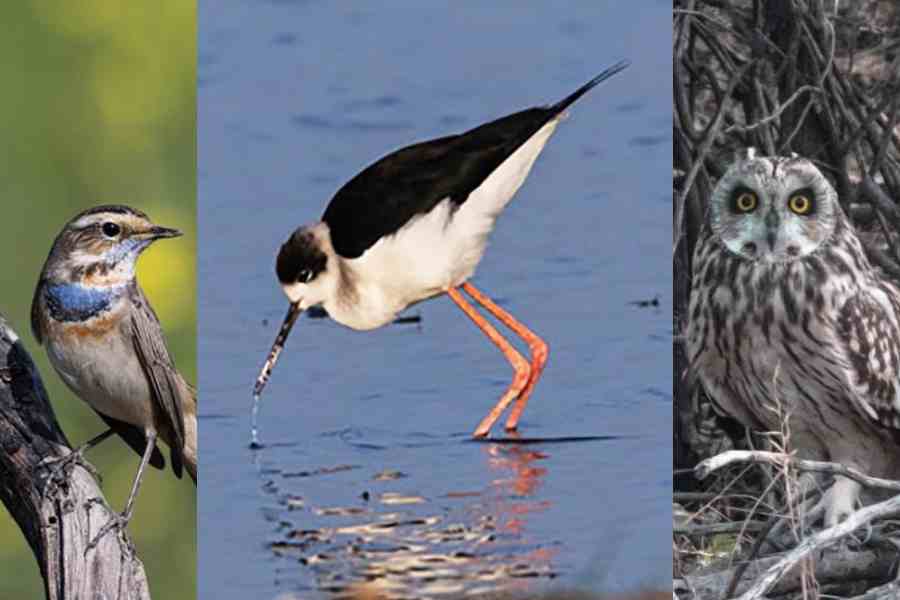
Bluethroat, Black-winged stilt, Great grey owl
The sanctuary is internationally renowned for its avian diversity, hosting more than 250 species. During the winter months, the lake becomes a vibrant refuge for migratory birds. Key species found here include water birds like pelicans, flamingos, and black-winged stilts, as well as songbirds and others such as black-headed buntings, bluethroats, and red munias.
The shallow waters provide ideal feeding and breeding conditions, while the fringes of the sanctuary support fish, amphibians, reptiles, and small mammals. For the best experience, visitors should explore the sanctuary early in the morning or late in the evening, when bird activity peaks.
Little Rann of Kutch
This is one of India’s most extraordinary landscapes. Spreading across nearly 5,000sq km in northern Gujarat, this vast saline desert transforms into a seasonal wetland during the monsoons. Established in 1972 as the Indian Wild Ass Sanctuary, it is currently on the Unesco Tentative World Heritage list. The LRK is globally famous as the last natural habitat of the Indian wild ass (Khur), a rare and endangered subspecies known for its speed, endurance, and distinctive sandy-coloured coat. Despite its rugged appearance, the region supports a surprising variety of wildlife, both mammals and birds.
Among the mammals are desert foxes, Indian wolves, striped hyenas, and nilgai.
As for the birds, the sanctuary is a breeding and wintering ground for over 200 species, such as peregrine falcons, demoiselle cranes, pied avocets, grey-headed swamphens, pelicans, red-naped ibises, spoonbills, and white-tailed lapwings.
From the iconic flamingos to the resilient desert fox, Nalsarovar and the LRK showcase the incredible adaptability of life across contrasting ecosystems, making them invaluable destinations for researchers, photographers, and nature enthusiasts alike.
A journey through the Little Rann of Kutch and Nalsarovar Bird Sanctuary is far more than a simple trip — it is an immersive encounter with nature at its raw and graceful best. From LRK’s stark salt deserts echoing with the calls of flamingos and the sight of the Indian wild ass, to Nalsarovar’s tranquil wetlands teeming with migratory birds, every moment offers visual drama and soulful calm.
For travellers, birders, and wildlife photographers, these landscapes reward patience with golden light, rare sightings, and unforgettable frames. Together, LRK and Nalsarovar stand as timeless destinations where travel, photography, and conservation converge beautifully.