The new film Porobashi (playing in theatres now) tells an intimate human story intertwined with the currents of history. Directed by Monet Roy Saha, the film features an ensemble cast comprising Loknath Dey, Kinjal Nanda, Debpratim Dasgupta, Swati Mukherjee, and Sabuj Bardhan, along with several other prominent actors and actresses.
The story of Porobashi follows a former freedom fighter, Nimai, who migrates to India with his family in search of safety in the 1960s. During their journey, his daughter Asima goes missing — an incident that changes the family’s life forever.
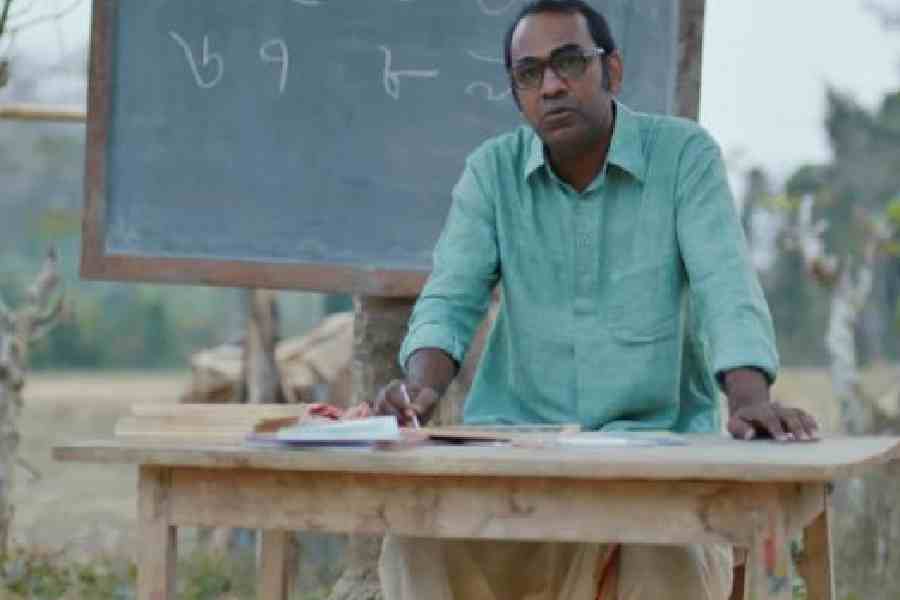
They eventually find refuge in an indigenous village in Tripura. Gradually, Nimai starts teaching the local children, and the family begins adjusting to their new life. Meanwhile, Nimai’s son Atul falls in love.
“Migration is a very serious issue across the world, driven by various social, political, and economic factors. What we have portrayed is only one fragment of the migration experience till date — there are still many untold stories waiting to be revealed to the world. Porobashi is not just the story of Nimai, an ex–freedom fighter; it is a collective story of everyone who has faced the trauma and consequences of migration. It is extremely important for our generation, and for generations to come, to know what our ancestors went through and to remember their lived histories.
“As I am from Tripura, and our producer Anil Chandra Debnath, who is also from the same state, was extremely cooperative. He is truly the backbone of the entire production. Since this is his story, he took me to different parts of Tripura to experience the locations, the people, and the characters who had encountered migration. This immersive journey made my process of making the film much easier and more authentic. The actors were very cooperative, and quite unexpectedly, they immersed themselves in different dialects of Bengal and the folk language of Tripura, which is truly commendable. The best part was seeing actors from Calcutta blend seamlessly with the culture of Tripura, something that is extremely challenging and deserves special appreciation. We are receiving an overwhelming positive response from audiences — friends, family, and viewers alike,” said director Monet Roy Saha.
“Porobashi is a very important film for me because the subject matter of this movie is very intriguing. It talks about humanity. It also speaks about the partition and the unforgettable pain it caused people. From that perspective, I believe this film is highly relevant. As an actor, I have really enjoyed working on this movie. An actor always dreams of playing a diverse range of characters, and from that standpoint, I can say that I have never played a character like this before. Our producer, Anil Debnath, has guided me a lot, as this is a story about his hometown.
“The director and everyone else in the team, especially Loknath Dey, who played the character of my father, and Sabuj, who played Iqbal, are incredibly talented artistes. Debapratim Dasgupta (Taju) was also great to work with. I can truly say that I have learned a lot from working on this project. I worked with this production and this producer for the first time. It felt very good; there was a very homely vibe at all times,” said Kinjal Nanda.
“Personally, as an actor, I always prefer layered characters where you can sense some complexity — whether psychologically or emotionally, where the character has multiple layers. I felt that by portraying the character of Iqbal, I got that opportunity. So, that was another reason why Porobashi was special to me. Besides, it was my first project with Purbo Digonto Film Production, but it never felt like our first collaboration, because Anil Debnath, our producer, and Monet, the director, were so open and supportive with all of us.
“We worked with such intimacy, and another major reason was that we shot in Tripura. So, it felt like a trip — we were travelling, and in between, we were shooting. Also, Tripura’s natural beauty and the wonderful locations, many of which are still unexplored, added to the experience. Overall, it was a great experience. When the film was shown at Nandan during the Kolkata International Film Festival, the audience gave an amazing response. So, understanding that, we hope that if people like it in the coming days, the number of shows or halls might increase. So, I have just one request: the film is out, and wherever it is showing near you, please go watch it in the theatre,” said Sabuj Bardhan.