Midjourney, the AI start-up known for transforming text prompts into striking and sometimes surreal images, has announced a major shift into hardware with its first physical product: a full-body ultrasound scanner focused on preventive healthcare.
The company introduced what it calls the Midjourney Scanner at an event in San Francisco. CEO David Holz acknowledged the shift from creating images to building medical devices. He explained that the scanner uses ultrasound, unlike the radiation or magnets used in CT scans or MRIs. It aims to deliver image quality similar to MRI in many ways, but in much less time. The scanning process is uniquely designed.
A user steps onto a platform that lowers them into a shallow pool of water along rails, descending at about two inches per second. As they sink, their body passes through a ring of around half a million tiny sensors, each acting as both a small speaker and microphone.
These sensors emit ultrasonic waves and record the resulting ripples millions of times per second, generating terabytes of data streamed to computers that create a detailed 3D map of the body's muscle, fat, bone and organs. The whole scan takes about 60 seconds, and Holz noted that about a dozen people have been scanned so far.
Importantly, Holz stated that the scanner does not depend on Midjourney's signature generative AI. "We're not even using any AI in this yet, just really cool hardware and software," he said. This leaves some uncertainty about how the project connects to the company's existing image-generating business, aside from using idle computing power in a new way.
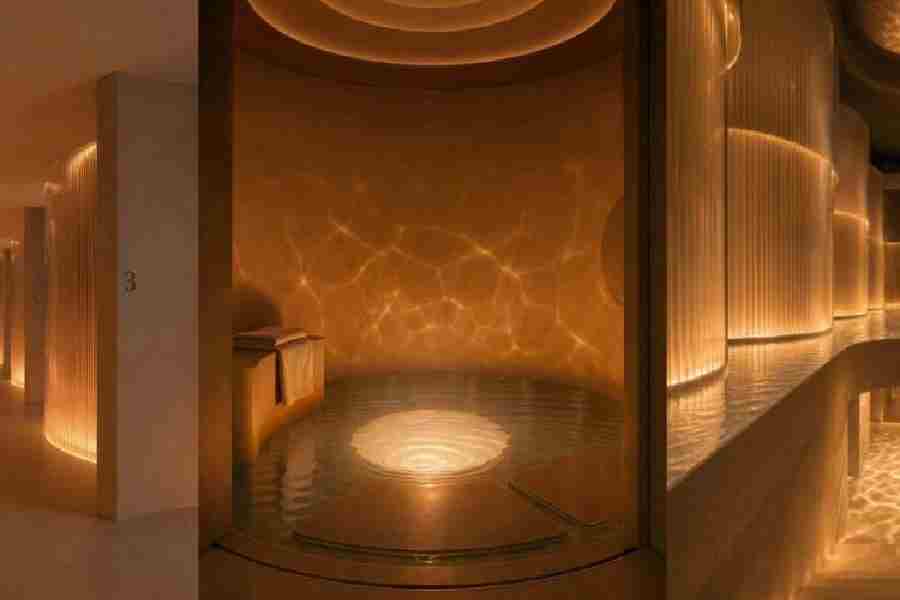
Instead of marketing the device as a diagnostic tool, Midjourney is integrating it into a lifestyle concept. The scanners will first launch in 'Midjourney Spa' locations, starting with a 25,000sqft site in San Francisco's Union Square. This spa will include hot tubs, saunas, cold plunges, a gym and scanning rooms built around the water-based platforms. Holz mentioned that the company has signed a lease and finalised designs. The first spa is expected to open before the end of 2027 and will house around ten scanners.