
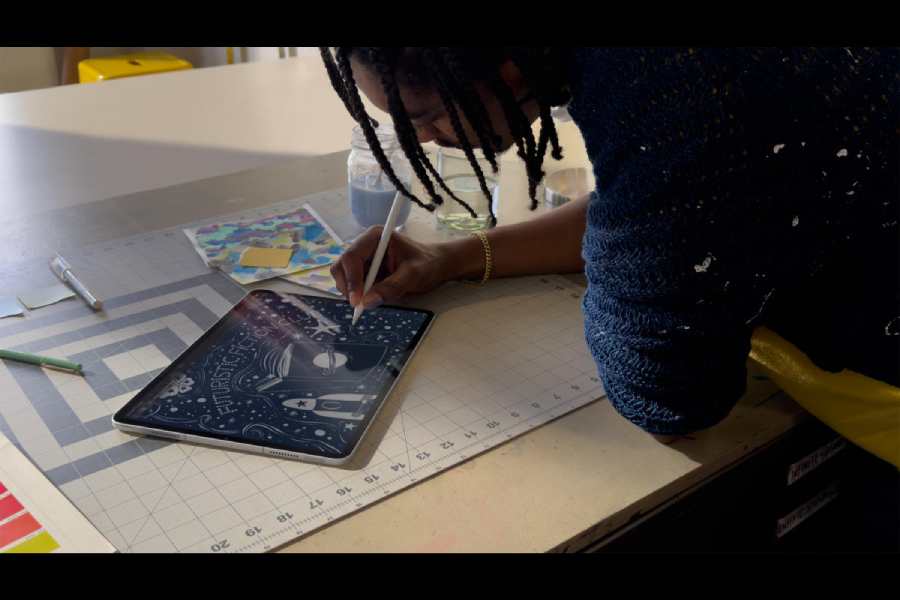
Apple is widening the way users pay for its creative software, not narrowing it. With the launch of Creator Studio on January 28, creators can continue buying professional apps outright or opt for a monthly or annual subscription that bundles nearly Apple’s entire creative toolkit across Mac and iPad (some apps are also accessible on iPhones).
The new subscription pulls together much of Apple’s professional creative software under one roof. Subscribers gain access to tools spanning video editing, music production, design and productivity — effectively the company’s full creation suite — for a single recurring fee.
The package includes Final Cut Pro on Mac and iPad, Logic Pro on Mac and iPad, and Pixelmator Pro across both platforms. It also folds in enhanced versions of Pages, Keynote, Numbers and Freeform, alongside Mac-only tools such as Motion, Compressor and MainStage. In practical terms, this is nearly everything Apple offers for creators in one subscription.
A subscription that adds options
A few omissions are notable but unsurprising. GarageBand and iMovie are absent, though both have long been seen as entry-level, free alternatives. Creator Studio, by contrast, is clearly aimed at users who have outgrown those tools or want to explore Apple’s professional ecosystem more deeply.
It is also worth noting what is not changing. Standalone versions of most professional apps remain available as one-time purchases, and Apple says they will continue to receive the same core updates. What remains unclear is whether future features — particularly those tied to cloud-based AI — will appear first, or exclusively, in the subscription tier.
Some distinctions already exist. The iPad versions of Final Cut Pro, Logic Pro and Pixelmator Pro are tied to Creator Studio and cannot be purchased outright. Meanwhile, apps that have always been free — Pages, Keynote, Numbers and Freeform — remain so. Users who do not subscribe can continue using them exactly as they do today.
Apple has added a new content hub, supplying images, graphics and illustrations for use across documents and presentations. Collaboration limits are also higher, allowing for larger shared files.
AI tools are woven throughout. Pages can assist with images and text, Numbers can auto-generate formulas and fill data intelligently, and Keynote can produce a first draft of a presentation based on a simple outline. These are convenience features rather than essentials, but they point to where Apple sees these apps heading.
Pricing, at least, is straightforward. Apple Creator Studio costs ₹399 per month or ₹3,999 per year. New subscribers receive a one-month free trial, and buyers of a new Mac or eligible iPad are offered three months at no extra cost. Education pricing brings the cost down to ₹199 per month or ₹1,999 per year for students and educators.
Whether this represents good value depends largely on how many of the apps you actually use. For someone working regularly in Final Cut Pro but rarely touching Logic Pro, the maths could be less compelling. Still, compared with the one-time cost of professional video-editing software, the subscription can be cheaperr — particularly for newcomers testing the waters.
There is also the question of duplication. Many users already own Final Cut Pro or Pixelmator Pro outright. If feature parity holds between those versions and the Creator Studio editions, subscribing effectively means paying for iPad access and future Cloud-based features, which may feel redundant in the short term.
Over the longer view, Apple appears to be betting that steady subscription revenue will translate into faster development. The company is likely to funnel more premium features into Pages, Keynote, Numbers and Freeform, gradually blurring the line between productivity tools and professional software. The content hub, too, is expected to expand.
What Apple is really charging for
AI is central to that strategy. Features that rely on Cloud processing and remote servers are expensive to run, and those costs make subscriptions more attractive to Apple. As iPads grow more powerful, the company seems intent on positioning them as serious creative machines, not just companions to the Mac.
This approach differs markedly from Adobe’s. Apple continues to allow lifetime purchases of its flagship apps, a policy that has won it considerable goodwill. Some users bought Final Cut Pro nearly a decade ago and have received years of updates at no additional cost. That model remains intact.
Apple has been explicit on this point. Speaking to CineD, the company confirmed that one-time purchasers will continue to receive the same core features. Bryan O’Neil Hughes, Apple’s director of worldwide product marketing for apps, said tools such as Visual Search, Transcript Search and Beat Detection would remain available to all users, regardless of how they paid. “It’ll update, and it’ll all just work as you expect it to,” he said.
Hardware, too, is not a barrier. Macs with older chips — anything before Apple’s latest M-series processors — will still support all features, with newer machines simply offering better performance. What may sit behind the subscription wall are features that depend on Cloud-based AI and server-side processing, rather than core editing tools.
Apple is marketing Creator Studio as an expansion of choice rather than a replacement. For students and first-time creators, it lowers the barrier to entry; for Apple, it creates a clear runway for rolling out future Apple Intelligence features at scale. If the subscription model results in faster development and more ambitious features, it could finally give tools like Final Cut Pro the momentum needed to justify their ‘pro’ branding once again.