Storytelling remains at the heart of Kankana Chakraborty’s creative journey. The actor and filmmaker, who completed her Master’s in Acting from the prestigious New York Film Academy, is steadily building a distinctive identity in the entertainment industry through her performances and work behind the camera. Her love for storytelling eventually drew her towards filmmaking.
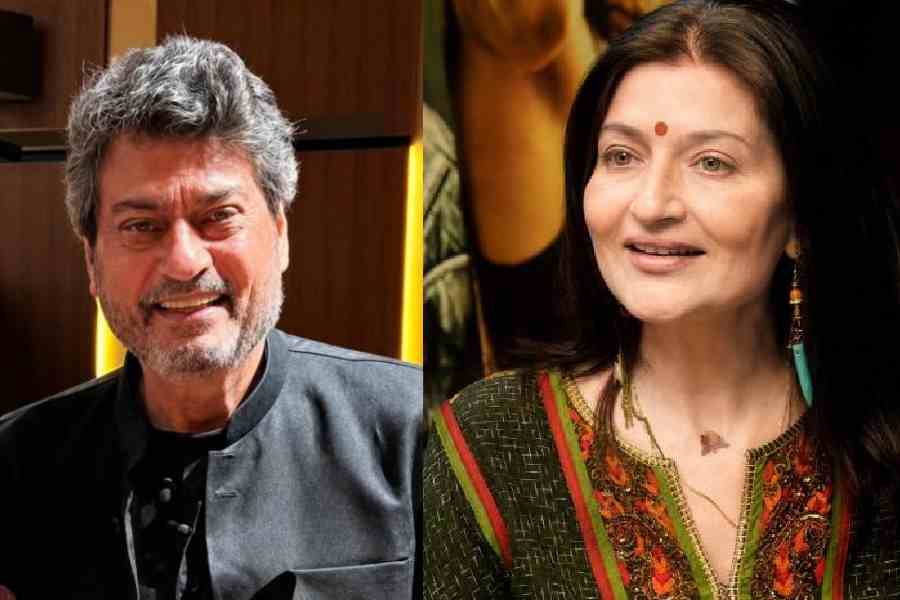
Over the years, she has directed a series of critically acclaimed docu-dramas and short films, earning appreciation for her nuanced and sensitive narratives. Now, Kankana is all set to direct her first feature film, The Family I Chose, starring veteran actors Sarika and Kanwaljit Singh. Adding another exciting chapter to her journey, Kankana recently reunited with her Shobdo Jobdo co-star Rajat Kapoor after being cast in Everybody Loves Sohrab Handa, which he directed. A t2 chat with Kankana...
Tell us about your film, The Family I Chose, set in Sikkim.
We don’t pick the family we’re born into — but what about the ones we gather along the way? Friends who become chosen family often form bonds stronger than blood, forged by shared history and hard-won trust.
The film dives into this idea, exploring redemption, the echoes of inherited grief, and the wild, risky decision to love beyond lineage. There’s also a father, searching for his son in the remnants of the life he left behind. The casting of The Family I Chose is something I’m especially excited about. It brings together Kanwaljit Singh sir and Sarika — marking their first collaboration — along with two young actors from Sikkim, Aaradhya Rai (11) and Adiln Rai (7). We auditioned over 350 children across the region before finding them. What stood out was their honesty — they’re instinctive, present, and incredibly natural. The rest of the cast is entirely from Sikkim.
Why did you decide to direct this film?
The answer comes from a very personal place. As a writer, I draw on my own life and surroundings, and this story is no different. I love my parents; they are my lifeline. I was born into a big family, but for me, chosen family has often felt as important — sometimes more — than the one I was born into. But for the longest time, I didn’t understand why leaving Los Angeles to come back to India felt so heavy. Later, I realised — it was the people I missed. My chosen family.
This film comes from that feeling. It’s my way of acknowledging those relationships, and the quieter things we carry — grief, distance, and the need to reconnect. We’re shooting in Gangtok because the mountains have always grounded me. Gangtok is not just a backdrop, but a living character in the story. This is also my way of giving back to Gangtok, a place that has always made me feel like I belong. All my projects are personal, but this one is special. I’m glad this is my first feature. In many ways, this film is my visual poetry.
What drew you to the character of Nazia in Everybody Loves Sohrab Handa when you first read the script?
When I first read the script, Nazia wasn’t fully developed. I liked the story, but didn’t feel a strong pull to the role. Around the same time, I was preparing to move back to Los Angeles and had given up on working in the Indian film industry. When I got the call for an audition, I was excited but unsure. A fellow actor, Atul Kulkarni, advised me: when Rajat Kapoor calls you, you show up.
Rajat conducted the audition himself, acting with me for three rounds. The first was sticking to the script; the second mixed it with improvisation; by the third, it was more open playing around with the scene. After many self-tape auditions, this felt refreshing — engaging and collaborative. At the end, Rajat said, “You are my Nazia,” and might need to convince others, but it didn’t matter much to me. The audition itself felt like a win. Somewhere during that process, I started to understand and connect with Nazia.
Working with Rajat Kapoor again — how was this experience different from your earlier collaboration?
I first worked with Rajat Kapoor in 2019 on Shabdo Jabdo, my first professional acting job in Calcutta. By 2022, I was cast in Everybody Loves Sohrab Handa, my first Hindi feature film, with Rajat as writer, director, and co-actor. He’s been part of several “firsts” in my career. On my first day of Shabdo Jabdo, I was nervously running lines when Rajat walked in, asked if I was ready, and when I said yes, he smiled and said, “Great, because I’m not,” before walking off. It instantly broke the tension. On Sohrab Handa, he welcomed every actor with a rose, thanking them for being part of the film. It set the tone — you felt valued, and it made you want to give your best. As a co-actor, he’s incredibly present. No two takes are the same, and he quietly pushes you to stay alert and engaged. After Shabdo Jabdo, he told me he wanted to direct me someday. A few years later, I was playing Nazia.
What changes would you like to see in the industry, especially for emerging actors and directors?
One of the biggest challenges I see is the lack of structure. It often feels like everyone is running the race, but no one knows where the starting line is. In Los Angeles, the process is clear: agents submit you, auditions are structured, and you move forward step by step. When you book a part, you know you’ve earned it. Here, especially for newcomers, it’s hard to even know an audition is happening unless you’re already connected. If I hadn’t known Rajat Kapoor, I would never have found out about that audition. I’ve been advised to invest in PR over representation. Casting agents have told me that being a “known face” matters more than being a good actor at the entry stage. It creates a loop — you need visibility to get work, but you need work to become visible.
We’ve borrowed the language of casting systems from Hollywood, but not the structure behind it. I also feel that producers/financiers/decision-makers need a better understanding of filmmaking. It allows for more meaningful collaboration. Right now, there’s talent and ambition — but what we really need is a clearer structure.