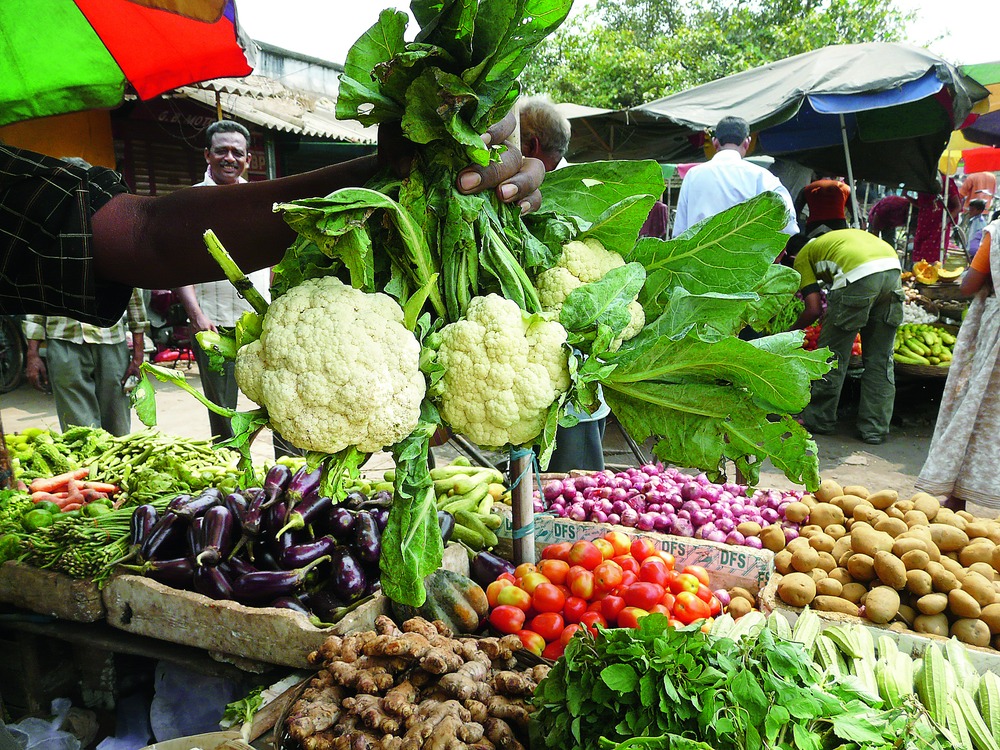

Buying local may be a global trend but it's not safe to follow it in Calcutta. A series of surveys by researchers from Jadavpur University in Calcutta found that vegetables and greens grown on the southern fringes of the city have high levels of cadmium, lead and chromium.
Many of us avoid buying vegetables grown in Dhapa, the solid waste disposal ground beside the Eastern Metropolitan Bypass, because of contamination issues. The study proved us right but also found those beautifully-packed vegetables - that you paid extra for - at the mall have toxic metals. And if you bought cauliflower, spinach, cabbage or brinjal fresh from a Calcutta market this morning, think twice before cooking them too.
The researchers tested samples of vegetables across farms, urban markets and shopping malls and found most of them had toxic levels of metals. The surveys were conducted between 2006 and 2014 by researchers at the department of food technology and biochemical engineering in Jadavpur University. The project was led by Lalitagauri Ray, who passed away before the research papers were published early this year in the Environmental, Agricultural & Food Chemistry Journal.
"We collected vegetable samples extensively from three sources - farms, open urban markets and shopping malls - mostly in southern Calcutta and South 24 Parganas," says Debopam Banerjee, first author of the paper. "Cauliflower, brinjal, spinach, cabbage, tomato and beans were the primary vegetables tested in our lab for heavy metal contamination." In a later study - yet to be published - the team also found an abnormally high amount of heavy metals in fish samples collected from eight ghats on the Hooghly river.
So how can you get rid of heavy metals in your vegetables? Washing thoroughly helps but the concentrations of metals are so high that they remain above safe levels. Boiling is no good, sometimes it actually increases the concentration of metals. The best thing is to buy vegetables that are not contaminated. The study found that vegetables from farms located far away from highways or industrial areas had metals well within the limit recommended by the World Health Organisation.
Vegetables sourced from Dhapa were, naturally, found to be the most contaminated. The mean concentration of cadmium exceeded seven to 20 times the permissible level (0.2 milligram per kilo) in all vegetable items; lead levels were 20 to 30 times the safe level (0.3 mg per kg); chromium levels were two to three times the safe level (2.3 mg per kg) in cauliflower, spinach and pumpkin leaves.
Says Debabrata Bera, one of the researchers, "Leafy vegetables (spinach and pumpkin leaves), cauliflower and brinjal contain a high amount of heavy metals." Not only does the Dhapa soil have solid waste but also heavy metal depositions from a wide range of small scale industries (such as, metal smelting and battery production) nearby.
The vegetables - especially the leafy ones - are also exposed to vehicular emission. "Vegetable cultivation close to highways is always dangerous; greens accumulate metals, especially lead aerosols, from automobile exhausts," adds Bera. This is why veggies from Falta (and Bakrahat, both in South 24 Parganas) - far away from both highways and industrial hubs -were the least contaminated. Samples collected from Ghatakpukur and Chittosali (Baruipur) were found to have moderately high levels of metals.
Since most of the vegetables in bustling markets in the city - Gariahat, New Alipore, Lake Market, Maniktala, VIP Market and Shyambazar - is sourced from fields close to greater Calcutta, samples collected from each of the markets were found contaminated with heavy metals. The samples taken from eight branded shopping malls were equally contaminated.
People are unaware of metal contamination in vegetables because the pollutants don't show up on the products. Moreover, the damage caused in the our body is very slow to show. "It's like slow poisoning with no symptoms," says Bera. If you go on eating vegetables laden with heavy metals, instead of flushing them out, your kidneys and liver accumulate these metals, he adds. These metals stay in the body for a long time and cause a range of health problems, from brain damage to cancer.
The worst part about these elements is that they often mimic useful organic compounds in the body and interfere with normal metabolic processes, says Utpal Roychoudhuri, senior food scientist at Jadavpur University. "These metals counter balanced diet and nutrition in your body bringing about cancer and cardiovascular diseases," he says.
The study has shown once again that there's hardly any routine testing of vegetables for metals. "There should be regular monitoring to check heavy metal contamination," says Bera. "Cultivation must be encouraged in fields far away from the highway or industrial area."
Finally, caveat emptor. Try to trace the origin of your veggies and buy only those that are sourced from fields far away from a city.
Body blow
Cadmium: It is absorbed via the digestive tract; can penetrate through placenta during pregnancy; damage membranes and DNA
Lead: It is toxic to many organs including the heart, bones, kidneys, and reproductive and nervous systems; causes permanent learning and behaviour disorders in growing children
Chromium: It causes skin rashes, weakened immune system, kidney and liver damage, alteration of genetic material, lung cancer and death