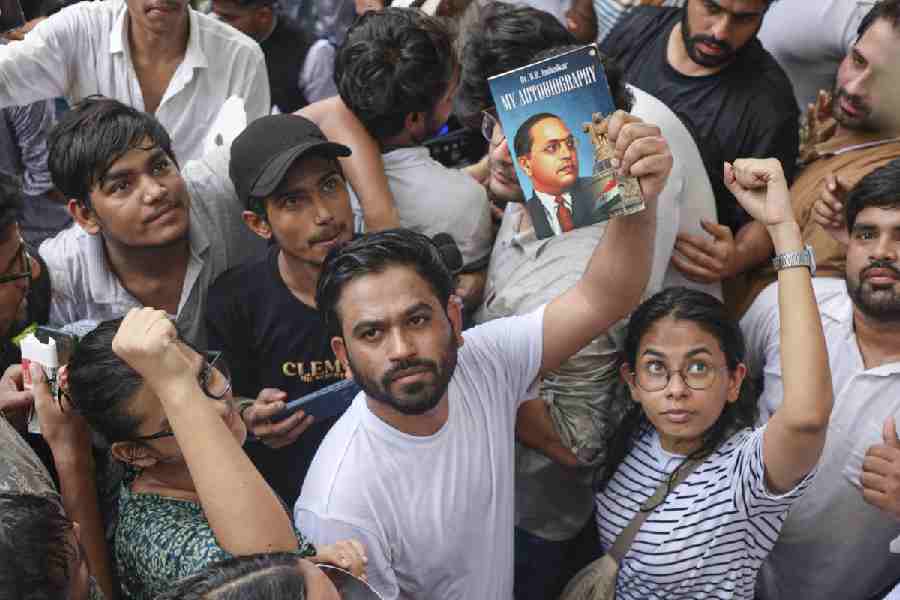
Is India’s demographic dividend turning into the proverbial Damocles’ sword? The State of Working India 2026 report brought out by Azim Premji University reveals worrying trends in this respect. This is not to suggest that the clouds do not have a silver lining. For instance, India has 367 million young people aged between 15 and 29, an enviable demographic capital that has the potential of transforming the economy. Moreover, the report has found that educational enrolment has been on the rise, gender gaps have narrowed, and caste divisions, although persistent, have become shallower. Taken together, these trends indicate that a far more educated and aware generation is entering the job market: around five million graduates join India’s job market annually.
And that is where the red flags begin to appear. An estimated 40% of graduates aged 15-25 years and 20% of those in the age group of 25-29 are without jobs. Unemployment among graduates has remained consistently high — around 35%-40% — for four decades, between 1983 and 2023. Even recent successes have been a chequered phenomenon. For instance, two years after the Covid pandemic, even though 83 million jobs were added, lifting total employment from 490 million to 572 million, nearly half of such employment was in the agricultural sector that is pockmarked with low productivity and disguised unemployment. The inference is clear. Even though India has managed to expand education and accessibility, the gains have not translated into the creation of productive, well-paying jobs. Economists have argued that the lopsided nature of India’s labour market can be explained by the fact that the country has relied on skill intensive services — the information technology segment is an example — instead of augmenting export and manufacturing, the formula preferred by some of its Southeast and Asian neighbours to attain prosperity. Worse, the demographic dividend is not a timeless resource. India may have a young force at the moment but the share of working-age Indians will begin to decline from around 2030. In other words, the country is running out of time to take advantage of its demographic dividend. The generation of employment for the youth should have been the foremost priority of India’s well-entrenched ruling regime. But it appears to have other — secondary — priorities.