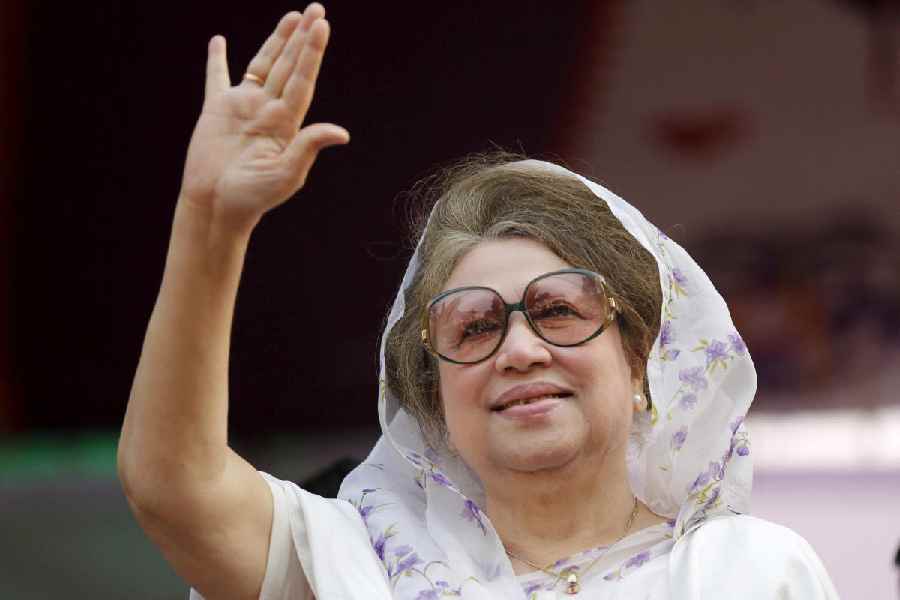
The passing of Khaleda Zia, the former prime minister of Bangladesh, on Tuesday marks the end of a more than four-decade-long era for India’s eastern neighbour. Since the 1980s, Zia and her long-time rival, Sheikh Hasina, dominated their country’s politics, first championing resistance against military rule, then competing to lead the nation. With Ms Hasina in exile in India and her party, the Awami League, banned from elections, Zia’s death has forced a generational change in the country’s leadership. Her son, Tarique Rahman, is expected to lead the Bangladesh Nationalist Party in the elections scheduled for February 12. Opinion polls suggest a close contest with the Jamaat-e-Islami. To win the election, the BNP will likely rely on Zia’s legacy, at least the parts of it that the party would want Bangladeshi voters to remember.
For the older generation of Bangladeshis, Zia represented the face of the resistance against the military rule of Hussain Muhammad Ershad. She also shattered the proverbial glass ceiling, becoming Bangladesh’s first woman prime minister in 1991, only to be replaced five years later by Ms Hasina. They would swap places again in the 2000s, their stints, marked by personal rivalry, separated by a military-backed interim government. Zia’s government and family — including Mr Rahman, her son — faced persistent allegations of corruption. Zia was also imprisoned under Ms Hasina’s reign and thousands of BNP leaders and activists were arrested. As it had done under Ershad, the BNP refused to contest elections under Ms Hasina’s rule that it felt would not be fair. Yet, when she was in power, she too faced accusations of weakening institutions and targeting Ms Hasina. Her relationship with India was similarly complex: neither trusted the other, but they also managed to forge a steady working relationship when Zia was prime minister. At a time when Bangladesh is deeply divided by political violence and inter-religious tensions, Zia’s passing has brought a rare moment of unity, with Ms Hasina and the leader of the interim government, Muhammad Yunus, recalling the deceased leader’s legacy. Bangladesh’s next generation of leaders must learn from her mistakes and also her courage.