Cosmic curveball
Sir — The latest revelations from the James Webb Space Telescope have offered yet another cosmic curveball. The early emergence of Alaknanda, a mature and orderly galaxy, indicates that the universe assembles complex structures far sooner than predicted. Such results may unsettle established theory, yet they sharpen the understanding of cosmic evolution. These anomalies also place human concerns in perspective; if entire galaxies appear ahead of schedule, then a species that misplaces its keys with heroic regularity may not be the universe’s most reliable timekeeper.
Sunanda Palit,
Calcutta
True lies
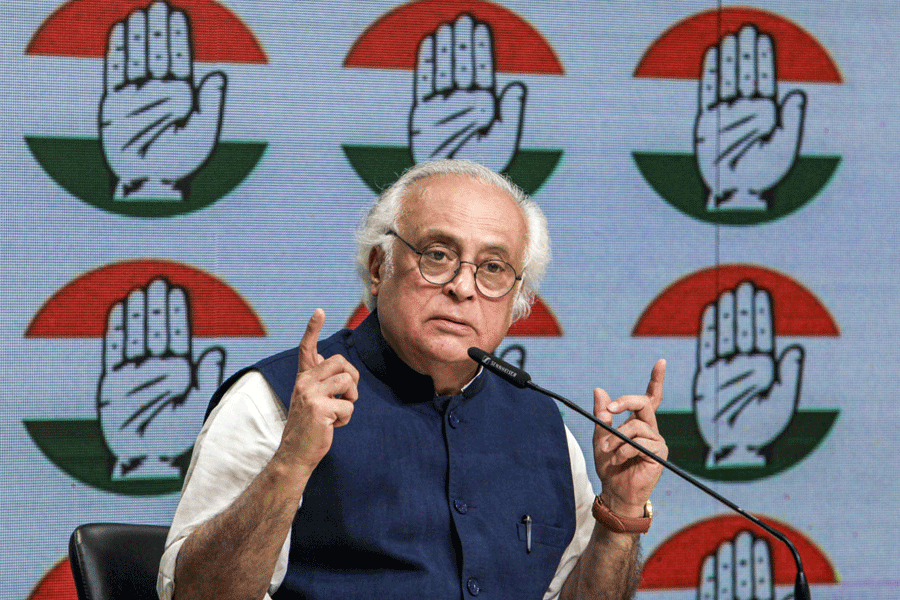
Sir — The sudden display of unity by the Congress leadership in Karnataka feels like a photo opportunity stitched together under duress (“Home fire”, Dec 3). The chief minister, Siddaramaiah, and his deputy, D.K. Shivakumar, claim perfect understanding. Yet weeks of tension have not faded from public memory. Breakfast meetings cannot erase what appears to be a long-running rivalry. The intervention by the leader of the Opposition in the Lok Sabha, Rahul Gandhi, exposes the wider weakness of the party’s command structure. The electorate deserves straightforward governance, not stage-managed reconciliation. The Congress must focus on competence and coherence before voters write the next chapter for them.
Rudrani Sen,
Calcutta
Sir — The spectacle involving the Karnataka chief minister and his deputy highlights the Congress’s habit of treating internal disorder as a minor inconvenience. A brief conversation and a plate of idlis have been presented as proof of harmony. Voters understand theatrics when they see them. The Opposition has already begun to question the credibility of this truce and people will do the same. The state requires consistent leadership. The party must acknowledge the scale of the problem rather than pretend it has been solved over breakfast.
S.A.K. Sinha,
Gaya
Sir — The Congress’s recurring power struggles mirror a party that has lost touch with discipline. Leaders appear driven by personal advancement rather than organisational strength.
Kuntal Pyne,
West Burdwan
Flagrant violation
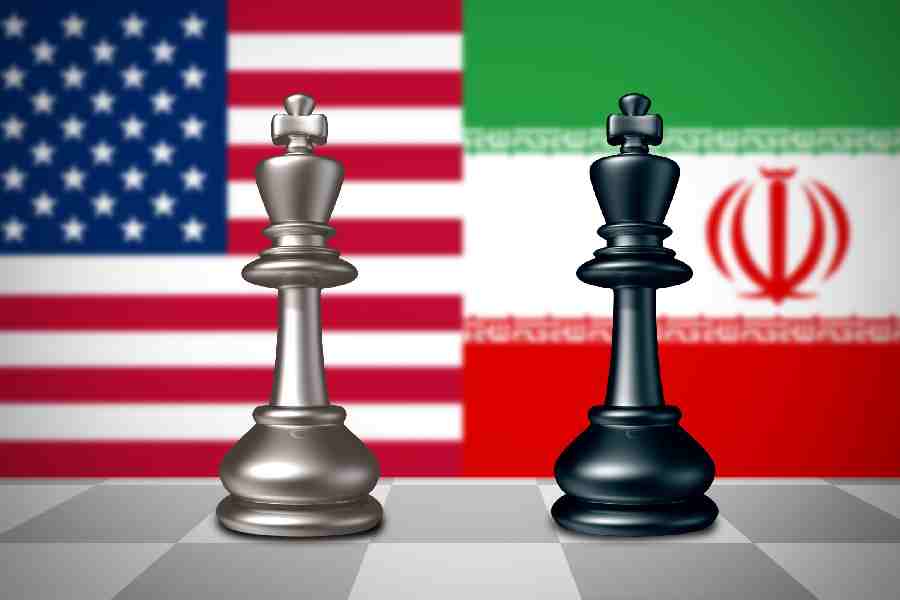
Sir — The alleged order to ‘kill everybody’ given by the United States of America’s secretary of war, Pete Hegseth, before American forces destroyed a civilian vessel in international waters is concerning. This action reveals a collapse of accountability inside a system that once claimed respect for law. The Pentagon’s own manual warns against such conduct. The legal shield surrounding the presidency ensures silence from those meant to enforce justice. The world is watching a superpower drift into a position where its leaders treat rules as optional and conscience as an accessory.
Ishika Raghavan,
Chennai
Sir — The US’s justification for attacks in international waters rests on a narrative that collapses under even mild inspection. The administration calls the victims narco-terrorists while their families describe them as fishermen, not masterminds of transnational crime. The selective outrage over drug trafficking becomes even more absurd after the presidential pardon of Juan Orlando Hernández, a former Honduran president, who was serving a 45-year sentence in an American prison for helping ship over 400 tonnes of narcotics to the US. High-level operators receive mercy while small-time suspects receive missiles.
Anwesha Deshpande,
Mumbai
Sir — The attempt to classify a Venezuelan street gang alongside groups responsible for major global attacks stretches the language of security past recognition. Such labels are meant to clarify threats, not provide cover for extrajudicial killings. The US has long captured suspects, interrogated them, and taken them to court. This new approach discards that tradition in favour of summary executions carried out in open water. No functioning democracy should consider that acceptable conduct. The danger lies not only in the deaths already recorded but in the precedent quietly taking shape.
Arindam Chatterjee,
Calcutta
Imbalanced
Sir — The National Council of Educational Research and Training’s social science book for Class VII has a chapter titled “The Constitution of India: An Introduction.” It presents the Constitution as both a rulebook and an art gallery. The omission of the Constitution’s protections for minorities, paired with the emphasis on illustrations, leaves the chapter feeling lopsided. Children are introduced to visual symbols while key guarantees such as cultural rights and freedom of conscience vanish into thin air. These principles are foundational, yet they receive no attention. A balanced introduction would help students see the Constitution as a living document, not an ornamental object. Civic education cannot rely on implication or guesswork. A textbook should guide students through principles of law with precision.
Devraj Saha,
Calcutta