
Itanagar, Dec. 28: Arunachal Pradesh heads into the New Year with a cloud of uncertainty hanging over the fate of the chief minister. Come January 4, Gauhati High Court will give its order on the validity of the "Assembly session" that was held recently where chief minister Nabam Tuki "lost" a no-confidence motion. The high court has ordered that no Assembly session will be held till it takes up for hearing a petition filed by the 21 Congress dissident MLAs, led by former health minister Kalikho Pul, challenging the court's order staying governor J.P. Rajkhowa's advancing of the House session from January 14 to December 16.
Cracks within the Tuki-led Congress government first began to appear when Hayuliang MLA Pul painted a poor picture of the state's health sector during the monsoon session last year. Famous for his long explanations and speeches, Pul was health minister at that time and informed the 60-member House about the poor supply of basic medicines in remote parts of the state and the pitiable condition of several health centres.
Pul is also said to have been vocal during the cabinet meetings in his opposition to alleged mismanagement of the state's finances. Around this time last year, Tuki dropped Pul from the cabinet and inducted Wanglin Lowangdong, Rajesh Tacho and Thangwang Wangham as ministers. After a relatively quiet start in 2015, things turned sour for Pul a day after April Fools' Day when he was expelled from the Congress for allegedly indulging in "anti-party activities". A month before being dropped, reports surfaced that Pul was leading a dissident group to unseat Tuki.
Pul challenged his expulsion in court and managed to get a stay order in his favour. By then, he had begun his tirade and levelled allegations of gross financial mismanagement under Tuki. He had claimed that the state finances were in overdraft of over Rs 6,000 crore. The allegations were refuted by the state government on several occasions. However, within a short period of time, a host of unions had jumped on the Pul bandwagon and began making similar accusations against the state government.
Amid this quietly brewing storm, former Assam chief secretary J.P. Rajkhowa became the 16th governor of Arunachal Pradesh. While the red carpet was laid out for him, the former bureaucrat was quick to court controversy and spoke out against high levels of corruption in the state soon after he was sworn in. Since then, Raj Bhavan issued several press releases about the lack of infrastructure development in the state. His critique on the condition of roads in the state led to a series of back-to-back press releases involving Raj Bhavan and PWD minister Gojen Gadi. Things came to head when a letter Rajkhowa wrote to Prime Minister Narendra Modi was "leaked" where the governor wrote that the airport at Lilabari in neighbouring Assam could be upgraded instead of building a new airport at Hollongi, 70km from Itanagar, to save costs amounting to Rs 1,150 crore.
Tuki later said that he was "surprised" by the letter. Rajkhowa, however, told reporters that he wrote to the Prime Minister's Office after Tuki repeatedly refused to acknowledge his correspondences. Rajkhowa said he "could not sleep for a few days" because Tuki did not reply to his letter on the issue for almost three months. Clearly something was not right between Raj Bhavan and the chief minister's bungalow and it intensified with Rajkhowa's next move.
On December 9, Rajkhowa summoned the sixth Assembly session for December 16, rescheduling it from the planned session of January 14, 2016. A press statement from Raj Bhavan said the governor was exercising his powers conferred to him under Clause (1) of Article 174 of the Constitution. The council of ministers, whom the governor is bound to consult before summoning the Assembly, were caught unawares as Rajkhowa chose to bypass them and issued the order. All 21 legislators in the Pul camp who were in Delhi for over two months made a hurried return to the state capital for the Assembly session. On D-Day, legislators from both camps were dodging verbal attacks outside the Assembly building as the gate was sealed.
Apparently, the key of the main gate was with Speaker Nabam Rebia who was facing an impeachment motion, while the key to the Assembly hall was with deputy Speaker T.N. Thongdok, who is in the Pul camp. A "session" was quickly conducted at a community centre nearby with the 21 dissident Congress MLAs, 11 BJP and two Independent MLAs in attendance while Tuki and his 26 legislators refused to attend it.
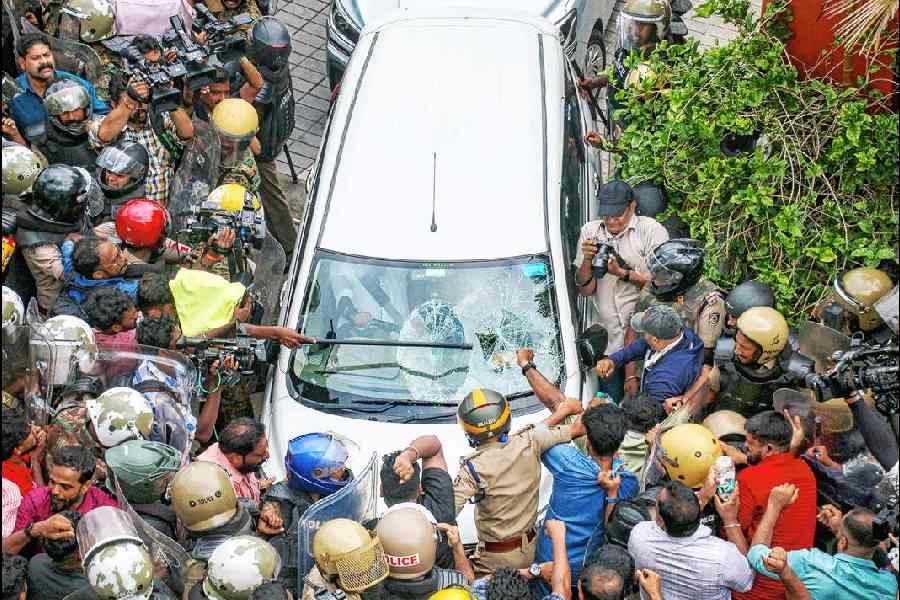
The next day, the situation in the state capital grew even more volatile as supporters of both Tuki and Pul were out in large numbers. Another "session" was held in the absence of Tuki's MLAs, this time at a city hotel, where Tuki "failed" a no-confidence motion.
For three hours, the state came close to having two chief ministers, although Pul was not sworn-in. Rajkhowa's actions have come under heavy fire from several organisations in the state, most vocally from Nyishi tribal organisations who have called for his recall. Adding to the turmoil, an audio clip has been doing the rounds where a man purported to be Pul is heard making derogatory remarks against the Nyishi community that Tuki belongs to. The All Nyishi Students' Union had staged a rally against Rajkhowa and Pul on Tuesday.
On December 17, Gauhati High Court kept in abeyance all decisions, including Rebia's removal and the "no-confidence vote" against Tuki. The court noted that Rajkhowa had violated Articles 174 and 175 of the Constitution by rescheduling the Assembly session. The court order came on a writ petition filed by Rebia. However, on December 21, the court ordered that there would be no sitting of the Assembly till January 4 when it will once again take up for hearing a petition filed by the dissident MLAs. After staying in Guwahati for a few days, the dissident MLAs flew back to Delhi. While they have been unable to meet party chief Sonia Gandhi, they are unlikely to do so after Congress MPs disrupted both Houses of Parliament over the issue and accused the BJP of orchestrating the crisis through the governor. The turmoil and confusion is unlikely to go away soon. Come January 4, whichever side loses is bound to challenge the decision in the Supreme Court.