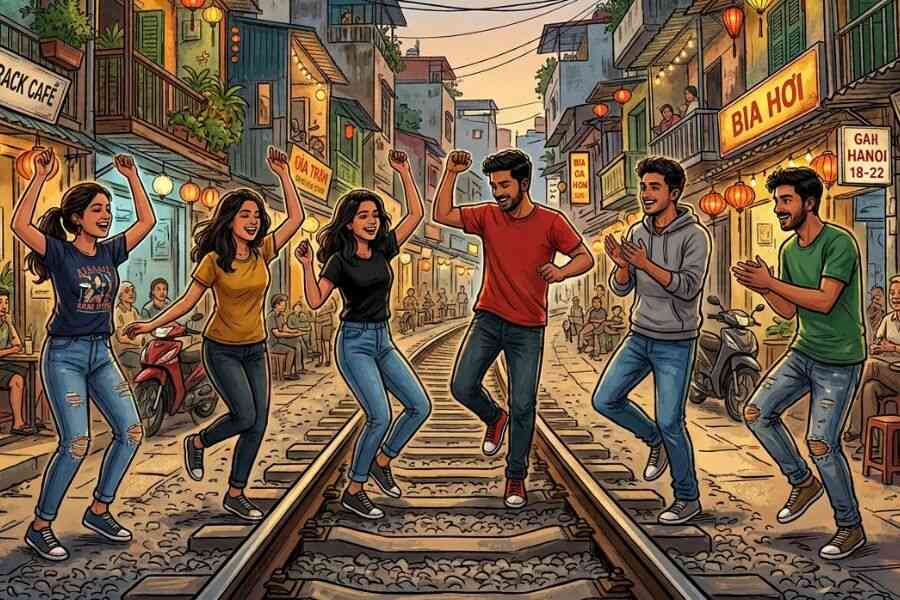
The Indian tourist has many superpowers, like the ability to find a fellow Indian in the remotest corners of the world. Or the ability to locate desi khana in a country famous for everything else. And, the ability to turn into a DJ blasting Bollywood songs, even in places where silence is practically the local lingo.
First came the viral videos of Indian tourists dancing on a Vietnam airport tarmac and at Hanoi's famous Train Street. Then came a Swiss hotel notice addressed to “Dear Guests from India”, reminding visitors not to carry away breakfast food and to keep noise levels down. Shared by industrialist Harsh Goenka, the notice reopened a question: Why do Indian travellers so often find themselves at the centre of conversations about public behaviour abroad?
My Kolkata spoke to frequent travellers from the city and found out that the videos were less shocking to them and more familiar. From travel vloggers to businessmen — Kolkatans share their experiences…
The loudspeaker syndrome
Ask frequent travellers about Indians abroad, and one complaint comes up repeatedly: Noise.
"Personal space and etiquette are valued in many countries. But some Indians often turn quiet places into a fish market," said Abhijeet Roy, who travels abroad at least twice a year for work.
He laughs while recalling a familiar scene. "Babu, cake ta kheye ne. Mona, jal kheyechis? The dialogue may sound normal at a family gathering in Kolkata, but imagine hearing a lady scream it inside a London Tube coach or a long-haul flight!”
Management consultant Ayan Ghosh remembers witnessing something similar on a train ride to Mount Titlis in Switzerland.
As passengers quietly admired the Alpine landscape, a young Indian tourist decided the journey needed a DJ. "She must have also felt a bit out of place because as soon as I frowned and asked her to use earphones, she hastily switched off the music. In India, she would probably have argued,” said Ghosh.
When holidays become reality shows
Travel blogger Pamela Nandi has spent eight years travelling the world and says social media has made the problem worse. People simply visit destinations for social media traction.
Whether it is blocking a famous viewpoint for an extended photoshoot, shouting instructions across a landmark or treating public spaces like a personal studio, she says travellers often forget they are sharing the destination with others. "Capturing memories is important, but so is being considerate of others,” said Nandi.
She believes many first-time international travellers underestimate how seriously countries in East and Southeast Asia take public etiquette.
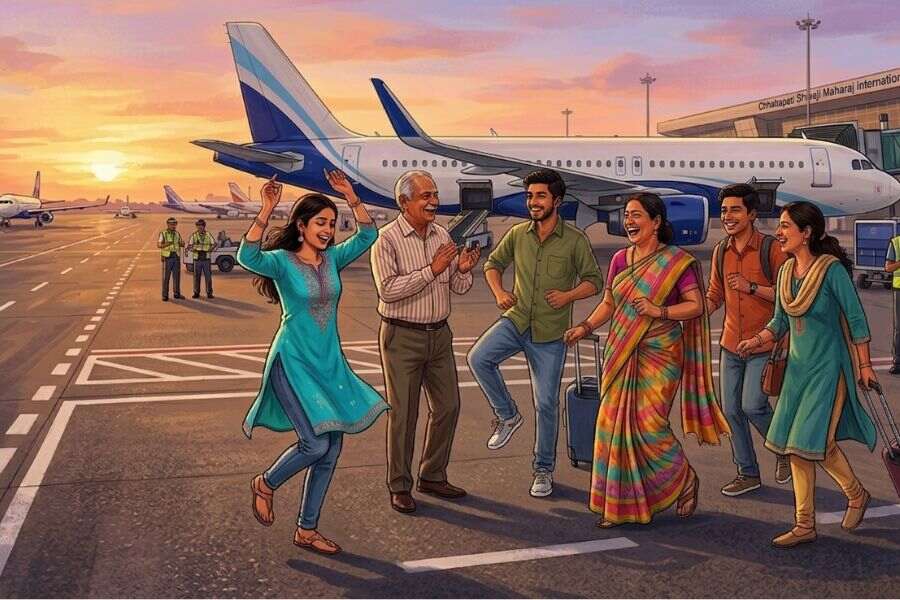
Indian tourists dancing on a Vietnam airport tarmac went viral in May 2026
"Countries in the Far East, in particular, place great importance on manners, personal space and social etiquette. Respecting local customs not only creates a positive impression but also enriches the travel experience,” she said.
For Kolkata-born travel vlogger Souvik Bhattacharya, who now lives in the US, one recent incident summed up the problem.
During a visit to the Tulip Festival in Holland, Michigan, he noticed locals admiring the flowers from a distance. Some Indian tourists, however, treated the blooms like photo props.
"I noticed some Indian tourists holding the flowers tightly while posing for photographs, sometimes even damaging the stems in the process. After taking the pictures, they would simply throw the flowers away. It reflects a lack of civic sense and respect for public spaces," he said.
Creepy behaviour
Then there are the stories travellers tell with equal parts cringe and horror.
A Kolkata-based teacher recalled having to repeatedly intervene when fellow travellers crossed social boundaries during a trip.
“A friend of mine in Thailand wanted to take photos with some women up close. Surprisingly, the other men in the group encouraged him. A few of us threatened to abandon them for the rest of the trip if the behaviour continued," he said, requesting anonymity.
The same group later witnessed another awkward episode. "A friend's wife shoplifted in Singapore and got caught. The store manager was very kind not to report it to the police," he added.
Unruly and ill-mannered tourists
Entrepreneur Arkamitra Roy says some of the most uncomfortable moments she has experienced abroad involve travellers who seemed oblivious to everyone around them.
“I have seen Indians misbehaving quite a few times in a way that makes it very cringeworthy, very embarrassing,” she said.
One cruise holiday remains etched in her memory.
“I have been on cruise ships where people thought it was just okay for their children to run around and try to climb into your room through the balconies,” she recalled. The children often disturbed fellow passengers while the parents remained surprisingly relaxed.
For Roy, the bigger issue is perception. "When we travel abroad, we are ambassadors for our country. It just takes one bad experience, one unfortunate incident, to paint all of us with the same brush."
Why does this happen?
According to senior clinical psychologist Devdeep Roy Chowdhury of Monoshij, the answer may lie in what happens when people leave familiar surroundings behind.
“When people travel abroad, they often experience a temporary loosening of social restraints. In the absence of the familiar network of accountability that exists at home, family, neighbours, colleagues and community, this creates a sense of anonymity and psychological distance from consequences," he explained.