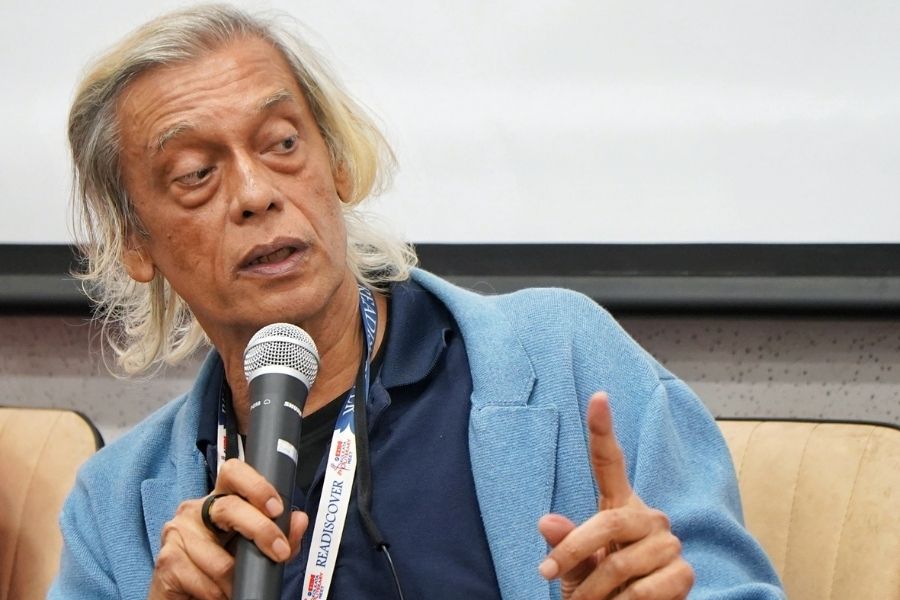
Filmmaker Sudhir Mishra on Saturday said Ritwik Ghatak cannot be boxed into categories such as “art cinema” or “parallel cinema”, asserting that the late auteur’s work continues to shape Indian filmmaking through its uncompromising cinematic language and deep engagement with history and displacement.
Speaking at the Kolkata Literary Meet during a session marking Ghatak’s birth centenary, Mishra said there were essentially only two kinds of cinema. “One that emanates from the filmmaker himself and another made for reasons other than cinema. Ghatak belonged entirely to the first,” he said.
Mishra described Ghatak as a filmmaker who had “no choice” but to make the films he did, bringing his personal pain, political awareness and mastery of craft into every work, regardless of commercial constraints.
“He teaches you what cinema can do — what is inside the frame, what is outside it, and how image and sound can counterpoint each other,” he said.
Rejecting the perception of Ghatak as merely a festival filmmaker, Mishra noted that films such as Meghe Dhaka Tara had connected with audiences in their time. However, he said Ghatak’s refusal to offer comfort or easy resolutions often kept his work away from mass popularity.
“He does not look away from despair. That is why he is not immediately popular — and that is why he lasts,” he said.
Mishra said Ghatak’s cinema was rooted in the trauma of Partition and migration, but went beyond politics to address a deeper human condition. “When people migrate, they lose more than land. They lose memory, culture, belonging. That lament runs through Ghatak’s work,” he said, adding that the filmmaker’s themes remain relevant amid contemporary patterns of displacement.
The filmmaker also underlined Ghatak’s influence on cinematic craft, particularly sound design and music, citing his use of Tagore, folk traditions and counterpointing audio-visual structures. “Every time you make a film, somewhere Ghatak is present,” Mishra said.
The session, titled ‘Ghatak @ 100: A Soft Note on a Sharp Scale’, also featured writer-editor Shamya Dasgupta, former information and broadcasting official Nirupama Kotru, and writer Salil Tripathi, in conversation with Balaji Vittal.
Mishra dismissed attempts to pit Ghatak against contemporaries such as Satyajit Ray, noting that Ghatak himself had written one of the finest reviews of Pather Panchali. “There is no war here. Ghatak is present — more than ever — in the language of cinema,” he said.