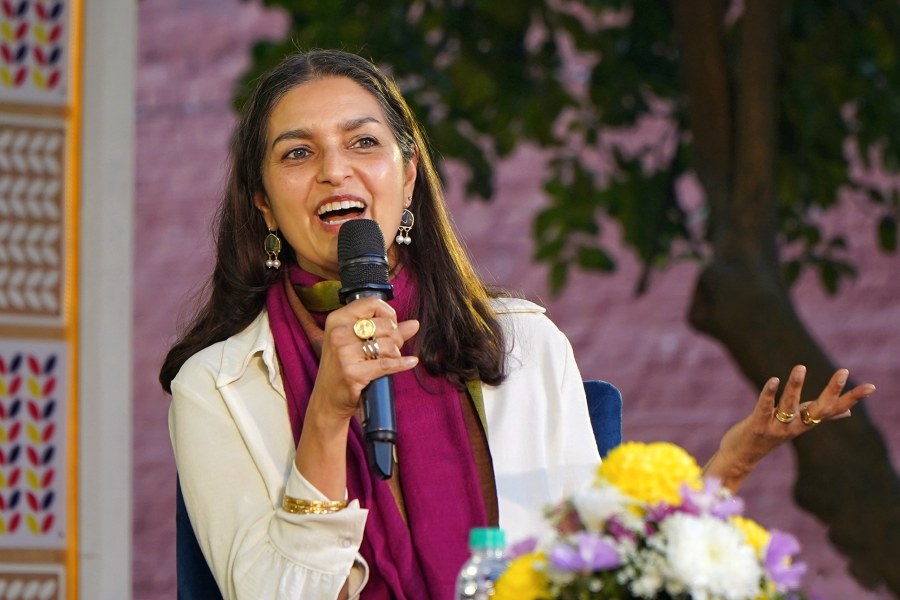
“All of India is in Kolkata anyway.”
That was how Jhumpa Lahiri described the City of Joy during a session on her novel Roman Stories at Kolkata Literary Meet on January 22 — a brief remark that suddenly popped up in between a conversation drawing smiles from Kolkatans across the sprawling lawn at Alipore Museum.
The Pulitzer Prize-winning author returned to Kolkata after her personal visit in 2023 and this time, she got candid about language, her lifelong conflict with belonging and her tryst with Rome during a conversation with Malavika Banerjee.
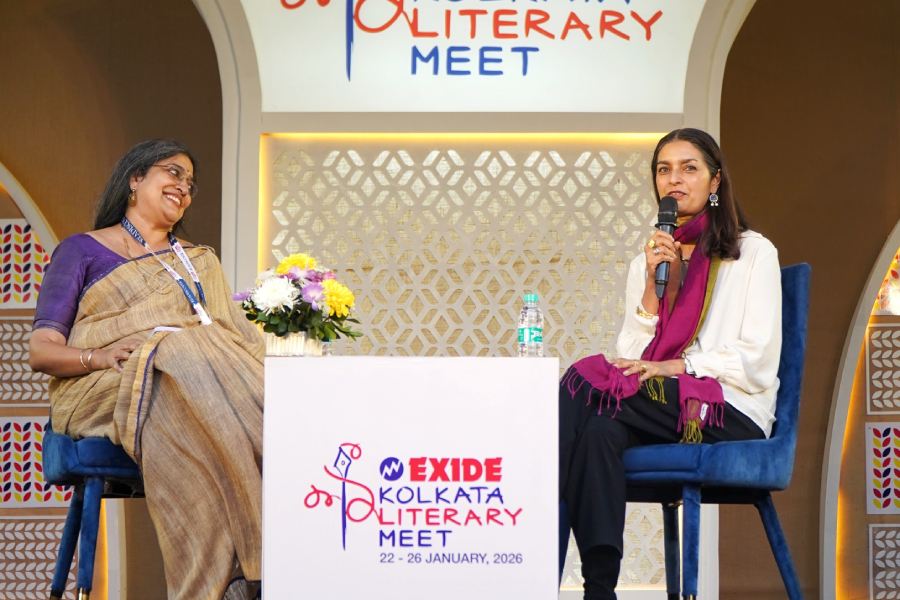
Jhumpa Lahiri in conversation with Malavika Banerjee at Kolkata Literary Meet 2026
For Lahiri, Kolkata was both omnipresent and absent in her upbringing. It was “the centre and the glaring absence” of family life. Even so, the city shaped her as she grew up in the United States.
What stayed with the 58-year-old was the city’s rich linguistic side. “One of the things I loved about the time I spent in Kolkata as a child and adolescent was the deeply multilingual reality of the place,” she said, adding that the city felt like the entire country itself.
The bountiful nature of Kolkata, however, posed a challenge for Lahiri, who often felt at odds with her sense of belonging.
The Namesake author opened up about growing up caught between Bengali and English, but never fully feeling at ease with either language.
While living in the US, Bengali felt like it was a language that she needed to hide.
“I was embarrassed, a bit ashamed to let on that I knew Bangla,” she said, recalling how she would pretend not to understand it around her American friends.
The anxiety was different when she would occasionally visit Kolkata with her parents. “My mother would say, “‘No English, no English,’” Lahiri remembered. “And I’d comply, as if I didn’t know English, just so I wouldn’t reveal that side of myself.”
This pressure to choose one language in which one is expected to think, speak and write compelled Lahiri to find a third language which will solely be hers. That is how her tryst with Rome and the Italian language came about.
She sees her journey of finding a language for herself as the first cycle of her body of work — from Interpreter of Maladies to The Lowland. These books, she said, were not mere attempts to alleviate the tension, but to find a bridge between the two worlds of Bengali and English.
The Lowland in particular was a nod to her Bengali inheritance, which was shaped by her mother’s admiration for writers like Mahasweta Devi. After finishing the manuscript of her novel, Lahiri realised she had reached the end of an era rooted in childhood and the oscillation between cultures.
What followed was a major shift in her perception as a writer. After moving to Rome in 2012, Lahiri began writing in Italian, ultimately stepping away from English altogether. The change was existential, not linguistic, she said. Writing in Italian allowed her to steer clear of both Bengali and English as well as the history, colonialism and societal expectations attached to them.
English, she pointed out, remains a language of dominance around the world. It is etched as the “ultimate coloniser” even after the British left.
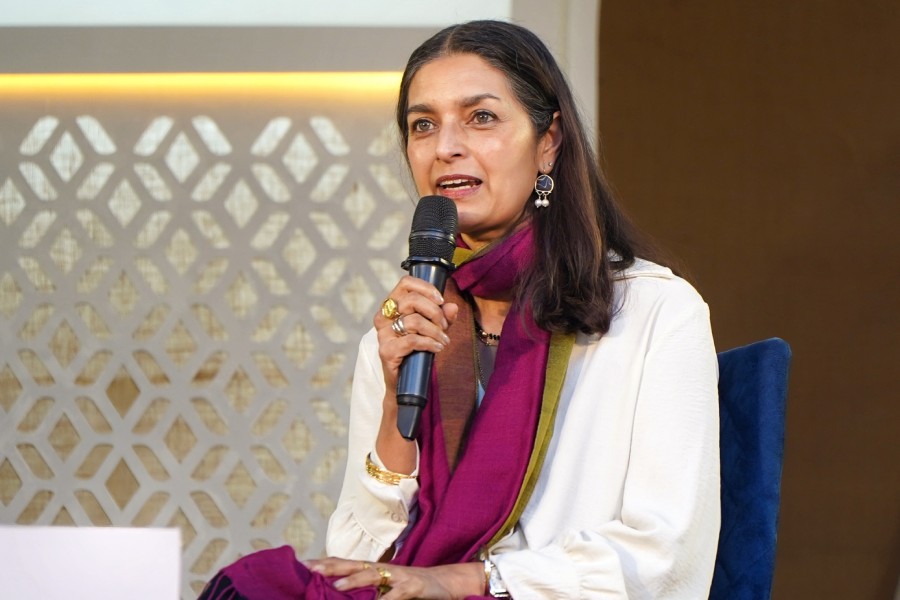
Lahiri also spoke about adopting the style of writing short stories and the challenges it posed with publishing houses
This doesn’t mean that she turned a blind eye to the urban loneliness, the longing for home and the diaspora conflict in her works.
In Roman Stories, Lahiri offers a more universal touch to the lives of immigrants by not spelling out their nationalities or names outright. Rather, her characters are all bound by alienation and not geographical boundaries.
“We are all outsiders, period,” Lahiri said. Most importantly, belonging is not about place or language, she added, but an existential condition that travels with us.