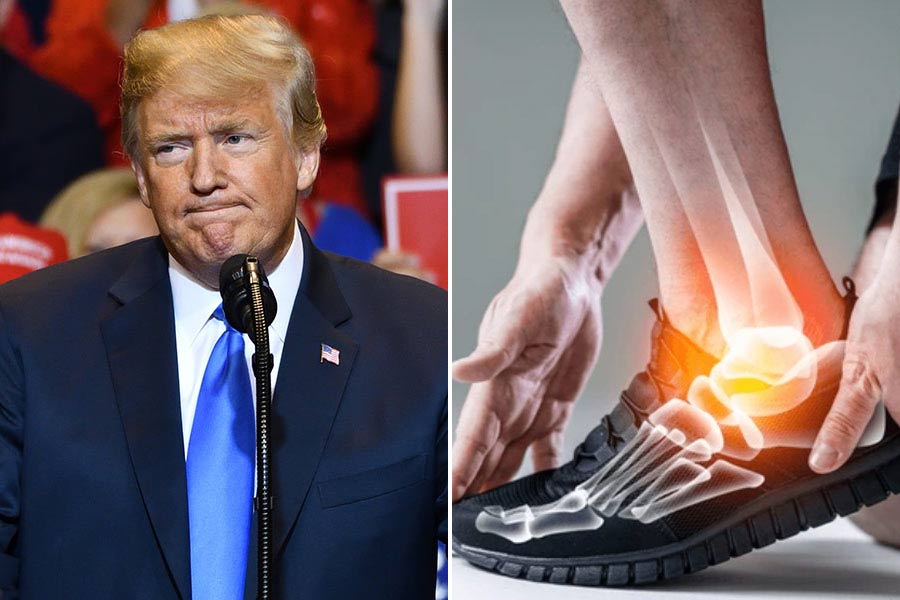
US President Donald Trump opening up about swelling in his lower legs has prompted conversations around a symptom that many people experience but rarely take seriously.
“I briefly tried wearing compression socks for my swelling ankles, but I didn’t like them,” Trump said, adding that he preferred walking around more instead.
Doctors say ankle swelling is not unusual, but it should never be ignored.
A symptom that can mean many things
Ankle swelling is not a disease in itself. “Ankle swelling is a symptom which can embody a whole gamut of diseases. It can be caused by a simple insect bite or infection to venous insufficiency signalling cardiac dysfunction,” said Dr MS Purkait, medical superintendent at Techno India DAMA Hospital.
According to Purkait, lifestyle factors also play a major role. “Often stress, long hours of standing and prolonged use of some medications can cause ankle swelling. A certain type of gouty arthritis and thyroid dysfunction can also cause ankle swelling,” he explained.
In today’s city life, where long commutes, desk jobs and extended working hours are common, ankle swelling is frequently dismissed as fatigue, say doctors.
The nature of swelling and what to notice

Shutterstock
The nature of swelling often provides clues to its cause. “Signs of swollen ankle can be sudden with redness and itching if it is an insect bite. It may be negligible or minimal after waking up from sleep and slowly increase in size as the day progresses in case of cardiac dysfunction,” Purkait stated.
This gradual swelling is linked to poor circulation. Trump himself was diagnosed with chronic venous insufficiency, a condition where blood struggles to travel upwards from the legs to the heart due to faulty vein valves.
“I’m getting up from my desk and walking around a bit more,” Trump said in the interview, noting that his swelling had improved.
Why the calf muscle matters
Shutterstock
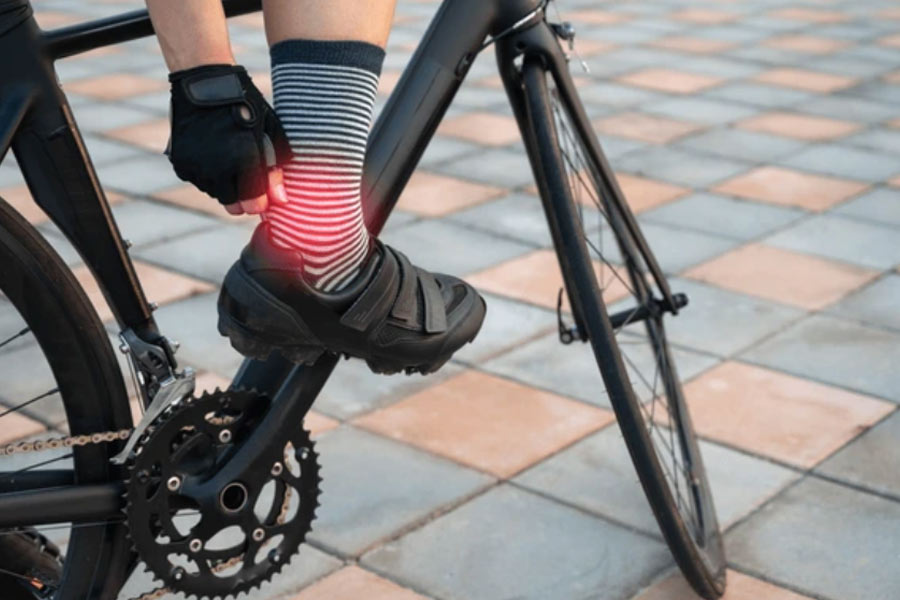
Doctors often refer to the calf as the body’s second heart. Regular movement of the calf muscle helps push blood back toward the heart, reducing fluid accumulation in the ankles. Simple exercises such as calf raises, short walks and avoiding prolonged sitting or standing can significantly help.
Trump admitted he avoids most forms of exercise. “I just don’t like it. It’s boring,” he said. Doctors, however, stress that even basic movement can make a difference.
Diet, salt and simple measures
Lifestyle changes are often the first line of management. “We should immediately cut down on excessive dietary salt intake and restrict water intake to a maximum of 1.5 litres,” said Purkait. “Simple measures like elevating the leg or keeping the foot end of the bed above heart level and avoiding long periods of standing can also help.”
Explaining ankle-specific causes and treatment, Dr Swaroop Solunke, associate professor, Department of Orthopaedics, DPU Super Specialty Hospital, Pimpri, Pune, said ankle swelling can occur due to multiple reasons. “Swelling in the ankle joint may be caused by inflammatory conditions like arthritis, overuse, strain or age-related degenerative changes. It is commonly seen in athletes, especially after twisting injuries that can damage ligaments,” he said.
“In traumatic cases, identifying the cause is crucial. An X-ray should be done first to rule out fractures. If there is no fracture, stress ligament tests help assess ligament injuries, most commonly involving the anterior talofibular ligament or the deltoid ligament,” Solunke explained.
He added that early treatment focuses on controlling pain and swelling. “Initial management includes immobilisation with a slab or crepe bandage, along with rest, elevation, ice application and compression.”
For non-traumatic swelling, Solunke advised further evaluation. “Degenerative or inflammatory arthritis should be assessed with blood tests for inflammatory markers and an X-ray of the ankle joint. Treatment may include immobilisation for three to six weeks, pain-relief medication, limited weight-bearing, supplements for ligament or bone healing, and disease-modifying drugs in chronic inflammatory conditions.”
When to seek medical help
If swelling persists despite these measures, medical consultation is essential. “Get investigated to know the reason behind swollen ankle. Trauma, infection, inflammation, hyperuricemia and arthritis, plenty of reasons can be there,” said Dr Soumya Chakraborty, consultant orthopaedics at Fortis Hospital Anandapur. “Imaging like X-ray, USG and MRI can also help.”