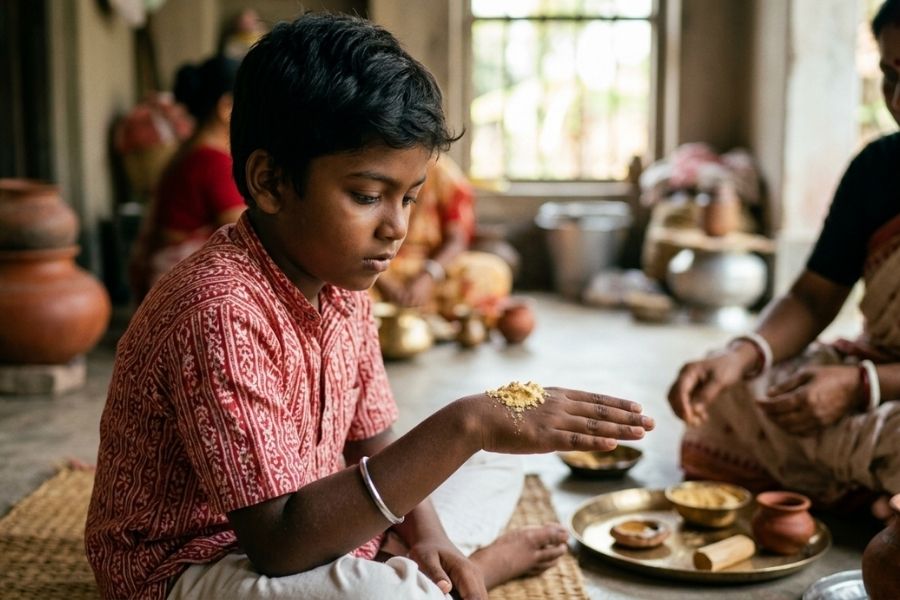
On Chaitra Sankranti, the last day of the Bengali calendar, as we prepare to bid farewell to the year, some households observe a tradition that binds siblings together — Bhai Chhatu.
Today, that tradition is slipping through the cracks of memory, surviving only in a few households in pockets of Bengal.
For many bangal families with roots in erstwhile East Bengal, Bhai Chhatu is as intrinsic as Bhai Phonta, though far less publicised. The ritual is simple. Sisters place a pinch of chhatu (roasted gram flour) on the back of their brothers’ hands. The brothers, in turn, blow it away, a symbolic gesture believed to ward off misfortune as the year ends.
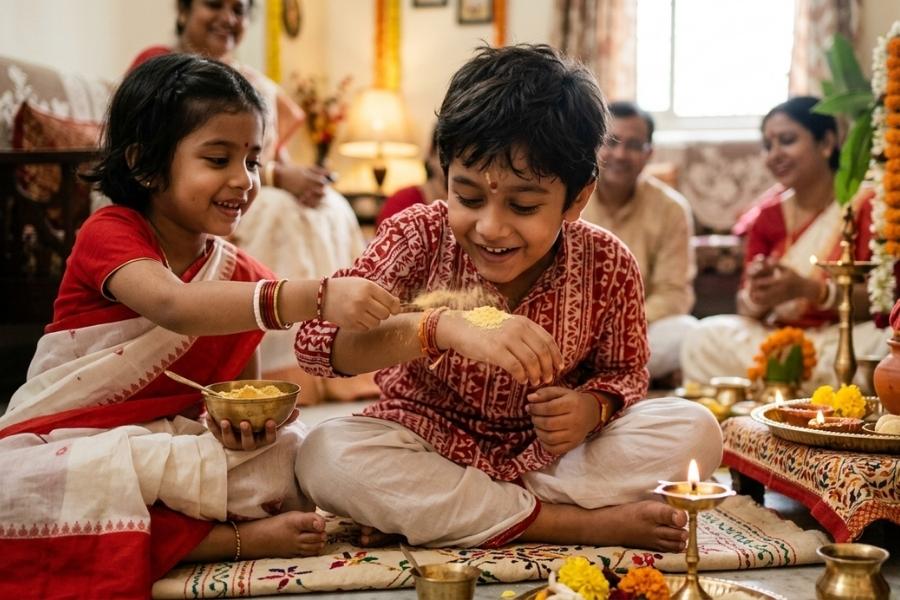
“Bhai Chhatu felt like an ‘untimely Bhai Phonta’,” says Semanti Niyogi, 38, from Jalpaiguri. She still observes the ritual with her cousins. “Earlier it would be an elaborate ritual, with many cousins coming together. But now, most of them have moved to different cities for jobs. So we observe it symbolically”.
“It was never about grandeur,” recalls 44-year-old Anima Sen, whose family migrated from Barisal decades ago. “We didn’t have elaborate arrangements. Just a small bowl of chhatu. The get-together of siblings was the main attraction for us”.
Following the chhatu ritual, would come the feast. A mixture of chhatu kneaded with sour curd, salt, and sugar. In some homes, puffed rice, flattened rice, or jaggery sweets were added to enhance the flavour. Even mangoes and bananas are added to the mix.
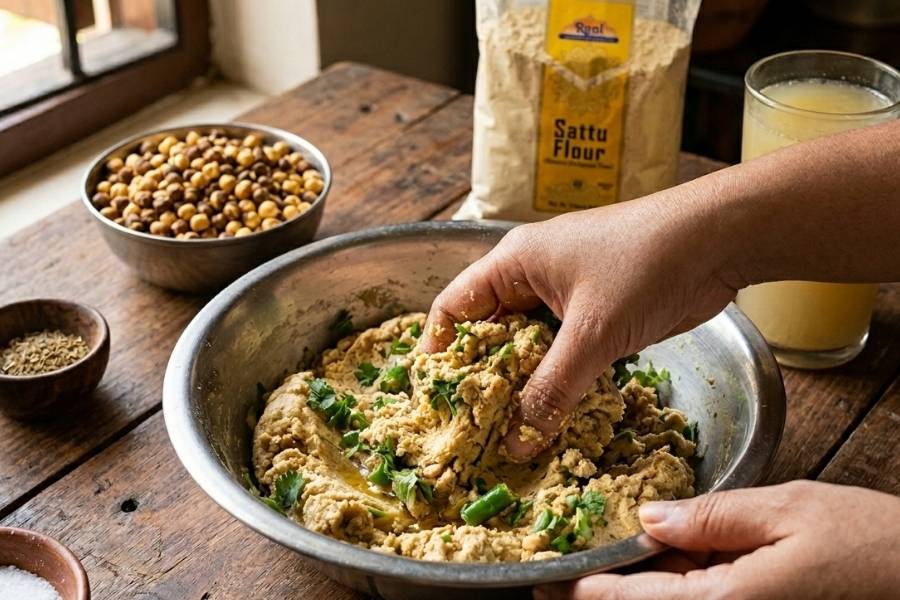
In some households, the ritual of blowing chhatu is no longer observed, but the chhatu makha is a must-have on Sankranti morning. “We offer it to our kul-devta first. And then sisters give the chhatu makha to brothers,” Tanwi Das, homemaker from Howrah, says.
Similarly, at 29-year-old Samipa Roy’s North Kolkata residence, Sankranti is called ‘paate chhatu’. “This day has always been about togetherness. New clothes, sweets, and a simple ritual of having chaatu and curd in the morning,” she says. The breakfast platter would also consist of bitter, sweet, and sour items. “Through this diverse spread, we learned to embrace every shade of life”.
“Today, though we are scattered across cities, we come together over video calls and offer it to our deity—holding on to the same love, just in a new way,” Roy says.
Beyond the household, the ritual extended into the community, too. In some villages, women would gather near ponds, blowing chhatu into the air with kulo (bamboo trays). “Shatrur mukhe diya chai, chhatu uraiya ghore jai” they would recite as an incantation.
Another tradition associated with Chaitra Sankranti is the ritualistic grinding of gram flour in a dheki (a foot-press grinder used in rural areas). “The rhythm of rural life is no longer what it used to be in the past. The dhenki has all but disappeared. Machine processing has replaced it, and with it, a piece of lived heritage has quietly faded,” Anima Sen added.
Saswata Saha, 25, from Madhyamgram echoes Sen. “When we were kids, our great aunt would send chhatu every year on Sankranti to our home without fail. After our grandfather blew a portion of it, we would eat the rest. But after my grandfather passed away, the tradition also came to an aburpt halt,” he says.
But not all is lost. Tanwi Das says she is trying her best to keep the ritual alive. “I have taught my sons about the tradition. If we stop, it ends with us.”
That, perhaps, is the sad truth of Bhai Chhatu. In this digital age, where algorithm decides what’s popular, we are perhaps moving away from our roots. As Bengal steps into another new year, the fate of this ritual is caught between nostalgia and neglect. Whether it survives will depend not on the willingness of families to hold on.
Sometimes, all it takes to preserve a tradition is a pinch of chhatu, and the resolve to carry it forward.