 |
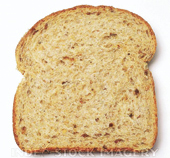
| DAILY BREAD: Only six of the 20 tested brands conformed to Prevention of Food Adulteration Act standards |
Bread has long been one of our principal forms of food. Earlier, we did not have many varieties of bread on offer. It used to be the regular white bread and milk bread that were available. Now, however, there are plenty of brands in the market.
The Consumer Education and Research Society (CERS), based in Ahmedabad, tested ? and tasted ? 20 different brands in three categories, namely white bread, milk bread and wheatmeal bread. The 20 brands tested comprised 14 brands of white bread, two of milk bread and four of wheatmeal bread.
Surprisingly, only six of the 20 tested brands conformed to the standards ? all brands were tested against the specifications under the Prevention of Food Adulteration (PFA) Act, 1955, and the Bureau of Indian Standards (BIS) IS: 1483-1988 for white bread; IS 11231-1985 for milk bread, and IS 1960-1979 for wheatmeal bread
In the white bread category, the brands tested were Modern Special, Super Sandwich, Britannia Premium Bake, Modern Premium, Satyam Golden Crust, Empire Sandwich, Maruti White, Monginis Sandwich, Kalory White, Aabad Continental, Italian Sandwich, Oven Fresh, Fresh ?N? Fresh and Upper Crust.
In the milk bread category, CERS tested Kalory Milky Gold and Super Milky,
In the wheatmeal category Modern Kissan, Kalory Vital Brown, Super Brown and Satyam Golden Crust (Wheat) were the four brands tested.
Key findings
• The most vital information for consumers ? the ?best before? date and the manufacturing/ packing dates were not given on the packs of 12 out of the 20 brands tested. The 12 comprised of nine white breads, one milk bread and two wheatmeal breads.
• The breads were tested for chemical parameters. All the brands complied with the chemical parameters, except for alcoholic acidity. Both Kalory Milky Gold (1.08 per cent) and Super Milky (0.98 per cent) conformed to the PFA Act specification for alcoholic acidity but not the IS specification.
• A 100 gm bread ? white, milk or wheatmeal ? gave 0.2 to 2 gm of fat.
• Protein content in all the breads (100 gm) was less than even 10 gm.
• CERS found 49.5 to 60.4 per cent of carbohydrates in all the three categories of breads tested.
• Calcium in all the categories tested ranged from 51 to 83 mg/100 gm.
• All three categories of bread gave 215 to 255 kilocalories of energy/100 gm.
• All the 14 brands of white bread tested showed a very high amount of sodium content, ranging from 503 to 806 mg/100 gm. The two milk breads showed the lowest sodium content at 379 mg/ 100 gm and 340 mg/ 100 gm. In the four wheatmeal breads, the sodium content ranged from 470 to 731 mg/100 gm.
• Though the PFA Act and the BIS do not have specifications for microbial tests, CERS tested all the brands for total bacterial count, yeast/mould content, coliform count and E.coli as per the Canadian Standards for Bakery Products and Mysore-based Central Food Technological Research Institute?s (CFTRI) proposed draft standard.
Total bacterial count: As per the Canadian Standards, the total bacterial count should not be more than 50,000 cfu/gm (colony forming units/ gm). Three white breads ? Italian Sandwich (140,000), Oven Fresh (130,000) and Fresh ?N? Fresh (110,000) ? did not conform to this parameter. In the wheatmeal category, the three non-conforming brands were Kalory Vital Brown (210,000), Super Brown (51,000,000) and Satyam Golden Crust (43,000,000).
Yeast/mould content: The Canadian Standards specify that the coliform count should not be more than 50 cfu/gm. Among the wheatmeal breads, Satyam Golden Crust (Wheat) had 54 cfu/gm.
E.coli: E.coli, as per CFTRI?s proposed draft standard, should be absent in 0.1 gm. All the brands, except Satyam Golden Crust (Wheat) (2/0.1 gm) in the wheatmeal bread category, passed this test.
• CERS? Best Buy is based on overall score and price. Modern Special and Super Sandwich in the white bread category and Modern Kissan in the wheatmeal category were chosen as CERS? Best Buys.
Golden rules of bread storage
 |
• First crush: Squeeze the bread to ascertain its freshness.
• Then protect: Cover the bread with a slightly dampened cloth to preserve its flavour.
• Then preserve: If unsliced, store bread at room temperature.
• Natural way: Avoid putting unused bread in the refrigerator. Refrigeration may, however, retard the growth of fungi.
• Give it the gentle touch: For soft-crust breads, wrap the loaf in foil and bake in pre-heated oven for 10-12 minutes at 350 degrees.
• Get hot: Toasting is another good way of maintaining the flavour of bread.